
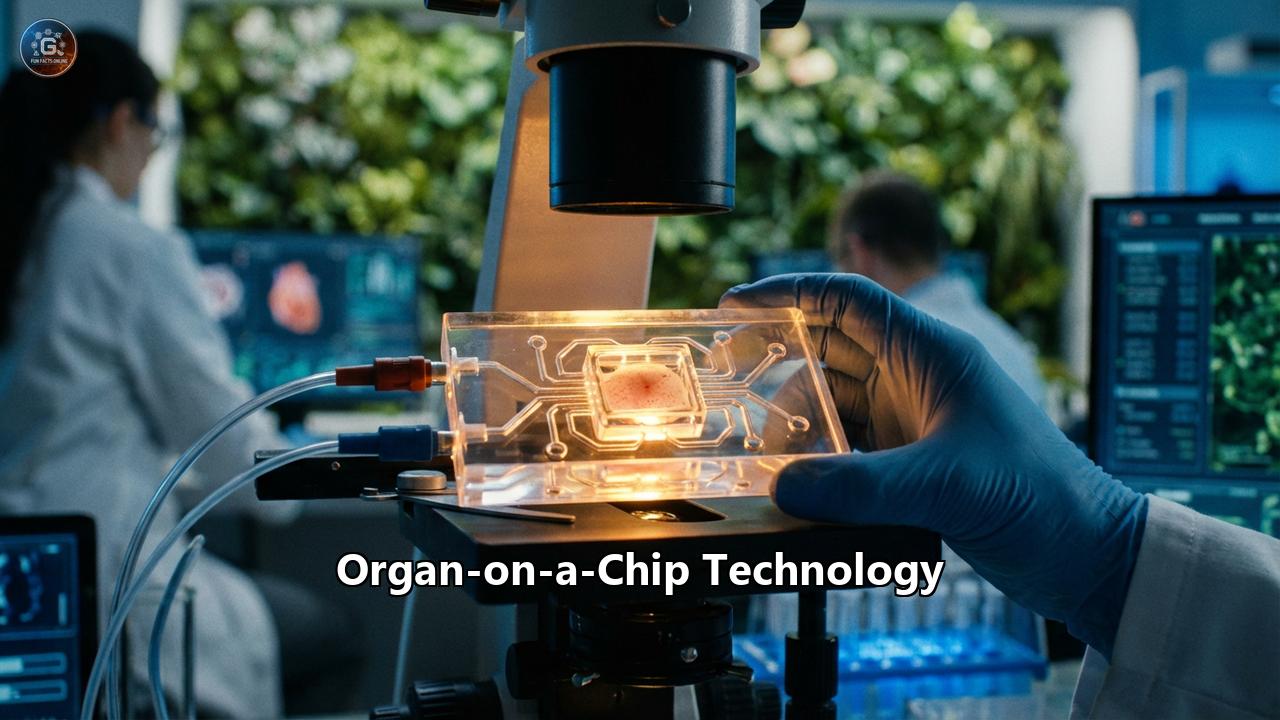
The pharmaceutical and biomedical industries stand at the precipice of a paradigm shift. For over a century, the gold standard for understanding human biology and testing new therapeutics has been a combination of two-dimensional (2D) cell cultures and animal models. While these methods have yielded immeasurable insights, they possess inherent, often fatal, flaws. A mouse is not a human; its metabolic pathways, immune responses, and genetic architecture diverge significantly from our own. Similarly, cells grown flat on a plastic petri dish, devoid of blood flow, mechanical stress, and three-dimensional architecture, fail to replicate the complex dynamic environment of a living organ.
Enter Organ-on-a-Chip (OOC) technology. Also known as Microphysiological Systems (MPS), these microfluidic devices are not computer chips in the traditional sense, but rather thumb-sized translucent polymer cartridges that house living human cells in micro-channels. By mimicking the continuous flow of blood, the mechanical expansion of breathing, and the electrical rhythms of the heart, these chips trick cells into believing they are still inside the human body. The result is a living, breathing, beating simulation of human physiology that promises to revolutionize drug discovery, eliminate animal cruelty, and usher in an era of truly personalized medicine.
This comprehensive article explores the depths of Organ-on-a-Chip technology—from its engineering marvels and organ-specific designs to the regulatory revolutions of 2025 and the commercial landscape defining this new era.
Part I: The Engineering of Life – Core Principles
To understand the magnitude of OOC technology, one must first appreciate the convergence of disciplines that makes it possible: microfluidics, cell biology, and materials science.
1. Microfluidics: The Circulatory System of the Chip
At the heart of every organ-chip is microfluidics—the precise manipulation of fluids at the sub-millimeter scale. In the human body, cells are rarely stagnant; they are constantly bathed in interstitial fluids, blood, or lymph. This flow provides nutrients, removes waste, and, crucially, exerts shear stress—a frictional force that dictates cell behavior.
- Laminar Flow: Unlike the turbulent flow of a rushing river, fluids in micro-channels move in smooth, parallel layers (laminar flow). This allows engineers to create stable chemical gradients, mimicking how morphogens guide tissue development or how drugs diffuse from blood vessels into tissues.
- Porous Membranes: Most chips feature a "sandwich" design. Two parallel channels are separated by a thin, porous membrane (often made of PDMS, polyester, or polycarbonate). This membrane acts as a tissue interface. For example, in a Lung-Chip, one side represents the air sac (alveolus) and the other the blood vessel (capillary), with the membrane allowing immune cells and molecules to pass between them, just as they do in the body.
2. The Material: PDMS and Beyond
The most common material used to fabricate these chips is Polydimethylsiloxane (PDMS). It is optically clear (allowing real-time microscopy), gas-permeable (letting cells breathe), and biocompatible.
- The "Sponge" Problem: Despite its advantages, PDMS has a drawback—it can absorb small hydrophobic drug molecules, potentially skewing toxicity data. Recent advancements in 2024 and 2025 have seen companies like Emulate and Mimetas shift toward newer proprietary polymers and "rigid" chip designs (like cyclic olefin copolymers) that minimize drug absorption while maintaining optical clarity.
3. 3D Architecture and Mechanical Forces
Cells are sensitive to their physical environment.
- Stretch and Strain: A lung cell that isn't stretched doesn't produce the right proteins. Organ-chips use vacuum channels running alongside the main culture channels. When the vacuum is applied, it deforms the flexible PDMS walls, stretching the central membrane and the attached cells. This mimics the rhythmic expansion of the lung during breathing or the peristalsis of the gut.
- Electrical Stimulation: For Heart-on-a-Chip and Brain-on-a-Chip models, integrated electrodes provide electrical pacing to synchronize heartbeats or measure neuronal firing rates, replicating the body's bioelectric environment.
Part II: The Organ Systems – A Deep Dive
The versatility of OOC technology lies in its ability to model specific organs with unprecedented fidelity.
1. Lung-on-a-Chip: The Pioneer
The Lung-on-a-Chip, developed by Donald Ingber’s team at the Wyss Institute in 2010, is the "Hello World" of this technology.
- Design: It consists of two channels separated by a porous membrane. The upper channel is lined with human alveolar epithelial cells and exposed to air (creating an Air-Liquid Interface, or ALI). The lower channel is lined with lung microvascular endothelial cells and perfused with a blood-substitute medium.
- Breathing Motion: Two hollow side chambers surround the culture channels. Cyclic vacuum suction is applied to these chambers, stretching the central membrane by 5-10%. This mechanical cue is critical; studies have shown that lung cells exposed to this breathing motion express higher levels of inflammatory response to silica nanoparticles than static cells, matching human clinical observations.
- Applications: It has been used to model pulmonary edema (fluid on the lungs), where a drug called GSK2193874 was shown to inhibit vascular leakage—a finding that matched animal data but was undiscoverable in static dishes. Recent 2025 iterations focus on viral pneumonia and testing inhaled therapeutics.
2. Liver-on-a-Chip: The Metabolic Engine
The liver is the primary site of drug metabolism and toxicity, making it the most critical organ for pharmaceutical safety testing.
- The Zonation Challenge: The human liver has a complex architecture where hepatocytes are arranged in zones with different metabolic functions depending on their distance from oxygen-rich blood.
- Solution: Advanced Liver-Chips, such as those by CN Bio, utilize perfusion to create oxygen and nutrient gradients, establishing natural metabolic zonation. They often co-culture hepatocytes (the main functional cells) with Kupffer cells (liver macrophages) and stellate cells.
- Why Co-culture Matters: Drug-Induced Liver Injury (DILI) is often immune-mediated. If a drug damages hepatocytes, they release signals that activate Kupffer cells, causing inflammation. A chip with only hepatocytes would miss this toxic reaction. By including immune cells, Liver-Chips have achieved >80% sensitivity in predicting toxicity, compared to the ~50% predictive power of animal models.
3. Kidney-on-a-Chip: The Filtration Unit
The kidney is notoriously difficult to model because of its fluid dynamics.
- Shear Stress is Key: The proximal tubule cells in our kidneys are constantly washed by filtrate. In a Kidney-Chip, primary human proximal tubule cells are cultured under a fluid shear stress of ~0.2 dyne/cm².
- The Result: Under flow, these cells develop primary cilia (sensory organelles), align correctly, and express transporters like P-glycoprotein and SGLT2 at physiological levels.
- Toxicity Testing: Cisplatin, a potent chemotherapy drug, is nephrotoxic (kidney-damaging). Kidney-Chips have successfully replicated the specific biomarkers of cisplatin toxicity (like KIM-1 expression) that static cultures fail to show.
4. Gut-on-a-Chip: The Microbiome Interface
The human gut is a dynamic ecosystem involving epithelial cells, mucus, immune cells, and trillions of bacteria.
- Peristalsis: Like the lung chip, Gut-Chips use vacuum actuation to mimic the peristaltic waves of digestion. This mechanical motion induces Caco-2 cells (a standard gut cell line) to spontaneously form 3D villi—finger-like projections that increase surface area for absorption.
- Microbiome Co-culture: In static dishes, bacteria overgrow and kill human cells within hours. In a perfused Gut-Chip, the continuous flow washes away excess bacteria and waste, allowing for the stable co-culture of beneficial bacteria (like Lactobacillus rhamnosus GG) on the surface of the gut cells for weeks. This allows researchers to study how the microbiome influences drug absorption and metabolism.
5. Blood-Brain Barrier (BBB)-on-a-Chip
The BBB is a fortress that protects the brain but also blocks 98% of potential neuro-therapeutics.
- Architecture: These chips co-culture brain microvascular endothelial cells (BMECs), pericytes, and astrocytes. The tight junctions formed between BMECs are the "gatekeepers."
- TEER Measurement: To verify the barrier is intact, chips use integrated electrodes to measure Trans-Endothelial Electrical Resistance (TEER). A high resistance indicates a tight, functional barrier.
- Alzheimer’s Modeling: Recent chips have successfully modeled the "leaky" BBB observed in Alzheimer's patients and demonstrated how shuttling mechanisms (like receptor-mediated transcytosis) can be exploited to smuggle drugs into the brain.
6. Heart-on-a-Chip: The Beat Goes On
- Bio-hybrid Engineering: These chips often use induced pluripotent stem cell-derived cardiomyocytes (iPSC-CMs).
- Measuring Force: A key innovation is the use of flexible micropillars or cantilever sensors. As the heart tissue contracts, it bends these pillars. By analyzing the degree of bending, researchers can calculate the exact contractile force of the "heart muscle."
- Arrhythmia: Electrical pacing allows scientists to induce tachycardia (fast heart rate) and test anti-arrhythmic drugs, observing not just if the cells live, but if their electrical rhythm returns to normal.
Part III: The Commercial Landscape (2025-2026)
The transition from academic labs to pharmaceutical R&D is driven by a robust commercial sector. As of early 2026, several key players dominate the market.
1. Emulate, Inc. (Boston, USA)
Emulate is arguably the market leader, spun out of the Wyss Institute.
- Flagship Tech: Their "Human Emulation System" is an automated lab-in-a-box. In mid-2025, they launched the AVA™ Emulation System, a high-throughput platform capable of running 96 chips simultaneously. This addressed a major criticism of OOC technology: low throughput compared to 96-well plates.
- Specific Chips: The Chip-R1 is a rigid chip designed to prevent small molecules from sticking to the walls, enhancing accuracy for DMPK (Drug Metabolism and Pharmacokinetics) studies.
- Regulatory Win: Their Liver-Chip S1 became the first OOC platform to be officially qualified by the FDA’s ISTAND pilot program, setting a precedent for the entire industry.
2. CN Bio (Cambridge, UK)
CN Bio focuses heavily on the liver and metabolism.
- PhysioMimix®: Their platform is known for its open-well design, which is more user-friendly for biologists used to standard pipetting.
- PhysioMimix Core: Launched in late 2025, this all-in-one system bridges single-organ and multi-organ testing. It allows researchers to connect a Liver-Chip to a Gut-Chip or Lung-Chip to study "cross-talk"—how a drug metabolized by the liver might become toxic to the lung.
- Partnerships: A strategic partnership with Pharmaron (a major CRO) in 2025 has expanded their reach into the Asian market and standardized their chips for contract research.
3. Mimetas (Leiden, Netherlands)
Mimetas takes a different approach with its OrganoPlate® technology.
- High Throughput: The OrganoPlate looks like a standard 384-well plate but contains microfluidic lanes at the bottom. It is "pumpless," using a rocking platform (the OrganoFlow) to drive gravity-based fluid flow.
- UniFlow (2025): Their newest innovation, OrganoPlate UniFlow, allows for unidirectional flow without pumps, better mimicking blood circulation for cardiovascular and tumor vascularization models. This system supports up to 512 chips in a single run, making it the highest-throughput system on the market.
4. TissUse (Berlin, Germany)
TissUse is the pioneer of "Human-on-a-Chip" or multi-organ integration.
- HUMIMIC Chip4: This incredible device supports four different organ models on a single chip, connected by a microfluidic circulatory system (blood) and even an excretory system (urine). It can model the absorption of a drug in the gut, its metabolism in the liver, its effect on the target organ (e.g., brain), and its excretion by the kidney.
- The Goal: TissUse is actively working toward a "Chip10"—a near-complete simulation of the human body.
5. Hesperos, Inc. (Orlando, USA)
Hesperos operates primarily as a service provider (CRO) rather than selling chips.
- Serum-Free: They are famous for their pumpless, serum-free systems. Serum (derived from cow blood) introduces variability; Hesperos uses defined chemical media, making their data cleaner.
- Rare Disease Focus: They have been instrumental in neuromuscular disorders. In a landmark case (around 2022-2024), data from their Human-on-a-Chip neuromuscular junction model was used to support an Investigational New Drug (IND) application for a rare autoimmune disease (Sanofi’s candidate), allowing the drug to bypass animal efficacy testing—a historic regulatory win.
Part IV: The Regulatory Revolution
Technology is only as useful as the regulators allow it to be. Fortunately, the regulatory landscape has undergone a seismic shift.
The FDA Modernization Act 2.0 (2022)
This law was the turning point. It amended the Federal Food, Drug, and Cosmetic Act (of 1938) to remove the requirement that all new drugs must be tested on animals before human trials. It specifically authorized the use of "cell-based assays and microphysiological systems."
- Impact: This didn't ban animal testing, but it opened the door. Pharma companies could now submit OOC data instead of mouse data if they could prove it was scientifically valid.
FDA Modernization Act 3.0 (Proposed 2024/2025)
Building on the success of 2.0, the proposed "3.0" legislation aims to force the FDA to establish a clear, routine qualification pathway for these non-animal methods. Instead of approving them on a case-by-case basis (which is slow), it seeks to create "standards" where a qualified Liver-Chip is automatically accepted for toxicity screening.
The ISTAND Pilot Program
The "Innovative Science and Technology Approaches for New Drugs" (ISTAND) program is the FDA's mechanism for evaluating these new tools.
- Milestone: As mentioned, Emulate’s Liver-Chip qualification was the first major victory here. It proved that OOCs are not just academic toys but rigorous, reproducible tools capable of protecting patient safety.
Global Harmonization
Europe is also moving fast. The European Medicines Agency (EMA) and organizations like the 3Rs Collaborative (Replace, Reduce, Refine) are working to harmonize standards so that a chip test accepted in the US is also accepted in the EU and Japan.
Part V: Applications – Saving Lives and Money
1. Drug Discovery: Breaking Eroom's Law
"Eroom's Law" (Moore's Law spelled backward) observes that drug discovery is becoming slower and more expensive over time. The primary culprit is the high failure rate; 90% of drugs that work in animals fail in humans.
- Toxicity Screening: The liver and heart are the primary reasons drugs are recalled. OOCs screen these out early. A famous study demonstrated that Emulate’s Liver-Chips could have predicted the toxicity of troglitazone (Rezulin), a drug that killed patients and was withdrawn, which animal models had deemed safe.
- Efficacy: For diseases that don't exist in animals (like certain psychiatric disorders or human-specific viral infections), OOCs provide the only viable efficacy models.
2. Disease Modeling: The Patient Avatar
- Infection: During the COVID-19 pandemic, Lung-Chips were used to study how SARS-CoV-2 infects alveolar cells and to test repurposed drugs like amodiaquine.
- Cancer: Tumor-on-a-Chip models replicate the Tumor Microenvironment (TME). They include the dense collagen matrix that prevents drugs from penetrating tumors and the blood vessels that tumors recruit (angiogenesis). This allows researchers to test "delivery" – can the drug actually reach the cancer cell?
3. Personalized Medicine: You-on-a-Chip
Imagine taking a blood sample, turning those cells into stem cells (iPSCs), differentiating them into heart, liver, and kidney cells, and placing them on a chip.
- Clinical Trials in a Dish: Before giving a patient a toxic chemotherapy, doctors could test it on their "Chip Avatar." If the avatar's heart stops beating, the doctor knows to choose a different drug. Hesperos is already pioneering this for rare diseases where the patient population is too small for traditional clinical trials.
Part VI: The Future – AI, Digital Twins, and Beyond
The next frontier is the integration of OOCs with computational power.
1. Intelligent Chips and AI
Chips are becoming "smart" with integrated sensors that measure pH, oxygen, and glucose in real-time.
- The Data Lake: A single multi-organ experiment generates terabytes of data (images, sensor readings, gene expression). Artificial Intelligence (AI) and Machine Learning (ML) are needed to crunch this data to find patterns humans can't see.
- BioEmulation: Companies are developing AI algorithms that take chip data and "extrapolate" it to predict a clinical outcome for a 70kg human.
2. Digital Twins
A "Digital Twin" is a virtual mathematical model of a patient.
- The Loop: Data from an Organ-on-a-Chip feeds the Digital Twin, refining its parameters. The Digital Twin then runs millions of virtual simulations to predict long-term outcomes (e.g., "What happens if the patient takes this drug for 10 years?"). This hybrid wet-lab + dry-lab approach is the future of pharmacology.
3. Challenges to Overcome
Despite the hype, challenges remain.
- The "Common Media" Problem: Connecting a liver to a lung is hard because they eat different food. A medium that keeps liver cells happy might kill lung cells. TissUse and others are developing "universal media" formulations, but it remains a biological balancing act.
- Scaling: Making one chip is easy; making 100,000 identical chips for a global pharma contract is a manufacturing nightmare. Standardization of materials and rigorous quality control (QC) are the current hurdles for mass adoption.
Conclusion
Organ-on-a-Chip technology is more than just a better petri dish; it is a fundamental reimagining of how we interact with human biology. It represents a shift from "observing" biology in static isolation to "experiencing" it in dynamic complexity.
By 2030, it is projected that routine animal testing for toxicity will be the exception, not the rule. We are moving toward a world where drugs are safer, cheaper, and developed faster, driven by translucent chips that pulse with the rhythm of human life. For patients waiting for cures, for researchers stifled by failures, and for a society increasingly conscious of animal welfare, this technology offers not just hope, but a tangible path to a healthier future.
The age of the mouse is ending. The age of the microphysiological human has begun.
Extended Technical Appendix
A. Detailed Architecture of the Blood-Brain Barrier (BBB) Chip
- Purpose: To model the selective permeability of the brain's capillaries.
- Cell Sources: iPSC-derived Endothelial Cells (iCMECs), Pericytes, Astrocytes.
- Structure:
Vascular Channel (Bottom): Lined with endothelial cells. Fluid flow mimics blood shear stress (approx. 4-6 dyne/cm²), which tightens the barrier.
Brain Channel (Top): Contains astrocytes and pericytes in a hydrogel matrix (mimicking brain parenchyma).
- Validation:
TEER (Trans-Endothelial Electrical Resistance): A functional BBB chip must achieve >1500 Ω·cm² (Ohms times square centimeter) to match in vivo human levels.
Permeability Coefficients (Papp): Tested using varying sizes of dextran molecules. A tight barrier blocks large dextrans.
- Key Insight: Recent studies (2025) using these chips revealed that "receptor-mediated transcytosis" (the mechanism used to shuttle large proteins like insulin into the brain) is species-dependent. Antibodies designed to cross the BBB in mice failed in human chips, explaining previous clinical trial failures in Alzheimer's drugs.
B. The Mechanics of the Heart-on-a-Chip
- The "Biowire" Design: Some advanced chips, like the Biowire II, grow heart tissue around a flexible polymer suture. As the tissue beats, it pulls on the suture.
- Readouts:
Contractile Force: Measured in micronewtons (µN).
Calcium Transients: Using fluorescent dyes, researchers can film the calcium ions flooding in and out of the cells with every beat. This indicates the health of the ion channels (the targets of many anti-arrhythmic drugs).
Frank-Starling Law: Advanced chips have demonstrated the ability to replicate this physiological law—where the heart muscle contracts more forcefully when it is stretched (filled with more blood).
C. Skin-on-a-Chip: Beyond Cosmetics
While the cosmetics industry (banned from animal testing in the EU since 2013) was an early adopter, pharma is now the driver.
- Vascularization: Early skin models were static "3D skin equivalents." New Skin-on-a-Chip models incorporate perfusable vascular channels made of endothelial cells.
- Immune Integration: By flowing T-cells and neutrophils through these vascular channels, researchers can model psoriasis and atopic dermatitis. They can observe immune cells migrating out of the "blood vessel" and into the "dermis" to attack skin cells, a process impossible to see in static biopsies.
- Drug Delivery: These chips are crucial for testing transdermal patches and microneedle arrays, measuring exactly how much drug penetrates the stratum corneum and enters the circulation.
D. The Economic Case: ROI for Pharma
A 2024 economic analysis by the standard-setting body IQ MPS Affiliate suggested that adopting OOCs for liver toxicity screening alone could save the pharmaceutical industry $3 billion annually.
- Cost of Failure: The cost of failing a drug in Phase II clinical trials (after animal testing) is approx. $20-40 million per drug.
- Cost of Chip: While a chip experiment might cost $20,000-$50,000 (more than a mouse study), the "Positive Predictive Value" (PPV) is significantly higher. Avoiding one Phase II failure pays for a decade of OOC testing.
E. The "Human-on-a-Chip" Concept (Body-on-a-Chip)
Connecting organs is the holy grail, but it introduces "scaling" laws.
- Allometric Scaling: You cannot simply connect a full-sized liver to a full-sized heart. Engineers use mathematical scaling (often based on metabolic rate or blood volume) to determine the right ratio of cells. For example, a common ratio might be 100,000 liver cells for every 10,000 kidney cells to match the body's filtration-to-metabolism ratio.
- TissUse Case Study: In a 28-day study, TissUse connected a Liver and a Pancreas model. They successfully modeled Type 2 Diabetes by adding high glucose (sugar) to the system. The pancreas islet cells ramped up insulin production, and the liver cells developed "fatty liver" (steatosis) and insulin resistance—a complete systemic disease model on a microscope slide.
(This article synthesizes the latest available technical, commercial, and regulatory data as of early 2026 to provide a comprehensive reference for the state of the art in Microphysiological Systems.)*
Reference:
- https://www.marknteladvisors.com/research-library/organ-on-chip-market.html
- https://cn-bio.com/news/
- https://hesperosinc.com/
- https://www.biopharmatrend.com/news/mimetas-recent-milestones-in-advancing-drug-discovery-through-organ-on-a-chip-technology-645/
- https://www.axt.com.au/cn-bio-launch-multi-organ-physiomimix/
- https://brandessenceresearch.com/healthcare/organs-on-chips-market-trends
- https://www.grandviewresearch.com/industry-analysis/organ-on-a-chip-market-report
- https://investdeeptech.substack.com/p/emulates-200b-biotech-win-ai-chips
- https://www.iptonline.com/articles/mimetas-launches-organoplate-uniflow-technology-at-slas-2025
- https://emulatebio.com/alternatives-to-animal-testing-in-drug-development/
- https://www.prnewswire.com/news-releases/emulate-unveils-brain-chip-to-enhance-neuroinflammatory-disease-research-and-drug-discovery-301196468.html
- https://leidenbiosciencepark.nl/mimetas-introduces-organoplate-uniflow-at-slas-2025/
- https://www.technologynetworks.com/tn/product-news/mimetas-launches-organoplate-uniflow-technology-at-slas-2025-395602
- https://www.the-scientist.com/fda-announces-plan-to-phase-out-animal-testing-will-that-work-73173
- https://www.zmescience.com/science/news-science/human-on-chip-system-16072022/
- https://www.researchgate.net/publication/394082604_Exploring_Multi-Organ_Crosstalk_via_the_TissUse_HUMIMIC_Chip_System_Lessons_Learnt_So_Far
- https://pmc.ncbi.nlm.nih.gov/articles/PMC10617761/
- https://www.pharmtech.com/view/cn-bio-forms-strategic-partnership-pharmaron-develop-ooc-technologies