
Echoes of Iron and Fury: The Immersive World of Ancient Battle Reenactment
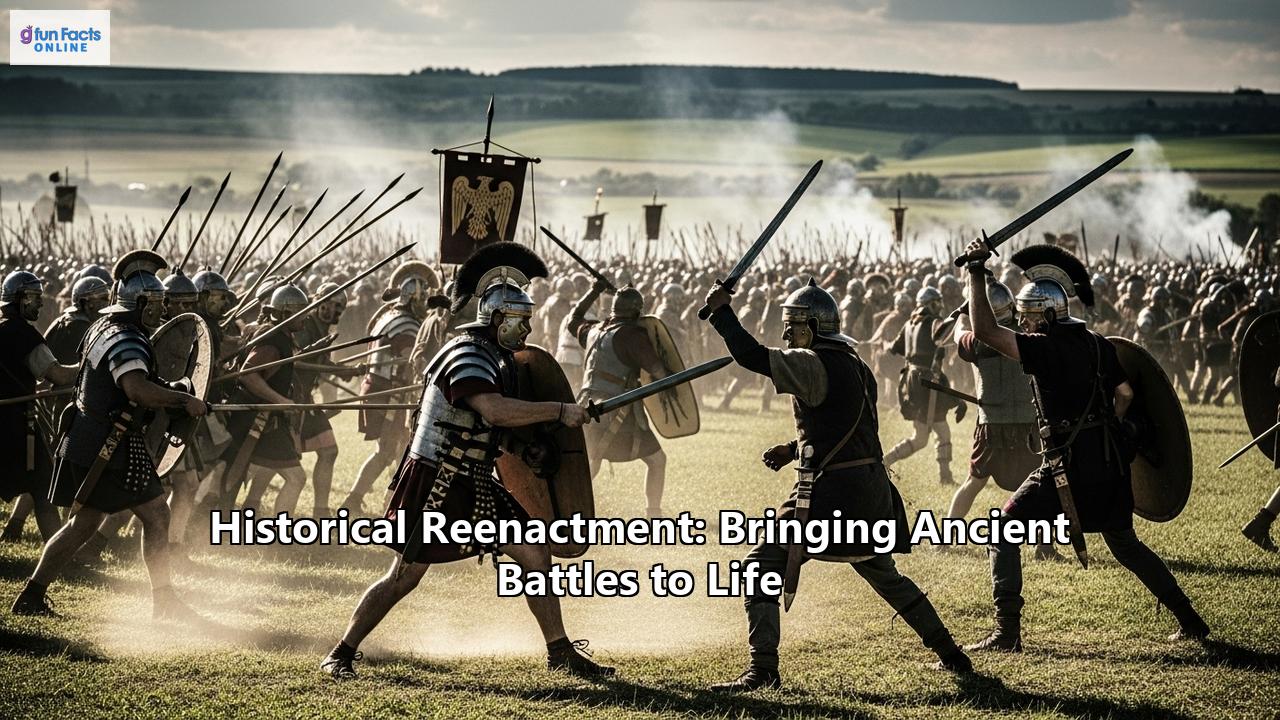
The dust kicks up, a cloud of grit and anticipation. The air, thick with the scent of wool, leather, and the nervous energy of hundreds, crackles with the clang of metal on metal. A horn blasts, a deep, resonant call that seems to echo not just across the field, but through the annals of time itself. This is not a movie set, nor a virtual reality simulation. This is the living, breathing world of ancient battle reenactment, a passionate and meticulous pursuit where history is not just read, but viscerally experienced.
For those who trade their modern attire for the heavy garb of a Roman legionary, the intricate armor of a Greek hoplite, or the rugged gear of a Celtic warrior, this is more than a hobby. It is a portal to the past, a way to connect with ancestors and understand the crucible of ancient warfare that shaped civilizations. This immersive experience allows participants to step back in time, to feel the weight of the armor, the camaraderie of the camp, and the adrenaline of the charge, all in the name of bringing history to life.
From Roman Spectacle to Modern Passion: A History of Stepping into the Past
The concept of restaging historical events is not a modern invention. The ancient Romans themselves were pioneers of the practice, staging grand naval battles (naumachiae) and recreations of famous land victories within their amphitheaters as public spectacles. These were often brutal affairs, far from the safety-conscious events of today. In the medieval period, tournaments frequently took on historical themes, with knights reenacting tales from antiquity.
The 17th century saw a rise in military displays and mock battles in England. As early as 1638, a staged battle in London featured costumed performers, and in 1645, even with the English Civil War ongoing, Roundhead soldiers reenacted a recent victory. The 19th century, with its Romantic fascination with the Middle Ages, saw historical reenactments become more widespread. The famous Eglinton Tournament of 1839 in Scotland, a grand medieval-style joust, drew a staggering 100,000 spectators.
The 20th century saw the formalization of many reenactment societies. In the United States, the Civil War centennial in the 1960s sparked a surge of interest, leading to the formation of numerous reenactment groups. It was also during this period that groups dedicated to earlier periods began to emerge. The Society for Creative Anachronism (SCA), founded in 1966, aimed to recreate aspects of pre-17th-century European cultures, including combat. In the United Kingdom, 1968 saw the founding of the Sealed Knot, which focuses on the English Civil Wars, and the Southern Skirmish Association, dedicated to the American Civil War.
This burgeoning interest soon expanded to encompass the ancient world. In 1972, the Ermine Street Guard was formed in Britain with a specific focus on the Roman army of the first century AD. This group, and others like it that have since formed across the globe, has been at the forefront of researching and reconstructing the arms, armor, and tactics of ancient soldiers with an ever-increasing dedication to authenticity.
The Legionaries, Hoplites, and Warriors: A Global Community of Ancient Reenactors
The world of ancient battle reenactment is a diverse tapestry of cultures and eras, with dedicated groups bringing to life the armies that once dominated the ancient world.
The Roman Legions: Roman reenactment is one of the most popular forms of ancient historical portrayal. Groups like the Ermine Street Guard in the UK and Legio XXI Rapax in Europe meticulously recreate the life of Roman soldiers. They often focus on a specific period, with the 1st and 2nd centuries AD, the era of the iconic lorica segmentata (segmented plate armor), being particularly popular. These groups participate in public displays, demonstrating drills, tactics, and even firing replica artillery like ballistas. Beyond the battlefield, they create immersive living history camps, complete with hand-stitched leather tents and displays of everyday Roman military life. Organizations like Nova Roma take a broader approach, encompassing all aspects of Roman society, from military matters to civilian life and political ceremonies. The Greek Hoplites: The might of the Greek city-states is brought back to life by groups such as The Hoplite Association in the UK and The Greek Phalanx on the US East Coast. These organizations focus on portraying the citizen-soldiers of the Classical era, famed for their phalanx formation. Members engage in events that showcase military drills and speculative reenactments of hoplite combat stages, from the initial advance under fire to the intense shield-to-shield pushing known as othismos. These groups often have an international reach, collaborating with other hoplite reenactors from around the world and participating in events in Greece itself. Viking and Celtic Warriors: The "Dark Ages" and the world of the so-called "barbarian" tribes are also a significant focus for many reenactors. Viking reenactment, in particular, has a large following, with groups in Europe and North America recreating the voyages and battles of these Norse seafarers. Events like the Wolin Viking Festival in Poland bring together hundreds of participants for epic, unchoreographed battles that are a mecca for "experimental archaeology." Celtic and other early medieval reenactment groups also thrive, offering a glimpse into the lives of the peoples who clashed with the Roman Empire and shaped the landscape of post-Roman Europe. These events often feature not just combat, but also reconstructions of daily life, from cooking and blacksmithing to ancient crafts.The Pursuit of Authenticity: Forging the Past in the Present
At the heart of historical reenactment is the relentless pursuit of authenticity. This dedication goes far beyond simply "dressing up." It is a scholarly and artisanal endeavor, where every piece of equipment, every stitch in a garment, and every battlefield maneuver is scrutinized for historical accuracy.
The process begins with exhaustive research. Reenactors delve into historical texts, archaeological reports, and academic studies to understand the material culture of the period they portray. This research informs the creation of their "kit"—the clothing, armor, and weaponry that are the most visible aspect of their impression. Many reenactors are skilled craftspeople, creating their own gear using period-appropriate materials and techniques.
The creation of a Roman legionary's armor, for example, is a complex undertaking. A lorica segmentata consists of numerous steel plates connected by leather straps and rivets, and making one requires a deep understanding of Roman metalworking and leatherworking techniques. Similarly, crafting a Greek hoplite's bronze helmet or a Viking's mail shirt is a testament to the reenactor's dedication to their craft. This hands-on approach, often a form of experimental archaeology, provides insights into the functionality and limitations of ancient equipment that cannot be gleaned from books alone. For instance, the practical experience of wearing and moving in replica armor can shed light on how ancient soldiers fought.
This commitment to authenticity extends to the "living history" aspect of reenactments. Encampments are set up to reflect the conditions of the period, with reenactors cooking period-appropriate food over open fires and using replica tools and utensils. For many, this immersive experience is a key part of the appeal, offering a chance to truly step away from the modern world and live, for a weekend, as their ancestors might have.
However, the pursuit of authenticity is not without its debates. Within the reenactment community, there are varying levels of adherence to historical accuracy. Some, often colloquially known as "stitch counters," insist on the most minute details being correct, while others, sometimes termed "farbs," are more relaxed in their standards. This spectrum reflects a broader conversation about the purpose of reenactment: is it a form of academic research, a public education tool, or a recreational hobby? For most, it is a blend of all three.
The Roar of the Crowd, the Clash of Steel: The Reenactment Event
The culmination of months, and often years, of research and preparation is the reenactment event itself. These gatherings range from small, local living history displays to massive international battles with thousands of participants. Organizing such events is a significant logistical challenge, requiring meticulous planning to ensure the safety and enjoyment of both participants and spectators.
Event organizers must secure suitable locations, which can range from actual historical sites to large, open fields. They are responsible for coordinating the various reenactment groups, establishing camping areas, and providing necessary amenities. For battle reenactments, safety is the paramount concern.
Strict safety rules are in place to prevent injuries during mock combat. While the fighting is often full-contact and unchoreographed, weapons are blunted, and certain types of strikes, such as thrusts to the head, are typically forbidden. Reenactors undergo training to learn how to fight safely and effectively, and safety officers are present on the battlefield to monitor the action and intervene if necessary. The goal is to create a spectacle that is both dramatic and safe for everyone involved.
For the public, these events are a unique educational opportunity. They offer a chance to see, hear, and smell a version of the past, to interact with knowledgeable reenactors, and to gain a more tangible understanding of history than can be found in a textbook. For the reenactors, it is a chance to share their passion, to test their skills and equipment, and to experience the camaraderie of being part of a historical army.
More Than a Game: The Educational and Personal Impact
The motivations for participating in historical reenactment are as varied as the individuals themselves. For many, it is a passion for history and a desire to learn through direct experience. As one reenactor put it, "You can read that knights wore heavy armor, but you get a different point of view when you lift and wear the armor yourself." This hands-on approach can lead to new insights and a deeper understanding of the past.
For others, it is a form of escapism, a chance to step away from the complexities of modern life and immerse themselves in a different time and place. There is also a strong sense of community and camaraderie among reenactors, who bond over their shared interests and experiences. Many forge lasting friendships with people from all over the world.
The educational impact of historical reenactment is significant. For the public, and especially for schoolchildren, these events can spark an interest in history and make the past feel more real and relevant. Some reenactment groups even visit schools to give presentations and allow students to handle replica equipment. By providing a "total immersion experience," reenactments can bring history to life in a way that is both engaging and memorable.
However, historical reenactment is not without its critics. Some historians argue that reenactments can oversimplify complex historical events and focus too much on the "bangs and smoke" of battle at the expense of the social and political context. There is also the danger of "blind patriotism" or the romanticization of war. Reenactors themselves are often keenly aware of these criticisms and strive to present a nuanced and accurate portrayal of the past.
Another important and evolving conversation within the reenactment community revolves around issues of diversity and inclusion. Historically, many reenactment groups have been predominantly white and male, which can perpetuate a narrow and exclusionary view of the past. There is a growing movement to diversify the hobby and to tell the stories of the women and people of color who also played a role in historical events. This includes portraying female soldiers who disguised themselves as men and highlighting the contributions of individuals from different ethnic backgrounds. These efforts are helping to create a more inclusive and historically accurate representation of the past.
The Future of the Past: Technology and the Evolution of Reenactment
Just as the practice of historical reenactment has evolved over the centuries, it continues to change and adapt in the modern era. Technology is playing an increasingly important role in both the research and the presentation of historical battles.
Digital tools like 3D modeling and virtual reality (VR) are being used to reconstruct ancient battlefields with unprecedented accuracy. By layering historical maps, archaeological data, and terrain information, researchers can create dynamic models that allow them to test theories about ancient tactics and strategies. VR experiences can even allow people to "walk" these virtual battlefields, offering an immersive educational experience that was previously impossible.
Augmented reality (AR) is another technology that is being used to enhance the visitor experience at historical sites. By pointing a smartphone or tablet at a modern landscape, visitors can see a virtual reconstruction of what was there in the past, from ancient fortifications to entire armies on the march.
This fusion of traditional reenactment with cutting-edge technology promises an exciting future for the hobby. It offers new ways to engage with the past, to test historical theories, and to share the stories of ancient battles with a wider audience.
From the thunderous charge of Roman legions to the disciplined advance of a Greek phalanx, the world of ancient battle reenactment is a vibrant and passionate testament to the enduring power of history. It is a world where the past is not just remembered, but relived, where dedicated individuals don the armor of their ancestors and, for a fleeting moment, bring the echoes of ancient battles roaring back to life. Through their meticulous research, skilled craftsmanship, and unwavering passion, they offer a unique and invaluable window into the conflicts that shaped our world, ensuring that the lessons and legacies of these ancient struggles are never forgotten.
Reference:
- https://www.yesandyes.org/2013/01/true-story-im-historical-war-reenactor.html
- https://www.aimircg.com/the-role-of-3d-visualization-in-historical-building-reconstruction/
- https://www.ancient-origins.net/news-history-archaeology/bronze-age-warfare-0013591
- https://www.researchgate.net/publication/338200312_Civil_War_Battlefield_Experience_Historical_Event_Simulation_using_Augmented_Reality_Technology
- https://www.gawkerarchives.com/they-were-amazing-soldiers-interview-with-a-confeder-1714165309
- https://www.fastercapital.com/content/Community-challenges-or-contests--Historical-Reenactments--Reliving-the-Past--The-Thrill-of-Historical-Reenactments.html
- https://www.youtube.com/watch?v=Nl-Nn2Z-n5U
- https://www.youtube.com/watch?v=OOO7zwVFWeA
- https://research.manchester.ac.uk/en/studentTheses/experimental-archaeology-and-siege-warfare-analysing-ancient-sour
- https://revolutionarywarjournal.com/interview-with-african-american-reenactor-noah-ned-hector-lewis-part-one-of-three/
- https://sevenswords.uk/get-started-historical-re-enactment-gear-groups-and-events/
- https://www.pewcenterarts.org/post/fighting-man-conversation-civil-war-reenactor-wendy-ramsburg
- https://www.hoplites.org/
- https://www.thegreekphalanx.org/
- https://www.reenactor.net/index.php/page,213.html
- https://www.hoplites.org/category/shows/
- https://www.youtube.com/watch?v=DgKycy23AZs&pp=0gcJCRsBo7VqN5tD
- https://www.youtube.com/watch?v=oNEW4qPacGw
- https://www.youtube.com/watch?v=y0bM1sRdwds
- https://www.youtube.com/watch?v=1EfyWOCiqk0
- https://www.leidenarchaeologyblog.nl/articles/weaponised-experimental-archaeology
- https://the-past.com/feature/a-conflict-reimagined-creating-a-digital-model-of-the-roman-assault-on-burnswark-hill/
- https://exarc.net/issue-2019-1/mm/how-run-reenactment-part-1
- https://jessicarector.com/logistical-planning-for-a-large-scale-event/
- https://civilwartalk.com/threads/help-ideas-for-organizing-a-reenactment.18519/
- https://ibw21.org/commentary/the-enduring-battle-to-diversify-historical-reenactment/
- https://www.researchgate.net/publication/220355633_Authentic_Interactive_Reenactment_of_Cultural_Heritage_with_3D_Virtual_Worlds_and_Artificial_Intelligence
- https://civilwartalk.com/threads/using-augmented-reality-to-recreate-battlegrounds-and-historic-sites.169209/
- https://www.youtube.com/watch?v=pfGVASapEvk
- https://public-history-weekly.degruyter.com/11-2023-6/gender-reenactment/
- https://www.cambridge.org/core/books/abs/cambridge-companion-to-the-literature-of-the-american-civil-war-and-reconstruction/reenactment-as-resistance/B7AA3C72B3BBEAC0F7F37ADAFB93F9BE
- https://medium.com/@badreddinebousseta/3d-modeling-and-cultural-heritage-preserving-the-past-through-digital-reconstruction-ce0695260504
- https://www.battlefields.org/visit/mobile-apps/battlefields-vr
- https://digitalmapsoftheancientworld.com/digital-maps/ancient-battles/
- https://deadconfederates.com/2023/09/02/notes-on-digital-modeling/