
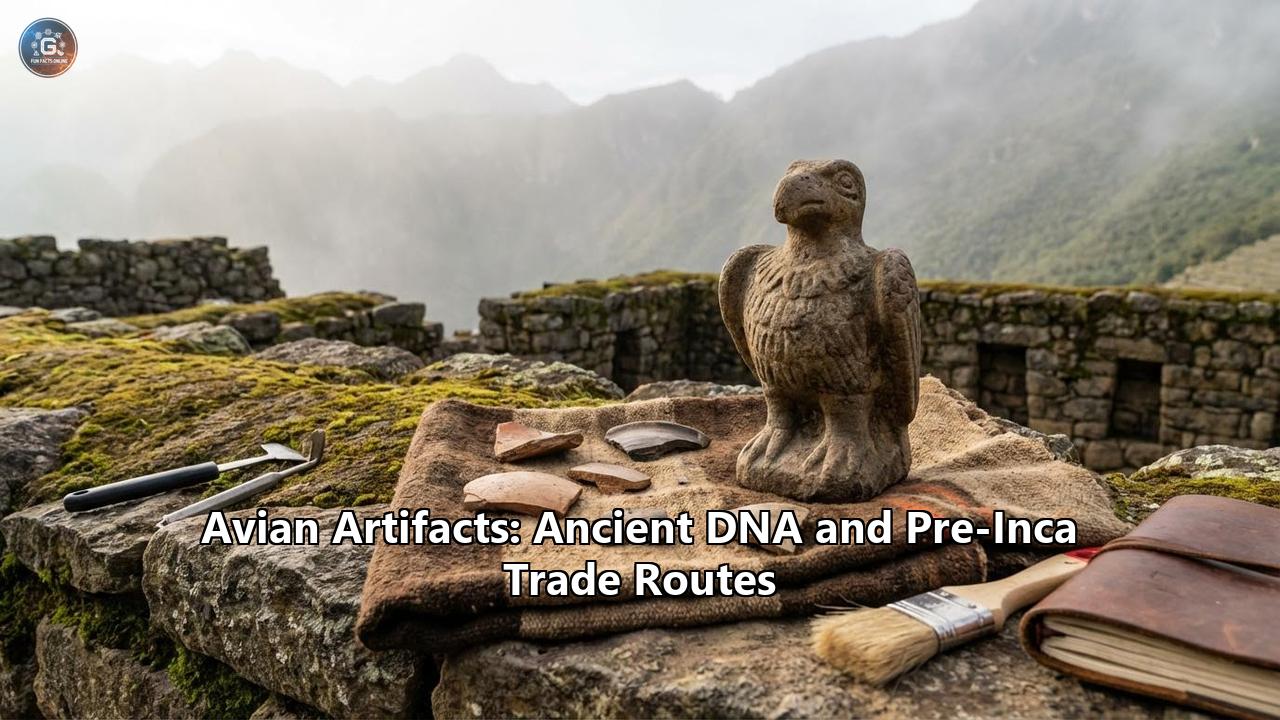
The Atacama Desert in northern Chile and the arid Pacific coast of Peru are among the most inhospitable environments on Earth. Stretching along the western edge of South America, these landscapes are defined by towering sand dunes, rainless skies, and a stark, hyper-arid beauty. Nothing about this environment suggests the presence of the Amazon rainforest. Yet, for over a century, archaeologists excavating the elite tombs of pre-Columbian cultures in these coastal deserts have unearthed a breathtaking anomaly: the brilliant, iridescent plumage of tropical rainforest birds.
Dazzling headdresses woven from the scarlet, blue, and gold feathers of macaws; intricately layered tabards; and even intact, mummified parrots have been pulled from the dust of 1,000-year-old graves. For decades, historians and archaeologists marveled at these avian artifacts, assuming that ancient traders had simply bartered bags of plucked feathers across the formidable Andes mountains. But recent breakthroughs in ancient DNA sequencing, isotope chemistry, and landscape modeling have shattered this assumption, revealing a reality that is far more complex, ambitious, and astonishing.
Centuries before the Inca Empire constructed its famous Qhapaq Ñan (the vast Andean road system), intricate pre-Inca trade networks were already moving live, squawking Amazonian parrots across the continent. These birds were carried from the humid lowlands of the Amazon, over freezing mountain passes exceeding 10,000 feet in elevation, and down into the parched coastal deserts—where they were kept alive for years as captive producers of sacred plumage.
The story of these avian artifacts is a sweeping epic of ancient globalization, indigenous science, and the profound spiritual power of the natural world. It completely rewrites our understanding of isolation and connectivity in the pre-Columbian Americas.
The Cultural Currency of the Andes
To understand why ancient humans would undertake the monumental task of transporting delicate rainforest birds across the highest mountain range in the Western Hemisphere, one must first understand the spiritual and economic currency of the ancient Andes.
In pre-Hispanic societies—such as the Wari, Tiwanaku, Chimú, and the Ychsma confederation—feathers were not merely decorative. They were the ultimate symbol of wealth, power, and divine connection. To wear a garment shimmering with the feathers of a macaw was to wear the sun, the sky, and the distant, mythical jungle. The Amazon basin, lying far to the east of the Andean peaks, was viewed by coastal peoples as a realm of fierce life force, esoteric medicines, and powerful deities. Possessing pieces of that realm conveyed immense political and religious prestige.
Artifacts recovered from sites like Pachacamac, a massive pre-Inca religious center and oracle on the central coast of Peru, illustrate this obsession. In 2005, archaeologists discovered an intact, stone-lined elite tomb belonging to the Ychsma culture (flourishing roughly between 1000 and 1470 CE). Inside were dozens of funerary bundles featuring elaborate false heads and ceremonial headdresses adorned with hundreds of bright tropical feathers.
The visual impact of these artifacts is staggering. Craftsmen utilized a technique called feather mosaic, tying individual feathers to long strings and then sewing those strings onto cotton or camelid-fiber textiles in overlapping rows. The result was a velvety, structural fabric that shimmered with the intense, un-fading colors of the rainforest. Because the desert environments where these cultures lived lacked such vividly colored fauna, the demand for exotic avian imports was insatiable.
The Mummies of the Atacama
While the textiles found in Peru showcase the end product of this demand, discoveries further south in the Atacama Desert reveal the grim and fascinating mechanics of the trade. Here, it was not just feathers that were buried, but the birds themselves.
A team led by anthropological archaeologist José M. Capriles from Pennsylvania State University conducted a systematic review of mummified parrots and macaws found in ancient oasis communities like Pica 8 in northern Chile. Dating back to between 1100 and 1450 CE—the period between the collapse of the Tiwanaku empire and the aggressive expansion of the Inca—these mummies offer a haunting glimpse into ancient aviculture.
The preservation of the birds is extraordinary, aided by the complete lack of moisture in the Atacama. Yet, their poses are often bizarre and unsettling. Many of the parrots were mummified with their beaks wide open and their tongues sticking out. Others were preserved with their wings fully spread in a posture of eternal flight.
"We have absolutely no idea why they were mummified like this," Capriles noted in his findings. The preparation of the birds was deliberate; they were meticulously eviscerated through the cloaca—a technique that prevented decomposition from the inside out—and were frequently wrapped tightly in textiles or custom-made leather bags before being placed alongside human dead in elite burials.
But the physical condition of the mummies tells a darker story about their lives in the desert. These were not pampered pets. Analysis of the skeletal remains revealed healed fractures and signs of physical trauma. The birds had their wings clipped or broken, and their feet strapped to prevent them from flying away. Furthermore, they were routinely plucked. "Some of these birds did not live a happy life," Capriles explained. "They were kept to produce feathers and their feathers were plucked out as soon as they grew in". This continuous, painful harvesting was a method of sustainable resource extraction, ensuring a steady supply of sacred plumage without the need to constantly traverse the deadly mountain passes for fresh birds.
Cracking the Genetic Code
Despite the visual evidence of mummies and feather mosaics, the exact origin of the birds remained a topic of scientific debate. Were these species that had somehow adapted to the western slopes of the Andes? Were they bred locally in large coastal aviaries from a small founder population? Or were they continually harvested from the deep wild of the Amazon?
To answer these questions, an international team of researchers—including conservation ecologist George Olah from the Australian National University—turned to cutting-edge genomic analysis. Their research, published in Nature Communications, focused on the delicate, centuries-old feathers recovered from the Ychsma tombs at Pachacamac.
Extracting ancient DNA (aDNA) from archaeological feathers is a notoriously difficult process. Feathers contain very little cellular material to begin with, and after nearly a millennium in a desert tomb, the genetic material is highly degraded. However, using specialized techniques, the team successfully sequenced the mitochondrial DNA of the ancient feathers.
The results were definitive. The genomic analysis identified four distinct Amazonian species within the burial assemblages: the Scarlet Macaw (Ara macao), the Red-and-green Macaw (Ara chloropterus), the Blue-and-yellow Macaw (Ara ararauna), and the Mealy Amazon (Amazona farinosa).
Furthermore, phylogenetic analysis placed these ancient samples squarely within the haplogroups characteristic of the eastern Peruvian Amazon and the broader Amazon Basin. If the birds had been bred in captivity on the coast for generations, scientists would expect to see a genetic bottleneck—a signature of low genetic diversity resulting from inbreeding. Instead, the ancient feathers displayed a high level of genetic diversity, perfectly matching wild populations in the distant rainforest. This proved that the pre-Inca coastal societies were not running self-sustaining breeding programs; they were continuously tapping into a vast, active supply chain that drew wild birds directly from the jungle.
The Isotopic Smoking Gun
While the DNA proved where the birds came from, another scientific discipline proved how they arrived: Isotope chemistry.
Feathers are made of keratin, a protein that grows incrementally. As a feather grows, it locks in the chemical signatures—specifically the isotopes of carbon and nitrogen—of the food and water the bird consumes. By analyzing these isotopic ratios, scientists can reconstruct an animal's diet with incredible precision.
If traders had simply hunted the birds in the Amazon, plucked them, and carried the feathers over the mountains, the isotopic signature of the Pachacamac feathers would reflect a pure rainforest diet. Rainforests are dominated by C3 plants, which leave a specific carbon isotope ratio in the food web.
However, when the researchers analyzed the archaeological feathers, they found something entirely different. The isotopic signatures revealed that while the birds were growing these specific feathers, their diet consisted heavily of C4 plants—specifically maize (corn), a staple crop of the Andean agriculturalists. Even more astoundingly, the nitrogen isotopes indicated the consumption of marine protein—fish and guano-fertilized crops from the Pacific coast.
This was the smoking gun. It provided irrefutable proof that the birds had not been killed in the Amazon. They had been captured alive, carried across the Andes, and kept in captivity on the Pacific coast for a significant amount of time. They were fed a diet provided by their human caretakers—maize and marine scraps—and they lived long enough in this new, alien environment to molt their old rainforest feathers and grow entirely new ones.
"The feathers recovered from the tomb were not feathers brought from the rainforest," the researchers concluded. "They were feathers grown in Peru's arid coastal zone, on birds that had been carried across the Andes".
Traversing the Roof of the World
The logistical reality of this trade network is almost beyond comprehension. The Amazon basin and the Pacific coast are separated by the Andes, the longest continental mountain range in the world, featuring peaks that easily exceed 20,000 feet.
To transport live, highly sensitive tropical birds across this barrier required an immense degree of ecological knowledge, logistical planning, and physical endurance. Through computational landscape modeling, researchers mapped the paths of least resistance that ancient traders likely utilized. These trans-Andean corridors and river routes connected the humid lowlands to the high-altitude puna (the alpine tundra of the Andes), and finally down the steep western slopes to the desert.
The journey would have taken weeks, perhaps months. Traders relied on large caravans of llamas, the primary pack animals of the pre-Columbian Andes. But while llamas are built for the freezing, thin air of the highlands, tropical parrots are not. Macaws and parrots are strictly rainforest dwellers, adapted to high humidity, dense forest canopies, and warm temperatures. Their natural home ranges rarely exceed 150 kilometers.
Transporting them required careful husbandry on the move. Traders would have had to protect the birds from extreme temperature fluctuations—from the sweltering heat of the jungle to the sub-zero blizzards of the mountain passes. They had to carry specialized food to keep the birds alive until they could be transitioned to a coastal diet of maize. The survival of these birds over 300 to 500 kilometers of brutal terrain speaks to a highly sophisticated, formalized system of animal care and commercial exchange.
The trade likely involved multiple intermediaries. For example, indigenous groups living in the Amazonian foothills, such as the Chachapoyas, may have been responsible for trapping the birds using nets or blowdarts equipped with paralyzing agents. The birds would then be traded to highland middlemen, who carried them over the mountain passes, before finally selling them to coastal elites or religious functionaries. Places like the Cerro de la Sal (Salt Mountain) in the Amazonian foothills served as bustling inter-regional hubs where salt from the mountains was traded for jungle products, including hallucinogenic plants, pelts, and live birds.
Redrawing the Pre-Columbian Map
For a long time, the narrative of pre-Columbian South America was dominated by the Inca. Because the Inca built an empire that stretched from modern-day Colombia to Chile, complete with monumental stone architecture and a vast, paved road network, it was easy to assume that large-scale integration and long-distance trade were uniquely Inca achievements.
The discovery of the live avian trade route dismantles this misconception. The birds found in the Atacama and the feathers found at Pachacamac pre-date the Inca Empire by centuries.
"This discovery challenges long-held assumptions that pre-Inca societies were isolated or fragmented," Dr. Olah explained. "Instead, we see evidence of organised exchange, ecological knowledge and logistical planning that connected vastly different environments long before imperial roads formalised these connections".
The fact that this trade persisted through periods of intense political upheaval is equally remarkable. The era between 1100 and 1450 CE was marked by the collapse of massive highland empires like the Tiwanaku and Wari, and the fragmentation of the region into smaller, competing regional chiefdoms. Yet, despite the lack of a centralized, overarching state to secure the roads, the llama caravans kept moving. The demand for the sacred feathers was so absolute, and the commercial networks so deeply entrenched, that the trade transcended political borders and the rise and fall of empires.
The Enduring Mystery of the Feathered Gods
Today, the mummified parrots of the Atacama and the brilliant feather textiles of Pachacamac sit in climate-controlled museum cases, silent testaments to a vanished world. They offer a rare, tangible link between the modern scientific laboratory and the spiritual beliefs of the ancient Americas.
Every thread in a pre-Columbian feather mosaic represents a staggering expenditure of human energy. It represents a trapper waiting in the humid canopy of the Amazon; a llama caravan struggling for breath in the freezing Andean passes; a coastal priest carefully tending to an exotic, squawking creature from a land he had never seen.
By decoding the DNA and chemical signatures locked within these fragile avian artifacts, modern science has done more than just map an ancient trade route. It has revealed the lengths to which humanity will go in pursuit of beauty, status, and a connection to the divine. The vibrant feathers of the macaws were the pre-Inca world's ultimate luxury—a brilliant flash of jungle green and sunset red, shining defiantly in the endless, pale dust of the desert.
Reference:
- https://www.earth.com/news/parrot-dna-reveals-ancient-trade-route-across-the-andes/
- https://www.iflscience.com/mummified-parrots-found-in-the-atacama-desert-transported-hundreds-of-miles-while-alive-59191
- https://www.popsci.com/science/ancient-parrot-trade-peru-inca/
- https://greekreporter.com/2026/03/11/parrots-amazon-trade-andes-before-inca-empire/
- https://www.sciencealert.com/mummified-birds-in-the-atacama-desert-reveal-a-truly-dark-side-of-history
- https://www.discovermagazine.com/ancient-dna-reveals-a-pre-inca-trade-network-that-carried-parrots-alive-across-the-andes-to-coastal-peru-48797
- https://www.reddit.com/r/PrecolumbianEra/comments/1rqjovt/ancient_dna_reveals_a_preinca_trade_network_that/
- https://reporter.anu.edu.au/all-stories/analysis-of-ancient-parrot-dna-reveals-sophisticated-long-distance-animal-trade-network-that-pre-dates-the-inca-empire
- https://www.smithsonianmag.com/smart-news/pre-columbian-llama-caravans-transported-exotic-birds-across-andes-180977379/
- https://www.anthropology.net/p/the-birds-that-crossed-the-andes
- https://www.researchgate.net/publication/328534519_The_influence_of_Amazonia_on_state_formation_in_the_ancient_Andes
- https://www.jpost.com/archaeology/article-889740
- https://journals.openedition.org/nuevomundo/1457