
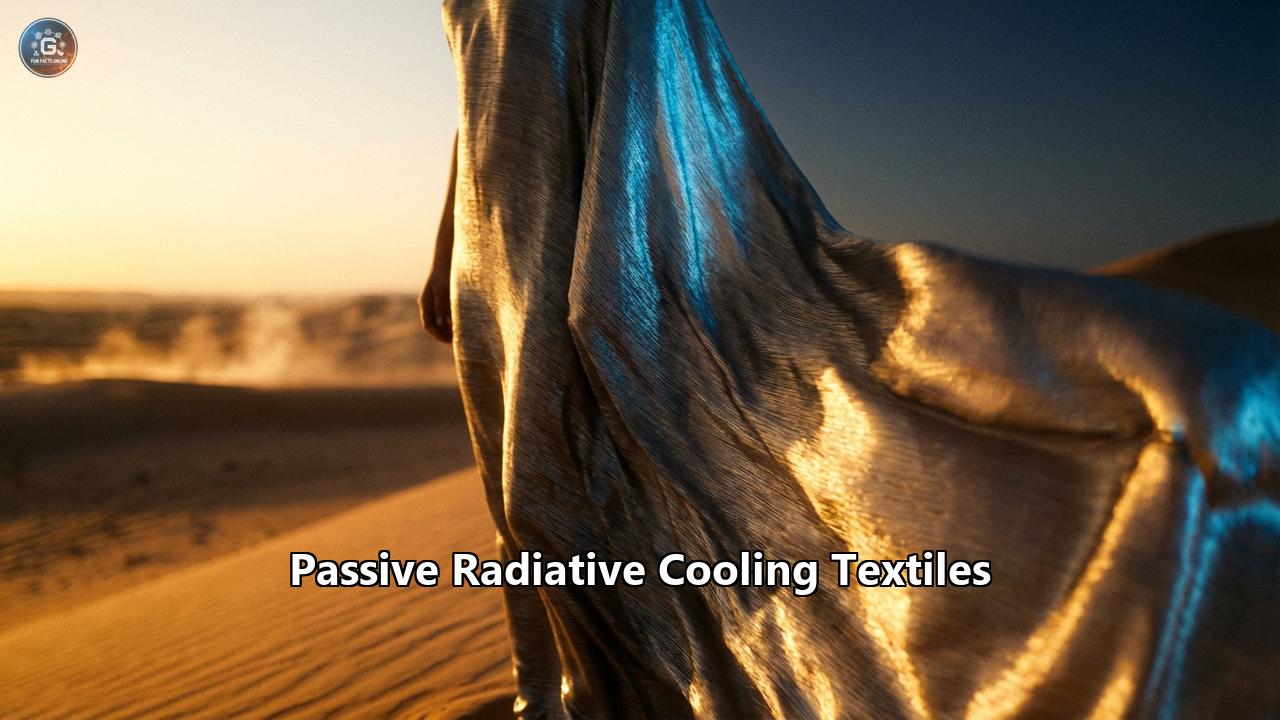
In an era defined by rising global temperatures and the intensifying urban heat island effect, the quest for personal thermal comfort has never been more critical. For decades, we have relied on energy-intensive air conditioning systems to cool our spaces, and simple moisture-wicking fabrics to cool our bodies. However, as heat waves become more frequent and severe, these traditional methods are hitting their limits. Enter Passive Radiative Cooling (PRC) textiles—a revolutionary leap in material science that promises to cool the human body not by using energy, but by harnessing the cold vastness of outer space.
Imagine wearing a shirt that doesn't just wick sweat but actively pumps heat away from your skin, sending it through the atmosphere and dumping it into the universe, even under the blazing noon sun. This is not science fiction; it is the reality of modern nanophotonic engineering. PRC textiles represent a paradigm shift in how we interact with our environment, offering a zero-energy solution that could reshape fashion, medicine, agriculture, and energy sustainability. This comprehensive guide delves deep into the physics, materials, manufacturing, and limitless potential of this fabric revolution.
Part 1: The Physics of Cool – How It Works
To understand how a piece of fabric can cool you down without a battery or a fan, we must first understand the invisible dance of energy that surrounds us. PRC textiles operate on two fundamental principles of thermodynamics and optics: Solar Reflection and Thermal Emission.
1.1 The Solar Spectrum and the Art of Reflection
The sun bombards the Earth with energy primarily in the ultraviolet (UV), visible, and near-infrared (NIR) spectrums (0.3–2.5 μm). Traditional clothing absorbs a significant portion of this energy. A black cotton t-shirt, for instance, absorbs visible light and converts it into heat, raising the wearer's temperature. Even white cotton, while reflective of visible light, often absorbs near-infrared radiation.
PRC textiles are engineered to be hyper-reflective. They are designed to bounce back 95% or more of the entire solar spectrum. This prevents the fabric from heating up in the first place, acting as a high-tech shield against the sun's radiative assault.
1.2 The Atmospheric Window: A Portal to Space
Reflection alone is not enough. To actively cool an object below ambient temperature, it must shed the heat it generates (or the metabolic heat of the human wearer). This is where the magic of "Thermal Emission" comes in.
All objects emit heat in the form of infrared radiation. However, the Earth's atmosphere is like a blanket; it contains water vapor, CO2, and ozone that absorb most of this heat and radiate it back, keeping the planet warm (the greenhouse effect). But there is a loophole—a specific range of wavelengths between 8 and 13 micrometers (μm) known as the "Atmospheric Window."
In this specific bandwidth, the atmosphere is transparent. Radiation emitted at these wavelengths passes right through the air, clouds, and gases, escaping directly into the freezing void of outer space, which sits at a chilly 3 Kelvin (-270°C).
PRC textiles are chemically and structurally tuned to emit their heat precisely within this 8-13 μm window. By doing so, they bypass the atmospheric blanket and couple the wearer thermally to deep space. The result is a net loss of heat, allowing the fabric—and the skin beneath it—to drop below the temperature of the surrounding air.
1.3 Kirchhoff’s Law and Selective Emissivity
According to Kirchhoff's law of thermal radiation, for an arbitrary body in thermal equilibrium, emissivity is equal to absorptivity. This presents a challenge: materials that emit well in the infrared often absorb well in the solar spectrum. The "Holy Grail" of PRC textile design is to break this link through spectral selectivity.
Engineers must create materials that are:
- Broadband Reflectors in the solar spectrum (0.3–2.5 μm) to block heat input.
- Selective Emitters in the mid-infrared (8–13 μm) to maximize heat output.
Achieving this dual property requires manipulating matter at the nanoscale, creating structures smaller than the wavelength of light to control how photons interact with the fabric.
Part 2: Material Science Innovation – weaving the Invisible
The transition from theoretical physics to wearable reality has been driven by breakthroughs in polymer science and nanotechnology.
2.1 Nanoporous Polyethylene (nanoPE)
The pioneer of this field is polyethylene (PE). Common PE (like plastic wrap) is transparent to infrared, which is good, but it is also transparent to visible light, which is bad (it would act like a greenhouse on your skin).
Researchers at Stanford and other institutions developed Nanoporous Polyethylene (nanoPE). By introducing tiny pores—ranging from 50 to 1000 nanometers—into the PE structure, they changed its optical properties.
- The Scattering Effect: These pores are similar in size to the wavelength of visible light. This causes them to scatter incoming sunlight intensely, turning the transparent plastic into an opaque, white material that reflects solar radiation.
- The IR Transparency: Because the pores are much smaller than infrared wavelengths, the material remains transparent to body heat, allowing it to escape.
However, PE is naturally hydrophobic (water-repelling) and feels like plastic. Making it wearable requires modifying it to be breathable and comfortable, often by coating it with hydrophilic agents or weaving it into microfibers.
2.2 PVDF and Ferroelectric Polymers
Poly(vinylidene fluoride) (PVDF) and its copolymer PVDF-HFP are currently the superstars of PRC research. Unlike PE, which relies largely on structure, PVDF has intrinsic chemical bonds (C-F bonds) that vibrate at frequencies matching the atmospheric window. This means the material itself is a powerful emitter of infrared radiation.
When electrospun into nanofibers, PVDF creates a mat that is:
- Highly reflective due to the scattering of light by the nanofibers.
- Highly emissive due to the molecular vibrations of the polymer.
- Breathable due to the porous nature of the fiber mat.
2.3 Inorganic Nanoparticles: The Power Boosters
To supercharge the cooling effect, scientists embed inorganic nanoparticles into the polymer fibers. Common additives include:
- Titanium Dioxide (TiO2): Used in sunscreen and white paint, it is excellent at scattering visible light.
- Silicon Dioxide (SiO2): Enhances infrared emissivity.
- Zinc Oxide (ZnO) & Magnesium Oxide (MgO): These offer a balance of high solar reflectance and antimicrobial properties, crucial for clothing.
By creating a "Metafabric"—a composite of polymer fibers doped with these nanoparticles—researchers can fine-tune the spectral response. For example, a mixture of varying particle sizes can ensure that all wavelengths of sunlight are scattered, preventing any heat absorption.
2.4 MXene and Advanced Composites
Recent 2024-2025 research has introduced MXenes (two-dimensional inorganic compounds) into the mix. MXenes have exceptional photothermal properties. When combined with PRC polymers, they can create fabrics that are not just passive coolers but "smart" thermal regulators. For instance, a PLA (Polylactic Acid) fiber core coated with MXene can provide electromagnetic shielding while maintaining radiative cooling properties, opening doors for military and industrial applications.
Part 3: The "Janus" Revolution – Sweat Meets Space
One of the biggest criticisms of early radiative cooling fabrics was comfort. Wearing a plastic-based shirt might cool you radiatively, but if it traps sweat, you will still feel hot and clammy. This led to the development of Janus fabrics.
Named after the two-faced Roman god, Janus fabrics have two distinct sides with opposing properties:
- Inner Layer (Skin-facing): Hydrophilic (water-loving). This layer pulls sweat rapidly away from the skin.
- Outer Layer (Sun-facing): Hydrophobic (water-fearing) and Radiative Cooling. This layer resists external moisture (rain) while emitting heat.
3.1 The Mechanism of Unidirectional Moisture Transport
The Janus structure creates a "pump" effect. Sweat is absorbed by the inner layer and wicked through micro-channels to the outer layer, where it spreads out and evaporates. The hydrophobic outer barrier prevents the sweat from soaking back in towards the skin.
Recent innovations use electrospinning to layer these materials. For example, a 2025 study utilized a hydrophobic PVDF layer loaded with MgO nanoparticles for cooling, bonded to a hydrophilic cellulose/polyurethane layer for wicking. This combination achieved a cooling effect of over 8°C while keeping the skin drier than cotton.
Part 4: Manufacturing & Scalability – From Lab to Fab
For PRC textiles to change the world, they must be mass-producible.
4.1 Electrospinning
This technique uses electric force to draw charged threads of polymer solutions into fibers with diameters in the order of some hundred nanometers. It is perfect for creating the porous, hierarchical structures needed for light scattering. While traditionally slow, recent advancements in multi-nozzle electrospinning and needleless electrospinning have scaled this up to industrial rolls of fabric.
4.2 Scalable Industrial Knitting and Weaving
A breakthrough in 2021 by researchers at Huazhong University of Science and Technology demonstrated the first woven metafabric. Instead of making a delicate nanofiber mat, they created composite yarns (using TiO2, PLA, and PTFE) that could be woven using standard commercial textile looms.
This was a game-changer. It meant PRC textiles could be:
- Durable: Withstanding mechanical stress like stretching and abrasion.
- Washable: Surviving standard laundry cycles without losing cooling properties.
- Cut-and-Sew Compatible: Treated just like normal fabric in garment factories.
4.3 Spray Coating and Dip Coating
For retrofitting existing textiles, spray coating is a viable path. A solution containing the PRC polymer and nanoparticles is sprayed onto standard fabrics like cotton or polyester. While this sometimes compromises breathability, new "dip-and-cure" methods allow the coating to coat individual fibers without clogging the gaps between them, preserving air permeability.
Part 5: Diverse Applications – Beyond the T-Shirt
The potential of PRC textiles extends far beyond keeping joggers cool.
5.1 Personal Thermal Management (Fashion & Sport)
The most immediate application is apparel. Brands like LifeLabs Design have already launched clothing lines based on PE fabrics that claim to lower skin temperature by nearly 2°C compared to cotton.
- Athletic Performance: For endurance athletes, maintaining a lower core temperature can significantly boost performance. PRC sportswear reduces the cardiac load required to pump blood to the skin for cooling.
- Everyday Wear: In hot climates, these fabrics can reduce the reliance on air conditioning. If everyone in a hot office wore PRC clothing, the thermostat could be set higher, saving massive amounts of energy.
5.2 Medical Frontiers: Healing and Care
One of the most exciting emerging fields is medical textiles.
- Cooling Wound Dressings: A 2024 study highlighted a "daytime radiative cooling dressing" made from silk fibroin and polyamide. By lowering the temperature of a wound by ~7°C, the dressing significantly reduced inflammation and oxidative stress. This "thermal immunotherapy" accelerated healing in rat models, offering a non-drug way to treat chronic wounds or burns.
- Fever Management: For patients with high fevers, especially in resource-poor settings without AC, a PRC blanket could provide life-saving passive cooling without the shock of ice baths.
5.3 Agricultural Transformation
Plants and livestock suffer from heat stress just like humans.
- Crop Protection: PRC agricultural films and nets can cover crops. By reflecting NIR light and emitting heat, they can lower the canopy temperature, reducing water loss through transpiration and preventing heat damage. i2Cool reported case studies where passive cooling films increased crop yields by 20% in greenhouses.
- Livestock Cooling: Cows produce less milk when heat-stressed. PRC blankets or barn roofing materials can passively lower the temperature of the livestock environment, improving animal welfare and productivity without expensive misting systems.
5.4 The Built Environment
Textiles are used heavily in architecture.
- Tents and Awnings: A standard canvas tent traps heat. A PRC tent reflects the sun and emits heat, potentially keeping the interior 5-10°C cooler than the outside air. This is vital for refugee camps in arid regions or military operations.
- Soft Logistics: Covers for shipping pallets can prevent perishable goods (pharmaceuticals, food) from spoiling on the tarmac, reducing the need for heavy refrigerated containers.
Part 6: Smart & Multifunctional Integration
The future of PRC is "Active-Passive" integration.
6.1 Energy Harvesting (TENGs)
Imagine a shirt that cools you down and charges your watch. Researchers have successfully integrated Triboelectric Nanogenerators (TENGs) with radiative cooling layers. A study in 2023 demonstrated a textile composed of PVDF-HFP/SiO2 that acted as a cooler while generating electricity from body movement. The hydrophobic nature of the cooling layer also protected the electrical components from sweat.
6.2 Adaptive and Responsive Textiles
Nature is rarely static, and neither should our clothes be.
- The Butterfly Effect: Inspired by the Morpho butterfly, researchers are developing "thermochromic" PRC textiles. These fabrics feature a layer that changes color or structure based on temperature. In the cold, they turn dark or close their pores to trap heat. In the heat, they turn white or open pores to maximize radiative cooling.
- Shape Memory Polymers: These fibers physically expand or contract in response to humidity or heat, altering the breathability of the fabric dynamically.
Part 7: Challenges & Solutions
Despite the promise, hurdles remain on the road to mass adoption.
7.1 The "White" Problem
To reflect sunlight effectively, most PRC materials must be white or silver. However, consumers want colors.
- Solution: Structural Coloration. Instead of chemical dyes (which absorb light and heat), researchers are using photonic crystals to create colors through light interference. This allows a fabric to look blue or green to the eye while still reflecting the underlying infrared heat.
- Solution: IR-Transparent Dyes. Developing dyes that absorb visible light (for color) but are transparent to the NIR and MIR spectrums, allowing the underlying polymer to still emit heat.
7.2 Durability and Washability
Nanostructures are delicate. Dirt, oil, and abrasion can clog the pores or degrade the nanoparticles.
- Solution: Hydrophobic/Oleophobic Coatings. Making the fibers self-cleaning (like a lotus leaf) prevents dirt accumulation.
- Solution: Encapsulation. Embedding the nanoparticles inside the fiber core rather than coating them on the surface ensures they don't wash off.
7.3 Cost
High-tech nanofibers are more expensive than cotton.
- Solution: Scalable Extrusion. Moving away from electrospinning to modified melt-extrusion (used for polyester) is bringing costs down. Using abundant materials like PE and SiO2 also helps.
Part 8: The Commercial Landscape
Several pioneers are bringing this technology to market.
- i2Cool: Spun out of City University of Hong Kong, they started with cooling paints and have expanded into textiles. Their "iPaint" technology has been adapted for industrial fabrics, and they are aggressively targeting the construction and logistics sectors.
- LifeLabs Design: Founded by Stanford researchers, they are the first to bring a consumer apparel line to market. Their "CoolLife" tees and sleepwear use the PE-based transparency principle.
- Radi-Cool: A major player producing cooling films and fabrics. Their products are widely used in airport gangways and industrial shading.
- ChillSkyn: A newer entrant focusing on nanostructured coatings for varied applications including transport and electronics.
Major sports brands (Nike, Adidas) are actively patenting in the "thermal management" space. While many current "cooling" products from these giants rely on evaporation (wicking), patent filings suggest they are investigating radiative cooling technologies for next-generation performance wear.
Conclusion: A Cool Future
Passive Radiative Cooling textiles are more than just a new fabric; they are a necessary adaptation to a changing climate. By reconnecting us to the cold sink of outer space, they offer a way to maintain thermal comfort without further warming our planet.
From a runner breaking a personal record in the heat, to a burn victim healing faster under a cool dressing, to a farmer saving their harvest from a heatwave—the applications are boundless. As manufacturing scales and costs drop, we stand on the brink of a textile revolution where our clothes become active participants in our thermal survival, weaving physics, biology, and sustainability into the very fiber of our lives.
The future of fashion isn't just about how it looks; it's about how it radiates. And the future looks incredibly cool.
Reference:
- https://pubs.acs.org/doi/abs/10.1021/acsami.2c15974
- https://patents.google.com/patent/US7437774B2/en
- https://i2cool.com/uploads/631748031_1704005762.pdf
- https://www.hkproptech.org/en/insights/articles/i2CoolWorldleadingPassiveRadiativeCoolingTechnologyInnovation
- https://www.optocool.com/blogs/posts/passive-daytime-radiative-cooling-upf-fabric
- https://www.optocool.com/pages/technology
- https://www.researchgate.net/publication/379319448_Daytime_radiative_cooling_dressings_for_accelerating_wound_healing_under_sunlight
- https://www.researchgate.net/publication/381928695_A_cooling_wound_dressing_for_accelerating_healing_under_sunlight
- https://textiletechsource.com/2024/06/24/passive-cooling-fabric-protects-from-thermal-radiation/
- https://www.youtube.com/watch?v=g8nlXh_4nEI
- https://www.forbes.com/sites/afdhelaziz/2021/12/07/lifelabs-announces-launch-of-innovative-thermally-efficient-textiles-and-apparel-to-help-battle-climate-change/
- https://www.i2cool.com/tideflow/hEa04DyG.html
- https://www.i2cool.com/tideflow/qj1GjtVT.html
- https://www.scribd.com/document/911303526/A-Cooling-Wound-Dressing-for-Accelerating-Healing
- https://www.researchgate.net/publication/373622082_Robust_integration_of_energy_harvesting_with_daytime_radiative_cooling_enables_wearing_thermal_comfort_self-powered_electronic_devices
- https://www.researchgate.net/publication/365872042_Adaptive_IR-_and_Water-Gating_Textiles_Based_on_Shape_Memory_Fibers
- https://www.i2cool.com/tideflow/RxKQyxha.html
- https://www.trendhunter.com/trends/lifelabs-coollife
- https://coldrays.com/