
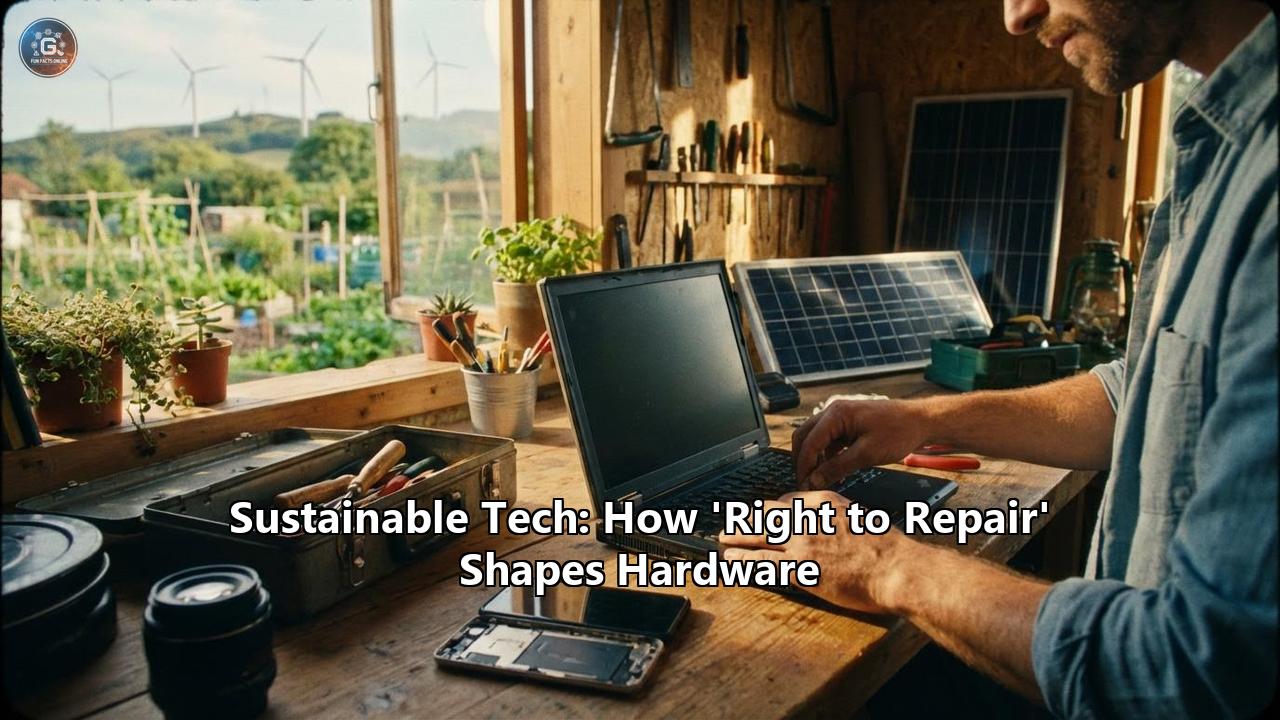
Picture a smartphone. It is a gleaming slab of glass, aluminum, and silicon, representing the absolute pinnacle of human engineering. Inside its impossibly thin chassis lies more computing power than the systems that guided the Apollo missions to the moon. Yet, if you accidentally drop this modern marvel on the pavement and shatter its screen, or if its lithium-ion battery naturally degrades after two years of charging, this magical device frequently transforms into something entirely different: garbage.
For the better part of two decades, the consumer electronics industry has operated on a linear, consumption-heavy model. We extract precious metals from the earth, manufacture them into tightly sealed, unrepairable black boxes, and ship them across the globe, only to discard them a few short years later when a single component fails. This cycle has generated a staggering environmental toll. The world produces tens of millions of metric tons of electronic waste (e-waste) annually, much of it leaching toxic chemicals into soil and groundwater.
But a revolution is currently rewriting the rules of the tech industry. Born from grassroots activism, championed by independent repair shops, and now codified into landmark global legislation, the "Right to Repair" movement is fundamentally altering how our hardware is designed, manufactured, and maintained. As we navigate 2026, the Right to Repair is no longer a fringe consumer rights issue—it is the defining architectural philosophy of sustainable tech.
Here is a deep dive into how the battle for our gadgets was fought, the insidious tactics used to keep us buying new, the legislative tipping point we are living through right now, and how companies are reimagining hardware for a sustainable future.
The Era of Disposable Tech and Designed Obsolescence
To understand the cure, we must first examine the disease. The hardware design trends of the 2010s prioritized thinness, aesthetics, and water resistance over longevity. Screws were replaced by industrial-strength adhesives. Easily swappable batteries were buried beneath fragile glass panels and delicate ribbon cables. Proprietary pentalobe screws were introduced to keep the average person out of their own devices.
While manufacturers argued these design choices were necessary to create sleek, water-resistant devices, the byproduct was an economic model that heavily favored replacement over repair. When a battery replacement costs nearly as much as a new, subsidized device, consumers are naturally nudged toward the upgrade. This phenomenon, often referred to as planned—or at least accepted—obsolescence, fueled astronomical profits for tech giants.
However, the environmental cost has been devastating. As highlighted in recent environmental impact reports, up to 80% of a smartphone’s carbon emissions are generated during its production phase, before it even reaches the consumer’s hands. The mining of cobalt, lithium, copper, and rare earth elements leads to deforestation, severe water pollution, and staggering biodiversity loss. Extending the life of a device from two years to five or six cuts its environmental footprint drastically. Yet, until recently, hardware was purposefully designed to make this extension as friction-heavy as possible.
The Invisible Handcuffs: Software Locks and Parts Pairing
As hardware began to physically open up due to early consumer pushback, manufacturers pivoted to a more insidious tactic to maintain control: software-based lockouts. Enter the era of "parts pairing," or serialization.
Parts pairing is the technological equivalent of a secret handshake. Manufacturers began digitally linking the serial numbers of specific hardware components—such as screens, batteries, cameras, and biometric sensors—to the device’s main logic board. If you took a genuine, perfectly functional screen from one broken iPhone and installed it onto another, the device would recognize that the serial numbers did not match. The result? The phone would deliberately disable features like Face ID, True Tone display, or battery health metrics, flooding the user with ominous warning notifications.
This practice was arguably the greatest existential threat to the Right to Repair. It effectively killed the circular economy by making the harvesting of donor parts impossible. Independent repair shops, which rely heavily on using refurbished parts to keep repair costs down for consumers, were systematically boxed out. Big Tech companies claimed that parts pairing was essential for user security and privacy, ensuring that compromised biometric sensors couldn't be installed by malicious actors. Repair advocates countered that it was merely a monopoly tactic designed to force consumers into expensive, first-party repair networks or early upgrades.
The battle over parts pairing became the defining conflict of the Right to Repair movement, setting the stage for lawmakers to step in.
The Legislative Tipping Point (2024–2026)
If the early 2020s were characterized by awareness, the mid-2020s have been defined by enforcement. Lawmakers across the globe have recognized that corporate goodwill alone will not solve the e-waste crisis.
The United States Bans the Software Lock
The dam broke in early 2024 when Oregon passed Senate Bill 1596, a landmark piece of Right to Repair legislation. While states like New York, California, and Minnesota had passed their own repair laws, Oregon's was the first to explicitly outlaw the practice of parts pairing for devices manufactured after January 1, 2025.
Under this law, manufacturers are legally prohibited from using software to prevent independent repair shops or owners from installing functional replacement parts. The impact was immediate. Apple, which had spent years lobbying against Right to Repair, was forced to adapt, announcing a pivot that would allow the use of genuine used parts in newer iPhone models without disabling functionality. By 2025, other states like Illinois began advancing similar sweeping legislation (such as the Fair Repair Act), expanding the availability of parts, tools, and diagnostics to independent shops.
Europe’s Grand Mandate
While US states attacked the problem on a regional basis, the European Union implemented a massive, continent-wide overhaul. In June 2024, the EU adopted the Right to Repair Directive (Directive (EU) 2024/1799). Member states were given two years to transpose the directive into national law, making July 31, 2026, the ultimate deadline for a new era of consumer rights.
The EU Directive changes the hardware landscape fundamentally:
- The Obligation to Repair: Manufacturers are now legally required to repair products like smartphones, tablets, and washing machines within a reasonable timeframe and at a reasonable price, even beyond the statutory warranty period. This obligation extends up to a decade for certain product categories.
- Extended Warranties: To nudge consumer psychology away from replacement, the EU now mandates that if a consumer chooses to have a defective product repaired during the warranty period, the legal guarantee for the entire product is extended by an additional 12 months.
- A Pan-European Repair Platform: Launching in 2027, this centralized database will allow consumers to easily locate local, vetted repairers, democratizing access to fix-it services.
- Ending Obstructive Design: The directive explicitly forbids manufacturers from using contractual terms, hardware, or software limitations (like parts pairing) that unnecessarily obstruct repair.
Faced with the reality of producing devices for the massive European and North American markets, global tech giants have realized that manufacturing separate "repairable" and "unrepairable" versions of their products is economically unviable. Legislation in Oregon and Brussels has effectively redesigned the hardware in your pocket, no matter where you live.
Hardware Reimagined: The Pioneers of Modularity
While legacy tech giants are being dragged into the repairable future by legislation, a new vanguard of hardware manufacturers has proven that sustainability and commercial success are not mutually exclusive. These companies are not just making their devices fixable; they are making them modular, upgradable, and immortal.
Fairphone: Ethical Electronics Go Mainstream
Based in the Netherlands, Fairphone has been fighting the good fight for over a decade. By 2025, the company achieved staggering results, reporting record growth of over 83% year-over-year in a global smartphone market that was otherwise shrinking or stagnant. The company surpassed one million total devices sold, proving that a mainstream appetite for sustainable tech exists.
Fairphone’s hardware is a masterclass in Right to Repair principles. Their recent devices, such as the Fairphone 5 and the highly anticipated Gen 6, are entirely modular. If the USB-C port wears out, you don't need a soldering iron; you simply order a $15 replacement module, unscrew a standard Phillips-head screw, pop the old port out, and snap the new one in. Their devices are manufactured using renewable energy and feature more than 50% recycled or fairly traded materials, including recycled copper, plastics, and rare earth elements.
Furthermore, Fairphone addresses the human element of hardware. They pay a living wage bonus to the factory workers assembling the devices and the miners extracting the materials, bringing social justice to an industry fraught with exploitation. Fairphone's success signals a paradigm shift: device longevity and spare part availability have become crucial purchasing criteria for modern consumers.
Framework: The Laptop, Cured of Obsolescence
In the computing space, Framework has shattered the illusion that thin-and-light laptops must be sealed shut. The Framework Laptop was designed from the ground up to be customized, upgraded, and endlessly repaired.
Every component inside a Framework laptop features a QR code. Scan it, and you are immediately taken to a page where you can buy a replacement part and view a step-by-step, illustrated guide on how to install it. The genius of Framework lies in its upgradability. If your processor becomes outdated after four years, you do not need to throw away the chassis, screen, keyboard, and battery. You simply swap out the mainboard for the latest generation.
The community around Framework has embraced a radical form of tech recycling. Leftover mainboards aren't ending up in landfills; they are being 3D-printed into custom desktop PCs, home servers, and even modular, handheld gaming consoles that rival the Steam Deck. By designing hardware as a platform rather than a disposable commodity, Framework is drastically reducing the carbon footprint of personal computing.
The Ripple Effect: How Big Tech is Adapting
The success of modular pioneers and the heavy hand of the law have forced the titans of the industry to change their tune.
We are witnessing the quiet death of the glue-heavy era. Recent flagship devices from massive brands are noticeably easier to open. Internal layouts are being redesigned to allow screen and battery replacements without removing the fragile logic board. Pull-tabs for battery removal—once a staple of early electronics—have made a triumphant return, replacing the harsh chemical solvents previously required to pry batteries from their housings.
Even Apple, historically the fiercest opponent of independent repair, has launched extensive Self Service Repair programs, providing the public with access to original manuals, tools, and parts. While critics rightfully point out that the pricing of these first-party parts often makes DIY repair economically daunting, the mere existence of these programs marks a cultural surrender. The "No User Serviceable Parts Inside" sticker, a staple of the 20th and early 21st centuries, is finally being scraped off.
The Economic and Environmental Dividends
The transition toward repairable hardware is not just an ecological victory; it is a profound economic stimulus.
By decentralizing repair, we are revitalizing Main Street. Independent repair shops—often small, locally owned businesses—are thriving now that they have legal access to schematics, tools, and parts. This localized economy keeps money circulating within communities rather than funneling it exclusively back to multinational tech headquarters.
Furthermore, the Right to Repair bridges the digital divide. When devices can be cheaply repaired and refurbished, the secondary market flourishes. High-quality, capable technology becomes accessible to lower-income families, students, and developing nations. A smartphone that lasts six years instead of three effectively halves its lifetime cost for the consumer.
Environmentally, the impact of extending device lifespans cannot be overstated. By repairing our tech, we directly reduce the demand for raw material extraction. We lower the immense greenhouse gas emissions associated with semiconductor manufacturing, global logistics, and smelting. True sustainability in technology does not come from buying a "green" phone; it comes from keeping the phone you already own out of the landfill for as long as humanly possible.
The Future: From Consumers to Caretakers
As the July 2026 EU mandate takes full effect and US state laws continue to dismantle software locks, the relationship between human and machine is evolving. We are transitioning from mere consumers of technology to caretakers of our hardware.
Looking ahead, the next frontier of sustainable tech will involve Extended Producer Responsibility (EPR), where manufacturers are held financially and logistically accountable for the entire lifecycle of their products, right down to the recycling of the base metals. We will likely see further innovations in bio-based plastics, easily dissolvable structural adhesives that separate cleanly under specific voltages, and standardized, universal components across different brands.
The Right to Repair movement has proven that the trajectory of modern hardware is not inevitable. It is a choice. For years, we were sold the lie that convenience required disposability, and that progress required a locked ecosystem. Today, thanks to tireless advocates, visionary engineers, and a newly empowered public, that lie has been dismantled.
The future of hardware is transparent. It is modular. It is secured by standard screws, accessible with a simple toolkit, and backed by the undeniable legal right to fix what you own. The era of the disposable black box is coming to an end, and the era of sustainable technology has finally been powered on.
Reference:
- https://www.readthepeak.com/p/04-24-apple-takes-a-small-step-towards-right-to-repair
- https://www.lewissilkin.com/insights/2026/03/18/what-does-the-right-to-repair-directive-mean-for-your-business
- https://www.beyonddesign.com/the-state-of-right-to-repair-in-2025/
- https://www.techradar.com/phones/our-aim-is-to-revolutionize-the-electronics-industry-from-the-inside-out-fairphones-impact-chief-on-offering-a-more-sustainable-smartphone-experience
- https://www.businessgreen.com/news/4525464/market-ready-different-approach-fairphone-reports-record-growth-2025
- https://www.techradar.com/phones/i-just-had-an-exclusive-look-at-fairphones-report-on-the-environmental-impact-of-phones-its-left-me-shocked
- https://www.repair.org/blog/2023/9/25/apples-war-on-right-to-repair-through-serial-numbers
- https://hackaday.com/2024/02/14/apple-pushes-back-on-right-to-repair-bill-due-to-parts-pairing/
- https://9to5mac.com/2023/11/13/parts-pairing-battle/
- https://www.techfinitive.com/features/parts-pairing-and-the-apple-iphone-16-how-apples-next-phone-will-be-designed-by-oregons-senate/
- https://www.ecomondo.com/en/news-detail/right-to-repair-the-other-eu-member-states-are-getting-ready-what-does-the-directive-entail?newsId=6168657
- https://www.fieldfisher.com/en/insights/incoming-eu-right-to-repair-requirements-the-key-t
- https://www.androidcentral.com/phones/fairphone-is-doing-its-part-to-make-the-world-a-better-place-is-it-enough
- https://community.frame.work/t/we-are-not-sustainable-environmental-impact-wise/36890