
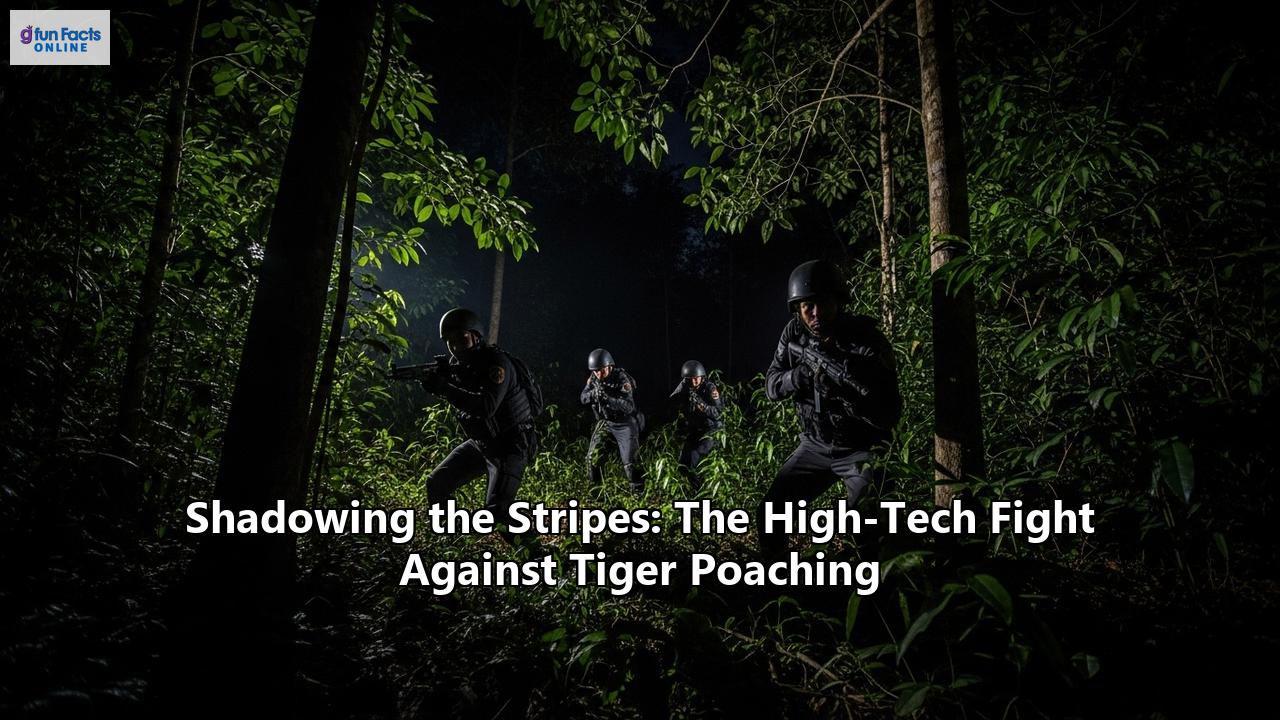
In the dense jungles and sprawling grasslands of Asia, a silent war is being waged. It is a battle for survival, pitting one of the planet's most iconic predators against a relentless and often invisible enemy. The tiger, a symbol of power and wild beauty, is facing the threat of extinction, driven by a brutal and lucrative illegal trade in its body parts. However, the front lines of this conflict are evolving. In place of traditional patrols alone, a new arsenal of high-tech weaponry is being deployed, offering a glimmer of hope in the fight to save the last of these magnificent big cats. This is the story of "Shadowing the Stripes," a narrative of innovation, dedication, and the cutting-edge technological advancements at the forefront of the war against tiger poaching.
For centuries, the tiger has been both revered and hunted. But in recent decades, the insatiable demand for tiger bones, skins, and other parts, fueled by their use in traditional medicine and as status symbols, has decimated their populations. The statistics are stark. From an estimated 100,000 at the beginning of the 20th century, the number of wild tigers plummeted to a mere fraction of that figure. This decline is not a consequence of natural processes but a direct result of a sophisticated and ruthless international criminal network that deals in death. Poaching, the illegal hunting or capturing of wild animals, is a multi-billion dollar industry that fuels organized crime and threatens global security.
In response to this crisis, conservationists and law enforcement agencies are no longer just relying on "boots on the ground." They are embracing a technological revolution, deploying a suite of sophisticated tools that are changing the dynamics of wildlife protection. From the unblinking eyes of AI-powered cameras hidden in the forest to the predictive power of machine learning algorithms that anticipate a poacher's next move, technology is leveling the playing field. This article delves deep into the heart of this high-tech fight, exploring the innovative technologies that are shadowing the stripes of the tiger and offering a new line of defense against those who seek to erase them from our world.
The Digital Sentinels: AI-Powered Cameras and Real-Time Alerts
One of the most significant technological leaps in the fight against tiger poaching has been the development and deployment of intelligent camera systems. These are not the passive camera traps of the past that would sit for months, their secrets only revealed upon retrieval. Today's cameras are active, intelligent sentinels, capable of identifying threats in real-time and sending immediate alerts to rangers.
A prime example of this revolutionary technology is TrailGuard AI. Developed by the social impact enterprise Nightjar Technologies, TrailGuard AI is a compact, AI-enabled camera unit designed for covert surveillance in vulnerable wildlife corridors. These diminutive devices, with a camera unit the size of a pen and a battery unit no bigger than a notepad, are easily concealed along trails, in tree trunks, or amidst shrubbery. Their strength lies in their intelligence and efficiency. The cameras remain in a low-power mode until motion is detected. At that point, a built-in AI chip analyzes the captured image and classifies the object as an animal, human, or vehicle.
If a potential threat, such as a human, is identified, the system transmits the image to a control room, and often to rangers' smartphones via WhatsApp and Very High Frequency (VHF) radio, in as little as 30 to 40 seconds. This rapid alert system is a game-changer, transforming anti-poaching efforts from a reactive to a proactive endeavor. Rangers no longer have to stumble upon signs of poaching days or weeks after the fact; they can be dispatched to the scene almost as the event is unfolding, with the potential to intercept poachers before they can kill a tiger.
The impact of TrailGuard AI has been significant. In India's Similipal Tiger Reserve in Odisha, the deployment of 100 to 150 units led to the arrest of 96 poachers and the seizure of 86 firearms within a mere ten months, resulting in an estimated 80% reduction in poaching incidents. The technology has also been successfully deployed in other key tiger landscapes, including the Kanha-Pench and Terai-Arc landscapes, which are home to a significant portion of the world's wild tiger population. In these areas, TrailGuard AI has not only detected poachers but also monitored the movement of tigers near human settlements, providing crucial data for mitigating human-wildlife conflict. One particularly telling success story from the Dudhwa Tiger Reserve in India saw the system capture images of an armed gang of poachers on a trail that was also used by a tiger just days apart. These real-time alerts led to the arrest of the individuals a few weeks later.
The Oracle of the Forest: Predictive Analytics and Smart Patrolling
In the vast and often impenetrable landscapes where tigers roam, ranger patrols are a critical line of defense. However, with limited resources and vast areas to cover, it's a constant challenge to be in the right place at the right time. This is where predictive analytics and sophisticated data management tools are making a profound difference, effectively giving rangers a glimpse into the future of poaching activities.
At the forefront of this predictive revolution is PAWS (Protection Assistant for Wildlife Security), an AI-based system that uses machine learning to forecast poaching hotspots. Developed by computer scientists in collaboration with conservation organizations, PAWS crunches vast amounts of data to identify patterns in poaching behavior. The system analyzes historical data on poaching incidents, such as the location of snares and illegal camps, and correlates it with a multitude of environmental and geographical factors. These factors can include the terrain's steepness, the proximity of rivers and roads that poachers might use for access, and even the location of villages and park boundaries.
By identifying these correlations, PAWS can generate predictive maps that highlight high-risk areas, allowing park managers to allocate their limited patrol resources more effectively. The system doesn't just predict where poachers might strike; it also uses game theory to generate randomized and unpredictable patrol routes for rangers. This element of surprise is crucial in disrupting the plans of poachers who often scout patrol patterns to find weaknesses.
The integration of PAWS with another powerful tool, the SMART (Spatial Monitoring and Reporting Tool), has created a formidable combination in the fight against poaching. SMART is a comprehensive software platform used in over 1,000 protected areas worldwide to collect, store, and analyze data from ranger patrols. Rangers in the field use a mobile app to record the location of their patrols, any signs of illegal activity they encounter (such as snares, gunshots, or poacher camps), and sightings of wildlife. This data is then uploaded to a central database where it can be analyzed to produce maps, reports, and dashboards that provide a clear picture of the security situation in a protected area.
While SMART provides a detailed picture of past events, PAWS uses that historical data to look into the future. The synergy between these two systems allows for a continuous cycle of data collection, analysis, prediction, and strategic action. For instance, if a tigress with cubs is detected by camera traps, this information can be fed into the SMART system. Patrol schedules in that area can then be informed by both the real-time location of the tigress and PAWS' predictions of potential threats in the vicinity, creating a more targeted and effective protective shield around the vulnerable family.
The effectiveness of this data-driven approach has been demonstrated in various locations. In Cambodia, field tests of PAWS resulted in rangers finding and removing five times more snares than they would have through traditional patrolling methods. In Bhutan, the national adoption of SMART has enabled park authorities to curb poaching and allocate resources more effectively by identifying high-risk areas. The country is now piloting SMART Connect, a real-time version of the tool that will provide instant access to data on the location of poachers, patrols, and key wildlife species, further enhancing the speed and effectiveness of their anti-poaching operations.
The Unblinking Eye in the Sky: Drones and Aerial Surveillance
The dense canopies and rugged terrain of tiger habitats have long provided cover for poachers. However, the advent of unmanned aerial vehicles (UAVs), or drones, has given conservationists a powerful new perspective – an eye in thesky. Drones are rapidly becoming an indispensable tool in the anti-poaching arsenal, offering a cost-effective and efficient way to monitor vast and often inaccessible areas.
Equipped with high-resolution cameras, thermal imaging sensors, and even LiDAR systems, drones provide real-time aerial surveillance that can detect poachers, monitor wildlife movements, and even spot the tell-tale signs of illegal logging or forest fires. Thermal cameras are particularly effective, allowing for surveillance at night when poachers are often most active. These cameras can detect the heat signatures of humans and vehicles, even through thick forest cover, providing a critical advantage to anti-poaching teams.
The use of drones is transforming patrol strategies. Instead of trekking for days through difficult terrain, a single drone operator can survey a large area in a fraction of the time. This not only increases the area under surveillance but also enhances the safety of rangers, who can assess a situation from a distance before moving in. In some cases, the mere presence of drones can act as a deterrent, with their buzzing sound signaling to poachers that they are being watched.
In India, several states have deployed drones to great effect. In Tamil Nadu and Kerala, drones equipped with high-resolution and thermal cameras are used to monitor elephant movements, track forest fires, and deter poachers in hard-to-reach areas. The Panna Tiger Reserve in India has a dedicated "Drone Squad" that has been successful in monitoring wildlife, detecting forest fires, and assisting in anti-poaching operations. In Maharashtra's Gadchiroli District, where tiger numbers are recovering, drones are being used to mitigate human-wildlife conflict by providing early warnings to villagers about the presence of tigers and elephants in their vicinity.
However, the use of drones in conservation is not without its challenges. Battery life can be a limiting factor, and harsh weather conditions or dense forest can interfere with signals. Furthermore, the effective operation of drones requires skilled pilots, and there are ethical considerations around the potential for drones to disturb wildlife if not used responsibly. Despite these limitations, the continuous advancement of drone technology, including the development of quieter and longer-range models, promises to make them an even more valuable tool in the future.
The Silent Scream: Acoustic Sensors and Gunshot Detection
In the vast and often remote wilderness where tigers live, the sound of a gunshot can be a death knell. But what if that sound could also be a call to action? Acoustic sensors are an emerging technology that is turning the sounds of the forest into a powerful tool for detecting and responding to poaching.
These sophisticated listening devices are strategically placed in protected areas and can be trained to recognize the specific acoustic signature of a gunshot, distinguishing it from other sounds of the forest. When a gunshot is detected, the sensors can triangulate its location and send an immediate alert to park rangers, providing them with the precise coordinates of the incident. This real-time information allows for a rapid response, increasing the chances of apprehending the poachers and potentially saving a wounded animal.
The DiANa project in Spain, for example, has developed a system of acoustic sensors to detect and locate gunshots in national parks. The system uses a network of sensors that communicate with a central server to calculate the location of a gunshot with a high degree of accuracy. In Greece, the TECH4ALL Guardian project uses acoustic sensors in the Pindos mountains to protect the Balkan chamois from poaching and illegal logging. These solar-powered devices can detect the sound of gunshots and chainsaws over a three-square-kilometer area and transmit real-time alerts to rangers.
The potential of acoustic sensors extends beyond just detecting gunshots. They can also be used to monitor the overall health of an ecosystem by recording the sounds of various species. This can provide valuable data on biodiversity and help to identify changes in animal populations over time. Furthermore, the technology is constantly evolving, with researchers exploring the use of animal-borne acoustic sensors. The idea is to integrate these sensors into GPS tracking collars, which would allow for the detection of gunshots in the immediate vicinity of a tagged animal, providing an even more direct and immediate alert of a poaching attempt.
The Unseen Clues: Forensic Science and DNA Analysis
The fight against tiger poaching is not only waged in the field but also in the laboratory. Forensic science, particularly DNA analysis, has become a powerful weapon in the effort to bring wildlife criminals to justice. When tiger parts are seized, it can be a challenge for law enforcement to prove their origin and link them to a specific poaching incident. This is where DNA analysis provides irrefutable evidence.
By creating comprehensive genetic databases of wild tiger populations, scientists can now match the DNA from a seized tiger part to a specific individual or population. This can help to pinpoint poaching hotspots and identify the routes used by trafficking networks. For example, the Nepal Tiger Genome Project has created a database of over 60% of the country's wild tigers. In one case, this database was used to analyze 15 seized items suspected to be tiger parts. All were confirmed to be from tigers, and the DNA analysis was even able to identify the sex of the animals and, in many cases, their likely geographic origin within Nepal. In a remarkable instance, one of the seized samples was an exact match to a female tiger that had been previously documented in the database through her fecal DNA.
This kind of forensic evidence is invaluable in a court of law, providing the concrete proof needed to secure convictions against poachers and traffickers. In a recent case in Madhya Pradesh, India, forensic analysis of blood and hair samples from an abandoned house confirmed that they belonged to two poached tigers. The analysis, which included stripe-pattern matching, revealed that the tigers had been butchered and their parts smuggled out of the country, providing crucial evidence in the investigation of a global wildlife crime syndicate.
The power of DNA analysis is also being used to tackle the issue of captive-bred tigers. There is a significant and growing industry of tiger farms, particularly in Southeast Asia, which often claim to be for conservation purposes. However, these farms can undermine conservation efforts by perpetuating the demand for tiger products and providing a cover for the laundering of poached wild tigers. DNA analysis can be used to determine whether a seized tiger part came from a wild or captive-bred animal, helping to expose the links between these farms and the illegal wildlife trade. The TigerBase project, for example, is aiming to create a DNA database of all captive tigers in Southeast Asia to help regulate the trade and detect illegal activity.
A Global Alliance: International Cooperation and the Role of Tech Companies
The fight to save the tiger is a global one, and it requires a concerted and collaborative effort. The criminal networks that drive tiger poaching are often transnational, operating across borders with a high degree of sophistication. To combat this threat, international cooperation between governments, law enforcement agencies, and conservation organizations is essential.
Initiatives like Project Tiger in India have benefited greatly from international collaboration, adopting best practices in wildlife management and establishing transboundary conservation areas with neighboring countries like Nepal and Bhutan. This cross-border cooperation is crucial for protecting tiger habitats that span multiple countries, allowing for joint anti-poaching patrols, the sharing of intelligence, and the creation of a more connected and secure landscape for tigers to roam. The Integrated Tiger Habitat Conservation Programme (ITHCP), funded by international donors, is another example of successful collaboration, supporting tiger conservation efforts in six countries and contributing to a 40% increase in tiger populations at project locations.
In addition to intergovernmental cooperation, there is a growing and vital partnership between the conservation community and the private sector, particularly technology companies. Recognizing that their platforms can be exploited by wildlife traffickers, many of the world's leading tech companies have joined the Global Coalition to End Wildlife Trafficking Online. This coalition, which includes giants like Google, Facebook, and Alibaba, is working to make their platforms inhospitable to the illegal wildlife trade by developing and implementing policies that prevent the sale of endangered species and their parts.
Furthermore, tech companies are also playing a more direct role in developing and funding the technologies that are being used to protect tigers in the field. Google.org, for example, provided a significant grant to the World Wildlife Fund (WWF) to support the development and deployment of anti-poaching technologies, including aerial surveillance drones. This kind of collaboration is a powerful force for innovation, bringing together the expertise of conservationists on the ground with the technological prowess of the tech industry. The Connected Conservation Foundation is another example of a collaborative effort, bringing together tech companies and conservation partners to deploy technologies like LoRaWAN sensor networks and AI-powered satellite imagery analysis to protect wildlife and their habitats.
The Human Element: Integrating Indigenous Knowledge and Community Engagement
While technology provides a powerful new set of tools in the fight against tiger poaching, it is not a silver bullet. The long-term success of any conservation effort ultimately depends on the people who live alongside wildlife. For centuries, indigenous communities have possessed a deep and intricate understanding of the ecosystems they inhabit, a body of knowledge that is increasingly being recognized as a vital component of effective conservation.
Integrating this traditional ecological knowledge with modern technology can create a powerful synergy. For example, the Samburu tribe in Kenya are training their youth as conservation rangers, equipping them with GPS technology to monitor wildlife and record incidents of human-wildlife conflict. This data, combined with their traditional understanding of the land and animal behavior, allows them to make more informed decisions about conservation strategies.
Community-based anti-poaching initiatives have also shown significant success in reducing illegal activities. When local communities are empowered to protect their own wildlife and benefit from conservation efforts, they become the most effective guardians of their natural heritage. In Nepal, community-based anti-poaching programs have led to a significant decline in poaching in designated areas. These programs often focus on providing alternative livelihoods and addressing the root causes of poaching, such as poverty and lack of economic opportunities.
However, the integration of technology into community-based conservation must be approached with care and sensitivity. There are valid ethical concerns about the use of surveillance technologies in areas where people live. The deployment of drones and AI-powered cameras can raise issues of privacy and data security, and there is a risk that these technologies could be used to monitor and control local communities. It is therefore crucial that the use of these technologies is done in consultation with local communities, and that they are empowered to be active participants in the conservation process, rather than just the subjects of surveillance.
The Path Forward: The Future of the High-Tech Fight
The fight against tiger poaching is a dynamic and ever-evolving one. Just as poachers adapt their methods, so too must the technologies and strategies used to combat them. The future of this high-tech war will likely see the integration of even more sophisticated and interconnected technologies.
We can expect to see advancements in AI and machine learning that will lead to more accurate and predictive models of poaching activity. The development of next-generation drones, with longer flight times, quieter operation, and more advanced sensors, will enhance aerial surveillance capabilities. The miniaturization of tracking devices will allow for the monitoring of a wider range of species, and the integration of new sensors, such as those that can detect the physiological signs of stress in an animal, could provide even earlier warnings of a threat.
The use of environmental DNA (eDNA) is another promising frontier. This non-invasive technique, which involves collecting DNA from environmental samples like water or soil, can be used to detect the presence of elusive species and monitor biodiversity without ever having to see or handle the animals themselves.
However, as technology becomes more powerful, the ethical considerations surrounding its use will become even more critical. It will be essential to ensure that these technologies are used in a way that is transparent, accountable, and respects the rights and privacy of local communities. The goal should not be to create a fortress of technology around protected areas, but rather to use technology as a tool to empower people to protect their own wildlife.
Ultimately, the future of the tiger depends on a multi-faceted approach that combines the power of technology with the wisdom of traditional knowledge, the dedication of rangers on the ground, the commitment of governments and international organizations, and the engagement of local communities. The stripes of the tiger are a symbol of the wild, a reminder of the raw and untamed beauty of our planet. The high-tech fight to protect them is not just about saving a single species; it is about defending the very essence of the wild and ensuring that future generations will have the chance to live in a world where these magnificent creatures continue to roam free. The shadows are long, and the fight is far from over, but with the unblinking eyes of technology watching over them, there is new hope that the tiger will not fade into the darkness.
Reference:
- https://www.unodc.org/unodc/en/environment-climate/webstories/viet-nam-forensic-evidence.html
- https://cites.org/sites/default/files/eng/prog/enforcement/TIGER%20GENETICS-Project%20TigrisID.pdf
- https://www.ifaw.org/journal/stopping-the-tiger-poachers
- https://wildlife.ai/wildlife-ai-announces-partnership-with-1-for-the-planet/
- https://ethicalgeo.org/ethical-evaluation-of-remote-sensing-in-conservation/
- https://www.weforum.org/stories/2025/03/biologists-technologists-conservation-wildlife-kenya/
- https://www.womentech.net/forum-topic/what-are-ethical-implications-using-drones-in-wildlife-conservation
- https://www.traffic.org/news/leading-tech-companies-unite-to-stop-wildlife-traffickers/
- https://journals.plos.org/plosone/article?id=10.1371/journal.pone.0201639
- https://connectedconservation.foundation/
- https://timesofindia.indiatimes.com/city/bhopal/forensic-experts-expose-poached-tigers-in-madhya-pradesh-uncovering-international-trafficking/articleshow/120691500.cms
- https://www.ishinews.com/tiger-slaughterhouses-and-forensic-dna-how-science-is-fighting-illegal-wildlife-trade/
- https://wwfeu.awsassets.panda.org/downloads/illegal_trade_of_tigers_4.pdf
- https://www.smartparks.org/news/smart-parks-drives-innovation-and-impact-through-collaborations/
- https://pubmed.ncbi.nlm.nih.gov/30138352/
- https://prism.sustainability-directory.com/scenario/ethical-implications-of-ai-surveillance-in-wildlife-conservation/
- https://www.giz.de/de/downloads/181008_newtechnologies_screen.pdf
- https://climate.sustainability-directory.com/question/what-are-the-ethical-implications-of-conservation-tech/
- https://www.kfw.de/stories/environment/nature-conservation/biodiversit%C3%A4t-bangladesh-tiger/
- https://microavia.com/news/unmanned_aerial_vehicles_for_wildlife_protection
- https://prepp.in/news/e-492-international-cooperation-for-project-tiger-environment-notes
- https://www.marwell.org.uk/zoo-news/how-modern-innovation-is-shaping-the-future-of-conservation/
- https://iucnsos.org/embracing-technology-for-improved-wildlife-conservation/
- https://www.researchgate.net/publication/319443583_Technological_Innovations_Supporting_Wildlife_Crime_Detection_Deterrence_and_Enforcement
- https://research-repository.griffith.edu.au/server/api/core/bitstreams/5e626291-fecc-41dd-a903-16655a95278e/content
- https://news.mongabay.com/2018/09/dna-database-helps-nepals-officials-monitor-tigers-punish-poachers/
- https://www.worldwildlife.org/stories/new-technology-and-collaboration-could-transform-wildlife-monitoring
- https://www.unodc.org/documents/Wildlife/Wildlife_Forensics_Brochure.pdf
- https://www.fundsforngos.org/all-proposals/a-sample-proposal-on-wildlife-conservation-through-anti-poaching-technologies/
- https://www.treehugger.com/high-tech-tools-to-make-poaching-extinct-4863255
- https://www.worldwildlife.org/projects/wildlife-crime-technology-project
- https://pmc.ncbi.nlm.nih.gov/articles/PMC9005341/
- https://www.wwf.eu/?11229466/Most-wildlife-crimes-in-Europe-go-unpunished-or-undetected-says-a-brand-new-report
- https://bioceed.uib.no/dropfolder/bioPOSTERS/Posters/V21/SDG215/215_8.pdf
- https://www.researchgate.net/publication/356321776_Digital_surveillance_technologies_in_conservation_and_their_social_implications
- https://www.zanza-africa.com/global-trends-in-wildlife-conservation-embracing-innovation-and-collaboration
- https://royalsociety.org/blog/2023/08/shedding-light--on-the-future-of-conservation-technology/