
In the microscopic universe, there are rules. For over a century, biology textbooks have drawn a bright, uncrossable line in the sand. On one side, there are the eukaryotes—the complex, sophisticated cells that make up you, me, mushrooms, and maple trees. These cells are seemingly the mansions of life, filled with specialized rooms called organelles: the nucleus for the library of DNA, the mitochondria for power, the lysosomes for waste disposal.
On the other side of the line are the prokaryotes—bacteria and archaea. These have largely been dismissed as the studio apartments of the biological world: small, unstructured "bags of enzymes" with no internal walls, no private rooms, and no sophisticated architecture. They were thought to be simple, chaotic soups of chemicals where everything floated freely in a jumble.
But recently, deep inside the body of a notorious agricultural pest, that line didn't just blur; it vanished.
Scientists looking into the belly of the Asian citrus psyllid—a tiny, sap-sucking insect responsible for devastating citrus groves worldwide—found something that shouldn't exist. They found a bacterium named Candidatus Profftella armatura. And inside that bacterium, they found a secret that challenges everything we thought we knew about the evolution of life. They found an organelle.
This is the story of Profftella’s secret: a discovery that rewrites the history of complexity, hints at the mechanical origins of our own cells, and offers a strange new hope for saving the world’s orange juice.
Part I: The Trojan Horse of the Citrus Grove
To understand the magnitude of this discovery, we must first understand the unlikely vessel in which it was found. The Asian citrus psyllid (Diaphorina citri) is a public enemy number one for citrus farmers. It is the vector for a disease called Huanglongbing (HLB), or "citrus greening." This disease turns fruit bitter, misshapen, and green, eventually killing the tree. There is no cure.
But the psyllid does not act alone. Like a Russian nesting doll, the insect is a host to a variety of smaller organisms. It carries the bacteria that causes the greening disease, but it also carries symbionts—bacteria that live permanently inside its body, passed down from mother to offspring for millions of years.
One of these partners is Candidatus Profftella armatura.
For years, microbiologists knew Profftella was special. Unlike the "freeloading" pathogens, Profftella is a "defensive symbiont." It pays its rent by producing a powerful chemical weapon called diaphorin. This toxin, a polyketide, is so potent that it acts as a shield for the psyllid, protecting the insect from predators like ladybugs and parasitic wasps. In essence, Profftella is a mercenary bodyguard living inside the insect’s gut.
Because Profftella is an "obligate symbiont"—meaning it cannot survive outside the insect—its genome has shrunk over millions of years. It has discarded the genes for making its own cell wall components, DNA repair mechanisms, and other "survival kit" basics, relying entirely on the insect host for these needs. In exchange, it devotes a staggering 15% of its tiny genetic code solely to the production of the diaphorin toxin.
It was already a fascinating example of biological cooperation. But when researchers from Japan and Korea decided to look closer—using advanced 3D electron microscopy to peer inside the bacterium itself—they saw something that made them gasp.
Part II: The Impossible Tubes
Bacterial cytoplasm is supposed to be boring. It is supposed to be a granular slurry of ribosomes and DNA.
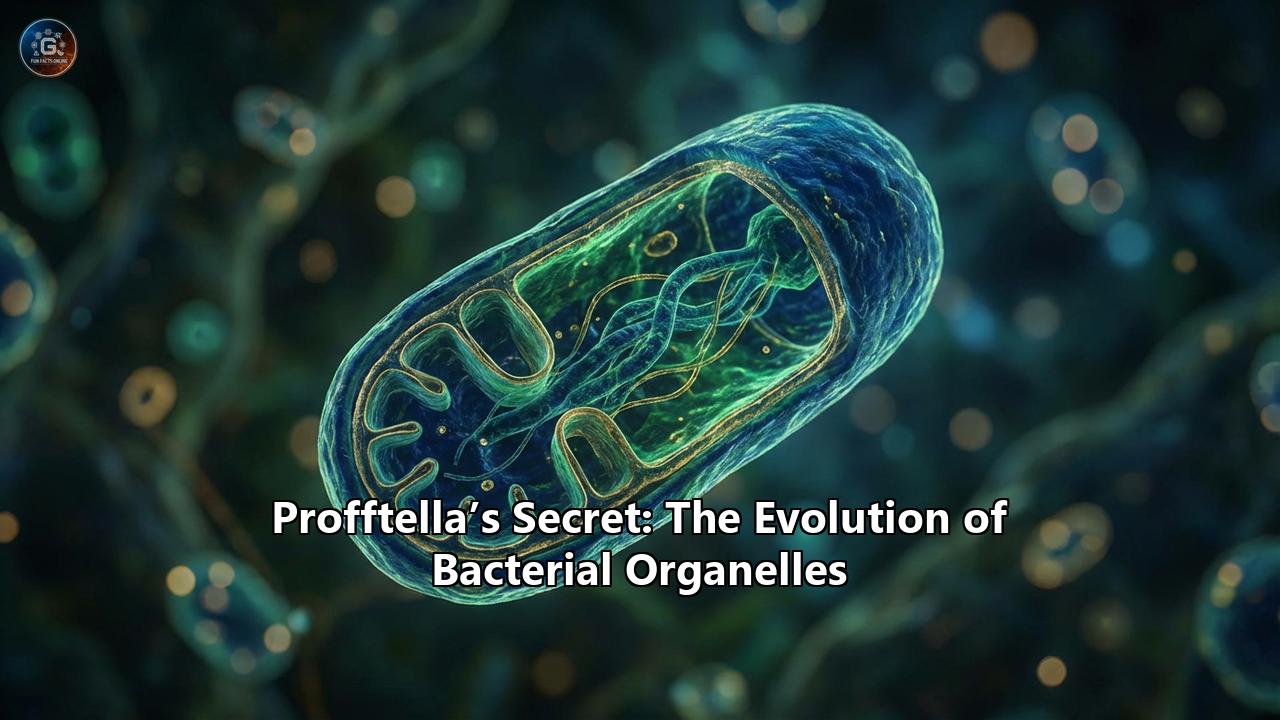
However, when the imaging team reconstructed the interior of Profftella armatura, they found it was packed with massive, geometric structures. Running the length of the bacterium were gigantic, bundled tubes.
These weren't just random clumps of protein. They were architectural marvels.
- The Scale: The tubes were enormous relative to the cell, measuring hundreds of micrometers in length and about 230 nanometers in diameter. To put that in perspective, if the bacterium were the size of a human, these tubes would be like carrying a bundle of telephone poles inside your body.
- The Structure: They were composed of a sheath of five to six distinct fibers twisted into a perfect right-handed helix.
- The Stability: Unlike most biological structures that collapse in the vacuum of an electron microscope, these tubes were diamond-hard in their resilience. They didn't shrink or crumble.
- The Cargo: Most shockingly, the tubes were hollow, and inside the hollow space, they were packed with ribosomes—the cellular machines that build proteins.
This was unprecedented. A specific, stable, protein-based compartment housing a specific molecular machine? That is the very definition of an organelle.
The researchers had found a "ribosome factory" or perhaps a "toxin assembly line" organized into a physical structure inside a bacterium. This shattered the "bag of enzymes" dogma. Profftella wasn't just a soup; it was a factory floor with specialized machinery bolted to the ground.
Part III: The "Bag of Enzymes" Myth
Why is this such a big deal? To appreciate the shock, we have to look at the history of how we define "complex" life.
For decades, the lack of internal compartments (organelles) was the defining trait of prokaryotes. We taught students that bacteria rely on diffusion—the random movement of molecules—to get things done. If a bacterium needs Enzyme A to meet Molecule B, it just waits for them to bump into each other in the crowded cytoplasm.
Eukaryotes (us), on the other hand, use compartmentalization. We put Enzyme A and Molecule B inside a small room (an organelle) to ensure they meet instantly. This efficiency is what allowed eukaryotes to grow large and complex.
The discovery of Profftella's tubes joins a growing, quiet revolution in microbiology that is dismantling this old view. We are realizing that bacteria are far more sophisticated than we gave them credit for.
1. The Bacterial CytoskeletonWe used to think only eukaryotes had a "skeleton" of actin and tubulin filaments to hold their shape. We now know bacteria have homologs (evolutionary cousins) of these proteins. FtsZ forms a ring to pinch dividing cells in half. MreB forms coils to maintain rod shapes. But Profftella's tubes are different; they are far larger and more permanent than these dynamic cytoskeletal elements.
2. Bacterial Microcompartments (BMCs)In the last few decades, we've discovered "carboxysomes" in cyanobacteria. These are tiny, geometric, soccer-ball-shaped cages made of protein that hold the enzymes for carbon fixation. They are organelles, yes, but they are usually small and transient. They are like small Tupperware containers floating in the cell.
3. MagnetosomesSome bacteria that live in mud navigationally align themselves with the Earth's magnetic field using magnetosomes—crystals of magnetite wrapped in a lipid membrane. These are true membrane-bound organelles, but they are rare and specific to magnetic sensing.
How Profftella Stands ApartProfftella's "secret" is different from all of these. These tubes are not just storage cages (like BMCs) or dynamic wires (like the cytoskeleton). They are seemingly permanent, massive scaffolding that occupies a huge percentage of the cell's volume. They blur the line between "skeleton" and "organelle."
They suggest that the bacterium has evolved a dedicated physical infrastructure to manage its most important job: the industrial-scale production of the diaphorin toxin.
Part IV: The Evolution of Complexity (Symbiogenesis)
The existence of Profftella offers a stunning window into the past. It forces us to revisit the Endosymbiotic Theory, most famously championed by Lynn Margulis in the 1960s.
Margulis argued that the "organs" of our cells were once free-living bacteria.
- Mitochondria (our power plants) were once aerobic bacteria that were swallowed by a larger host but not digested.
- Chloroplasts (the solar panels of plants) were once cyanobacteria that suffered the same fate.
Over billions of years, these enslaved bacteria lost their independence. They shrank, gave up most of their DNA to the host nucleus, and became mere components of the cell.
Profftella is an organelle in the making.When we look at Profftella, we are seeing this process in real-time. It lives inside the psyllid insect. It has lost the ability to live outside. It has a tiny genome. It provides a specific service (defense) to the host. In many ways, Profftella is a "defensive organelle" of the insect.
But the discovery of the tubes adds a "meta" layer to this story.
We have a host (insect) containing a symbiont (Profftella) which itself contains an organelle (the tubes). It is a biological Turducken.
This forces a difficult question: Did our mitochondria once have structures like this?
Before they became smooth, bean-shaped power plants, did the ancestors of mitochondria have complex internal tubes and skeletons that they "simplified" away over eons? Or is Profftella inventing a new kind of complexity that life on Earth has never seen before?
The presence of ribosomes inside the tubes suggests a level of spatial organization for protein synthesis that was previously thought to be unique to the eukaryotic "Rough Endoplasmic Reticulum" (Rough ER). The Rough ER is a maze of membranes studded with ribosomes where we make proteins. Profftella seems to have invented a "bacterial Rough ER" using protein tubes instead of lipid membranes. It is a striking example of convergent evolution—life finding two completely different ways to solve the problem of "how to build proteins quickly and efficiently."
Part V: The Function of the Secret
Why does Profftella need these massive tubes? Evolution is a ruthless accountant; it does not spend energy building giant structures for no reason. The researchers have two leading theories, and both tell us something fascinating about the struggle for survival.
Theory 1: The Toxin Assembly LineProfftella is a weapon factory. Its primary job is to churn out diaphorin to protect its host. This molecule is a polyketide, a complex chemical that requires a massive enzymatic assembly line to construct.
The ribosomes packed inside the tubes may be there to churn out the enzymes needed for this synthesis at a breakneck pace. By confining the ribosomes and the enzymes into a narrow tube, Profftella creates a "reaction chamber" where the concentration of ingredients is incredibly high. This would make the chemical reactions millions of times faster than if the ingredients were just floating around in the soup of the cytoplasm.
Theory 2: The Structural SkeletonProfftella cells are weirdly shaped. They are incredibly long and thread-like, sometimes over 100 micrometers long (gigantic for a bacterium). A cell that long and thin is fragile; it risks snapping in half or collapsing under osmotic pressure.
The helical tubes may act as a rebar skeleton, providing the tensile strength needed to maintain this extreme shape. This allows the bacterium to thread itself through the tissues of the insect's bacteriome (the organ that houses symbionts) without breaking.
Most likely, the answer is both. In biology, structure often follows function. A structure evolved to hold the cell open became a convenient place to stash the protein-making machinery, or vice versa.
Part VI: A New Weapon in the Citrus War?
While the evolutionary implications are thrilling for biologists, for the citrus farmer in Florida or Brazil watching their trees die, this discovery offers something else: a target.
Citrus greening is an existential threat to the global orange, lemon, and lime industry. We have struggled to control the Asian citrus psyllid because it is resistant to many pesticides, and killing the insect often harms the environment.
But Profftella reveals a weak point.
The psyllid needs Profftella to survive. Without the defensive toxin diaphorin, the psyllid becomes vulnerable to natural predators. And Profftella, it seems, needs these tubes to survive and produce the toxin.
If we can design a molecule that specifically disrupts the protein fibers that make up these tubes—a "tube-busting" drug—we could sterilize the psyllid of its defensive symbiont.
- The drug wouldn't need to kill the insect directly (reducing toxicity to other species).
- It wouldn't hurt bees or humans, because bees and humans don't have Profftella tubes.
- It would simply strip the psyllid of its armor, allowing nature (ladybugs, lacewings, and wasps) to finish the job.
This represents a new frontier in "symbiosis-disruption" pest control. Instead of attacking the pest, we attack the partner that makes the pest dangerous.
Conclusion: The Infinite Complexity of the "Simple"
The discovery of the organelles within Profftella armatura is a humbling reminder of how much we still have to learn. For centuries, we looked at bacteria through our microscopes and saw simple dots and rods. We assumed they were primitive because they didn't look like us.
But complexity is not the monopoly of the eukaryote. In the dark, high-pressure environment of an insect's gut, a bacterium evolved a secret. It built a cathedral of protein ropes, a factory of twisted helices, and a fortress of ribosomes.
Profftella teaches us that life, no matter how small, is a relentless innovator. It blurs the boundaries we try to draw. It suggests that the "secret" to the origin of our own complex cells might not be a singular miraculous event, but a common tendency of life to compartmentalize, organize, and build.
As we peer deeper into the microbial world, we are likely to find that Profftella is not an exception, but a pioneer. The secret is out: there is no such thing as a "simple" cell.
Reference:
- https://en.wikipedia.org/wiki/Symbiogenesis
- https://www.quora.com/How-does-compartmentalization-occur-in-a-prokaryotic-cell
- https://en.wikipedia.org/wiki/Bacterial_microcompartment
- https://pmc.ncbi.nlm.nih.gov/articles/PMC4718714/
- https://pubmed.ncbi.nlm.nih.gov/25306530/
- https://www.quora.com/What-is-the-endosymbiotic-theory-of-bacteria-like-organelles
- https://docs.ufpr.br/~microgeral/arquivos/2013FUNDAMENTOSBacterialMicrocompartments.pdf
- https://en.wikipedia.org/wiki/Cellular_compartment
- https://www.pnas.org/doi/10.1073/pnas.2022114118
- https://publish.obsidian.md/disruptively-useful/Knowledge+Base/Symbiogenesis
- https://pmc.ncbi.nlm.nih.gov/articles/PMC3160578/
- https://www.researchgate.net/publication/348905469_Symbiotic_Models_for_Reconstruction_of_Organellogenesis
- https://en.wikipedia.org/wiki/Eukaryote