
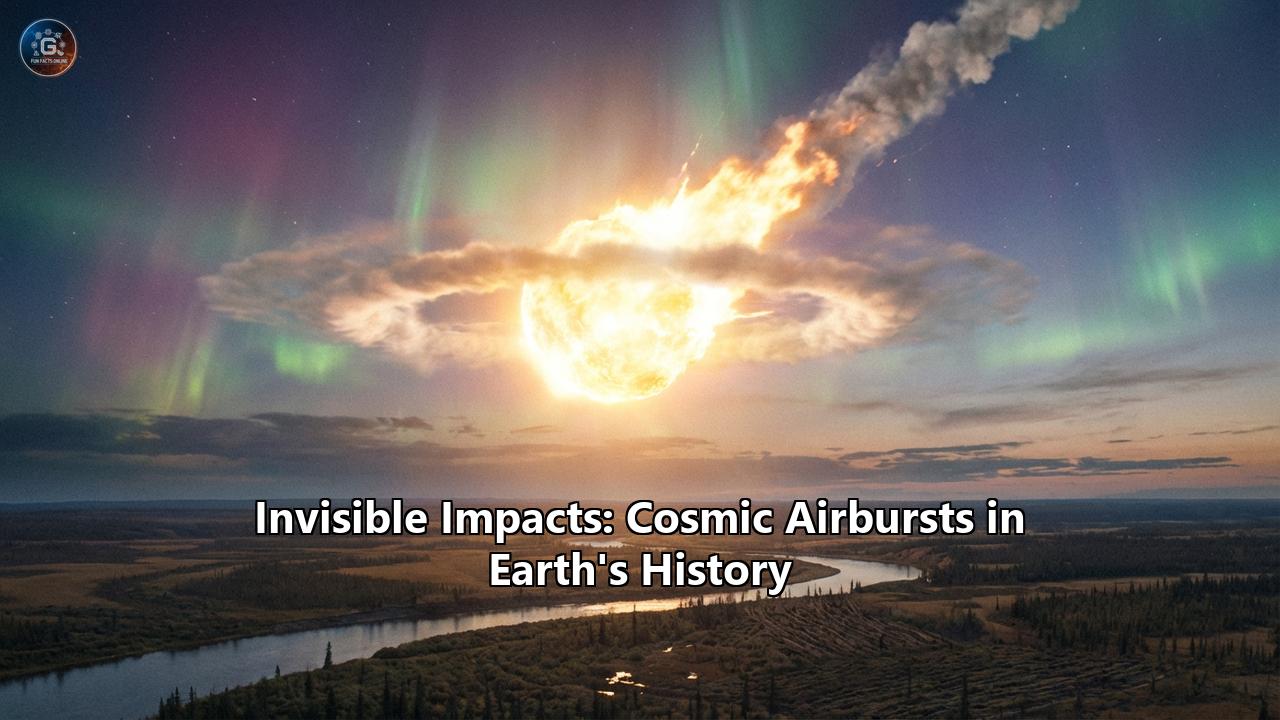
Introduction: The Bomb That Never Landed
On a frozen morning in February 2013, the residents of Chelyabinsk, Russia, were commuting to work under a clear, cold sky. It was a mundane Tuesday in the Urals, until the heavens tore open. A second sun flared into existence, streaking across the firmament with a brightness that seared retinas and cast shadows that danced wildly against the snow. It was brighter than the sun, a dazzling bolide painting a thick trail of smoke across the atmosphere.
Then came the silence—a deceptive, eerie pause that lasted for nearly three minutes. People rushed to their windows, pressing their faces against the glass to gawk at the lingering contrail.
That curiosity was punished by a wall of invisible force.
A shockwave, delayed by the distance of the explosion, slammed into the city. It didn't just rattle windows; it blew them out. Thousands of panes of glass shattered simultaneously, showering onlookers in razor-sharp confetti. Factory roofs collapsed. Garage doors buckled inward as if punched by a giant fist. Over 1,500 people were injured, not by a falling rock, but by the air itself.
The object that caused this chaos never hit the ground—at least, not as a mountain-leveling asteroid. It was a "rock" roughly the size of a six-story building that had detonated 18 miles above the surface with the force of 500 kilotons of TNT—thirty times the energy of the Hiroshima bomb.
This was a cosmic airburst. It is a phenomenon that has shaped our planet’s history, potentially erased civilizations, and inspired our deepest myths, all while leaving almost no traditional geological fingerprints. Unlike the crater-forming impacts that killed the dinosaurs, airbursts are the "invisible" assassins of the cosmos. They leave no smoking hole in the ground, only scorched earth, flattened forests, and melted stone.
For centuries, humanity has scanned the ground for craters to understand the threat from above. We were looking in the wrong place. The true danger—and the most frequent one—doesn't strike the Earth; it strikes the sky.
Chapter 1: The Physics of Sky-Fire
To understand an airburst, one must first abandon the Hollywood image of an asteroid impact. In movies, a rock slams into the ground, creating a mushroom cloud and a massive crater. In reality, the atmosphere is a formidable shield, acting less like a gas and more like a brick wall for objects moving at cosmic velocities.
The Kinetic equation
When a meteoroid enters Earth’s atmosphere, it is traveling at hypersonic speeds, typically between 11 and 72 kilometers per second (25,000 to 160,000 miles per hour). At these speeds, the object possesses an immense amount of kinetic energy. The atmosphere, while thin to us, compresses rapidly in front of the intruder.
This compression creates a shock front of superheated plasma. The air cannot move out of the way fast enough. The pressure difference between the front of the meteoroid (high pressure) and the back (vacuum) can become colossal, exceeding the structural strength of the rock itself.
The "Pancake" Effect
Stony asteroids—the most common type—are often "rubble piles," loose conglomerations of rock held together by weak gravity, or they are fractured monoliths. As the atmospheric pressure mounts, the rock begins to flatten and mushroom outward, a process physicists call "pancaking."
This deformation increases the surface area, which increases the drag, which increases the heat and pressure even further. It is a runaway feedback loop. Within a fraction of a second, the structural integrity fails completely. The rock does not just break; it vaporizes. The solid mass instantaneously converts into a cloud of expanding gas and dust.
This sudden conversion of kinetic energy into heat and pressure is, by definition, an explosion.
The Mach Stem
The explosion generates a spherical shockwave that travels outward in all directions. The part of the wave traveling downward eventually hits the ground. But the physics gets stranger here. When that incident shockwave hits the surface, it reflects upward.
This reflected wave moves faster than the original wave because it is traveling through air that has already been heated and compressed by the first wave. It eventually catches up to the incident wave, merging to form a vertical wall of pressure known as a Mach stem.
The Mach stem travels horizontally across the ground, sweeping everything in its path. This is the mechanism of destruction. It acts like a giant bulldozer made of air. In a "touchdown" airburst, this jet of superheated gas and pressure can scour the surface, melting soil into glass and snapping trees like matchsticks, all without a physical meteorite ever touching the soil.
Chapter 2: The Great Siberian Mystery (Tunguska, 1908)
For over a century, the Tunguska event stood as the ultimate cold case of astronomy.
On June 30, 1908, in a remote region of Siberia near the Podkamennaya Tunguska River, the sky split in two. A fireball descended, followed by a detonation so powerful it was detected by seismic stations in England.
Eyewitnesses in the trading post of Vanavara, 40 miles away, were thrown from their chairs. One man reported that "the shirt was almost burned off my back." The heat was intense enough to be felt on the skin from dozens of miles away.
The Missing Crater
It wasn't until 1927 that Leonid Kulik, a Soviet mineralogist, finally led an expedition to the site. He expected to find a massive crater with a large iron meteorite buried in the center. He struggled through the swampy taiga, fighting mosquitoes and disease, finally reaching "Ground Zero."
What he found baffled him. There was no crater.
Instead, he found a butterfly-shaped zone of devastation. Over 80 million trees across 2,150 square kilometers (830 square miles) were flattened. They lay in a radial pattern, pointing away from a central epicenter. But at the very center, the trees were still standing—stripped of their branches and bark, looking like a forest of telephone poles.
This "telegraph pole" forest was the clue. The explosion had occurred directly above them. The shockwave had pressed straight down, stripping the branches but leaving the trunks upright, while the horizontal blast wave further out had knocked the trees over.
Solving the Puzzle
For decades, theories ran wild: a black hole, antimatter, a crashed alien spaceship (a favorite of Soviet sci-fi writers). However, modern computer modeling has confirmed it was a stony asteroid, roughly 50 to 80 meters wide, that detonated at an altitude of 5 to 10 kilometers.
The energy release is estimated at 3 to 15 megatons—hundreds of times powerful than the atomic bomb dropped on Hiroshima. If the Tunguska object had arrived a few hours later, due to Earth’s rotation, it could have airburst over St. Petersburg, potentially killing hundreds of thousands and changing the course of 20th-century history.
Chapter 3: Echoes in the Earth (Geological Evidence)
If airbursts don't leave craters, how do we find them in the deep past? Geologists have had to become forensic scientists, looking for microscopic clues—"impact proxies"—that testify to sudden, extreme violence.
Trinitite and Melt Glass
When the first atomic bomb was tested at the Trinity site in New Mexico in 1945, the heat melted the desert sand into a greenish glass called "trinitite." Airbursts do the same thing.
When the superheated plasma jet of a touchdown airburst hits the ground, temperatures can exceed 2,000°C (3,600°F). This melts the topsoil, sand, and rock instantly. When it cools, it forms melt glass. Unlike volcanic glass (obsidian), this impact glass often contains water inclusions or minerals that require ultra-high temperatures to form, such as lechatelierite (pure silica glass).
Microspherules
Vaporized rock and metal from the asteroid and the ground are lofted into the atmosphere. As this vapor cloud cools, it condenses into microscopic droplets that rain down over thousands of miles. These magnetic microspherules are often found in sediment layers corresponding to airburst events. They are perfectly spherical, a shape that can only form when molten material cools in freefall.
Shocked Quartz
Quartz is one of the hardest minerals on Earth. To deform its crystal lattice requires immense pressure. Under a microscope, quartz grains from impact sites show "shock lamellae"—parallel lines of damage that cannot be formed by volcanoes or earthquakes. While "touchdown" airbursts create less shocked quartz than direct impacts, recent research suggests they can still generate enough pressure (around 3-5 GPa) to fracture quartz in distinctive patterns.
Nanodiamonds
In the fireball's fury, carbon atoms can be crunched into microscopic diamonds. These nanodiamonds are invisible to the naked eye but can be found in trillions within the "black mats"—layers of carbon-rich soil left behind by the wildfires that often accompany these events.
Chapter 4: Deep Time & Ancient Civilizations
The most controversial and fascinating frontier of airburst science is its intersection with archaeology. Did the sky-gods of ancient myth actually exist as physical phenomena?
Tall el-Hammam: The Real Sodom?
In the Jordan Valley, just northeast of the Dead Sea, lies the ruin of Tall el-Hammam. In the Middle Bronze Age (around 1650 BCE), this was a thriving city-state, larger than Jerusalem or Jericho at the time. Then, in an instant, it ended.
Excavations have revealed a "destruction layer" 1.5 meters thick. It is a chaotic mess of ash, charcoal, and pulverized mudbrick.
- The Evidence: Archaeologists found pottery shards with their outer surfaces melted into glass. Bubbles inside the glass indicate boiling occurred, requiring temperatures of over 4,000 degrees. Mudbricks were partially melted. Skeletons were found in extreme disarray, with evidence of hyperextension and fragmentation consistent with a high-velocity blast wave.
- The Theory: A paper published in Scientific Reports (2021) proposed that a cosmic airburst, slightly larger than Tunguska, detonated over the city. The blast sheared off the top 12 meters of the palace complex and blew the city wall down. It also may have pushed a surge of super-saline water from the Dead Sea over the agricultural land, salting the fields and rendering the region uninhabitable for centuries.
- The Connection: The location and timing roughly align with the biblical account of Sodom and Gomorrah. The description of "fire and sulfur" raining from the sky, the smoke rising "like the smoke of a furnace," and the destruction of the entire plain fits the profile of an airburst with uncanny precision.
- The Controversy: This hypothesis is fiercely debated. Critics argue that the "shocked quartz" evidence is weak and that the "melt glass" could be from ancient smelting or pottery firing accidents (though the temperatures required seem too high). Some suggest the "airburst" theory is motivated by a desire to validate biblical texts. However, the physical evidence of high-temperature melting remains a difficult puzzle for conventional archaeology to solve.
The Younger Dryas: The Big Freeze
Around 12,800 years ago, the Earth was warming up as it emerged from the last Ice Age. Then, suddenly, the planet plunged back into a deep freeze that lasted 1,200 years. This period is called the Younger Dryas.
- The Theory: In 2007, a team of scientists proposed the Younger Dryas Impact Hypothesis (YDIH). They suggested that a fragmented comet, perhaps over 4 kilometers wide, exploded over the North American ice sheet. The airbursts and impacts ignited wildfires across 10% of the planet's landmass (evidenced by a "black mat" of soot found in soil layers worldwide). The heat destabilized the ice sheet, causing a massive influx of fresh water into the Atlantic, shutting down the ocean currents that warm Europe.
- The Casualties: This event is blamed for the extinction of the North American megafauna (mammoths, saber-toothed cats, giant sloths) and the sudden disappearance of the Clovis people, the dominant human culture of the time.
- The Debate: This is one of the most heated debates in modern science. Opponents argue that the "impact markers" (nanodiamonds, spherules) are not unique to impacts or are misidentified. They point to gradual climate change and human overhunting as the culprits for the extinctions. However, recent findings of a large impact crater under the Hiawatha Glacier in Greenland (though its age is still uncertain) have breathed new life into the theory.
The Hopewell Airburst
In the Ohio River Valley, the Hopewell culture built magnificent earthworks and mounds between 200 and 500 AD. A recent theory suggested their decline was linked to a comet airburst around 252-383 AD. Researchers cited meteorites found in mounds and a layer of charcoal.
- The Retraction: This theory, unlike the others, suffered a major blow. The initial paper was retracted after errors were found in the data analysis. It serves as a cautionary tale: while airbursts are real, not every historical decline can be blamed on the stars.
Chapter 5: Whispers from the Ancients (Mythology & Oral Tradition)
Before we had satellites, we had stories. Indigenous oral traditions may contain the oldest eyewitness accounts of these events, encoded in myth to ensure their survival.
The Fire-Devils of Australia
Aboriginal Australian oral traditions are known for their longevity, preserving data for over 10,000 years.
- Henbury Craters: In Central Australia, the Henbury crater field was formed about 4,700 years ago. When scientists first visited in the 1930s, local Aboriginal elders refused to camp nearby. They called the place chindu china waru chchinga, meaning "Sun walk fire devil rock." They described a "fire-devil" that ran down from the Sun and set the land ablaze. This is likely a direct memory of the fragmentation and impact.
- Wolfe Creek: The Djaru people tell of a rainbow serpent named Ganba who emerged from the ground, creating the massive Wolfe Creek crater. While this crater is much older (300,000 years), the association of "snakes" with cosmic impacts is a recurring motif globally—perhaps describing the winding smoke trail of a bolide.
The Sun-Stealer (Estonia)
The Kaali crater in Estonia is a rare Holocene impact (approx. 1500 BCE) in a populated area.
- The Kalevala: The Finnish national epic, the Kalevala, tells of a spark of fire that fell from the heavens, penetrating the "roof of the sky" and landing in the Alue Lake, causing the water to boil and overflow. This likely describes the formation of the Kaali lake crater.
- Thule: Some historians believe the legendary island of "Thule," described by the Greek explorer Pytheas as a place where the sun went to rest, might actually be Saaremaa island in Estonia, famous in the ancient world for this "sun-grave."
The Field of Heaven (Argentina)
In Argentina, the Campo del Cielo ("Field of Heaven") is a crater field formed 4,000 years ago. The local indigenous tribes told the Spanish conquerors that the masses of iron found there had fallen from the sky. They believed a piece of the sun had broken off. This oral history led the Spanish to the site in 1576—the first time Europeans "discovered" meteorites based on indigenous guidance.
Chapter 6: The Blind Spot
If these events have happened before, they will happen again. The Chelyabinsk event revealed a terrifying gap in our planetary defense: the Solar Blind Spot.
Most asteroids are discovered by optical telescopes that look into the night sky. They detect the sunlight reflected off the rock. But objects approaching Earth from the direction of the Sun are invisible to these telescopes. The glare of our star washes them out.
Chelyabinsk came from the dayside sky. It struck without warning.
The Size Problem
We have found over 90% of the "planet-killers" (1 km+ width). But we have found less than 1% of the "city-killers" (30-140 meters).
- Low Albedo: Many asteroids are as dark as charcoal. Against the blackness of space, they are incredibly difficult to see until they are very close.
- Hyper-Velocity: A small object moves fast. It might only be visible for a few days or weeks before impact.
Chapter 7: Shielding the Earth (Planetary Defense)
We are the first species in history with the ability to prevent our own extinction. The era of "Planetary Defense" has begun.
The Sentinels: ATLAS and Pan-STARRS
In Hawaii, the ATLAS (Asteroid Terrestrial-impact Last Alert System) and Pan-STARRS telescopes scan the sky every night. ATLAS is designed specifically for the "small stuff." It can give us:
- 3 Weeks Warning for a 140m "County Killer."
- 2 Days Warning for a 50m "City Killer."
- It might not seem like much, but 48 hours is enough time to evacuate a city or, at the very least, instruct the population to stay away from windows (which would have prevented almost all injuries in Chelyabinsk).
The Hunter: NEO Surveyor
To fix the "Blind Spot," NASA is building the NEO Surveyor, a space telescope set to launch around 2027.
- Infrared Vision: It will look in the infrared spectrum. Asteroids absorb sunlight and re-emit it as heat. Even a coal-black asteroid glows brightly in infrared against the cold background of space.
- L1 Orbit: Sitting between the Earth and Sun, it can look "sideways" and spot objects coming from the daylight direction that ground telescopes miss.
The Deflector: DART and Hera
In 2022, NASA’s DART (Double Asteroid Redirection Test) mission successfully slammed a spacecraft into the moonlet Dimorphos. It was a practice run for the "Kinetic Impactor" method.
- The Result: It worked better than expected. The impact shortened Dimorphos's orbit by 32 minutes. We proved we can push a rock.
- The Follow-up: ESA’s Hera mission (launched 2024) is currently en route to the crime scene. It will study the crater DART made and help refine the physics so we can scale this up for a real threat.
The Last Resort: Nuclear Disruption
For a large object detected with very little warning time (less than 5 years), a kinetic impactor (like DART) might not be heavy enough to push it off course. In this scenario, a nuclear device would be detonated near the asteroid (not inside it, Armageddon-style). The X-rays would vaporize the surface of the rock, creating a jet of gas that acts like a rocket engine, shoving the asteroid away.
Conclusion: Living in a Cosmic Shooting Gallery
The Earth travels through a cosmic shooting gallery. Every day, tons of dust and sand burn up in our atmosphere. Every few decades, a Chelyabinsk-sized rock explodes. Every few centuries, a Tunguska levels a forest. Every few millennia, a civilization might fall.
For 4.5 billion years, this was a lottery. Life simply had to hope it wasn't in the wrong place at the wrong time.
Today, we are different. We are watching. The "Invisible Impacts" are no longer invisible to our sensors. We are finding the traces of ancient catastrophes in the dirt and scanning the skies for the next one. The silence of the Chelyabinsk morning was broken by a shockwave, but it woke us up. The next time the sky falls, we intend to be ready to catch it.
Reference:
- https://www.esa.int/ESA_Multimedia/Images/2023/02/Chelyabinsk_a_decade_on_the_Sun_s_invisible_asteroids
- https://www.youtube.com/watch?v=6eqfcCaVPu8
- https://www.spaceacademy.net.au/watch/debris/metflite.htm
- https://www.livescience.com/space/asteroids/the-sun-is-blinding-us-to-thousands-of-potentially-lethal-asteroids-can-scientists-spot-them-before-its-too-late
- https://en.wikipedia.org/wiki/Asteroid_impact_avoidance
- https://en.wikipedia.org/wiki/Hera_(space_mission))
- https://www.esa.int/Space_Safety/Hera/Earth_s_first_missions_to_a_binary_asteroid_for_planetary_defence
- https://fallingstar.com/how_atlas_works.php
- https://www.planetary.org/space-missions/neosm
- https://science.nasa.gov/mission/neo-surveyor/
- https://nss.org/neo-surveyor-faq/
- https://www.sciencealert.com/here-are-our-defense-options-against-potential-city-killer-asteroid-impact
- https://www.sciencetimes.com/articles/47052/20231112/beyond-suns-glare-unseen-threats-concealed-cosmic-blind-spot-pose.htm