
The global transition to electric vehicles (EVs) has been hailed as the silver bullet for decarbonizing transportation. As millions of EVs silently glide across the world’s highways, they are actively driving down greenhouse gas emissions and reducing our reliance on fossil fuels. But beneath the floorboards of these sleek, modern vehicles lies a looming logistical challenge—and an unprecedented opportunity. What happens to the millions of lithium-ion batteries when they can no longer meet the rigorous demands of highway driving?
For years, skeptics pointed to battery disposal as the Achilles' heel of the electric revolution, warning of a looming tsunami of hazardous electronic waste. However, the narrative has fundamentally shifted. Rather than becoming a liability, retired EV batteries are emerging as the backbone of a new, circular energy economy. Welcome to the era of the "second-life" battery, a paradigm-shifting concept that is bridging the gap between clean transportation and a resilient, renewable energy grid.
As we navigate through 2026, the second-life EV battery market has evolved from a niche academic concept into a multi-billion-dollar industry. With massive implications for grid stability, renewable energy storage, rural electrification, and global supply chain resilience, repurposing automotive power is no longer just a good idea—it is an economic and environmental imperative.
The Myth of Rapid Battery Degradation
To understand the sheer scale of the second-life battery opportunity, we must first dismantle a persistent myth: that EV batteries degrade as quickly as mobile phone batteries. For years, consumer anxiety surrounding EVs was fueled by the fear that after five to eight years, a vehicle’s battery pack would be rendered useless, turning the car into an unsellable paperweight.
This is fundamentally untrue. An electric vehicle battery is a complex, heavily engineered thermal system that is vastly superior to the basic power cells found in consumer electronics. Modern EV battery packs are managed by sophisticated Battery Management Systems (BMS) and advanced liquid cooling/heating infrastructure. These systems meticulously regulate the charging and discharging rates, ensuring the cells operate within an optimal temperature window, thereby preventing catastrophic degradation.
Recent comprehensive studies, including massive data analyses by the P3 Group and AVILOO analyzing over 7,000 vehicles in real-world conditions, have definitively proven the resilience of EV batteries. The data reveals that the vast majority of EV batteries retain more than 80% of their original capacity even after traversing 200,000 kilometers (roughly 124,000 miles). While an initial capacity drop is observed in the first 30,000 kilometers, the degradation curve quickly flattens, resulting in a slow, highly predictable linear decline over the following decade.
Battery degradation is primarily driven by two factors:
- Cyclical Aging: The wear and tear resulting from repeated charging and discharging cycles. Extreme behaviors, such as exclusively relying on DC fast chargers or routinely draining the battery to 0%, can accelerate this.
- Calendar Aging: The natural chemical changes that occur over time, regardless of whether the vehicle is driven or parked. The buildup of the Solid Electrolyte Interphase (SEI) layer and the plating of lithium onto the anode slowly trap active lithium ions, marginally reducing the pack's overall energy capacity.
By the time a battery degrades to roughly 70% to 80% of its original capacity, it typically reaches the end of its "first life" in an automotive application. At this stage, the battery may no longer deliver the rapid acceleration or the 300-mile range demanded by modern drivers. However, it still holds a massive reservoir of energy. A 100-kilowatt-hour (kWh) battery pack retired at 80% health still possesses 80 kWh of storage capacity—more than enough to power an average residential home for several days. Throwing this battery into a shredder for raw material recycling would be a tragic waste of highly functional engineering.
The Circular Battery Economy: Reuse, Repurpose, Recycle
As millions of first-generation EVs reach their 10-to-15-year lifespans, the industry is adopting a "Circular Battery Economy" model. This framework prioritizes extracting the maximum possible utility from every manufactured battery cell before it is finally broken down into its base elements.
The lifecycle stages of an EV battery can be categorized as follows:
- First Life (Automotive): The battery serves its primary purpose, powering an electric vehicle for 10 to 15 years, or up to 200,000+ miles.
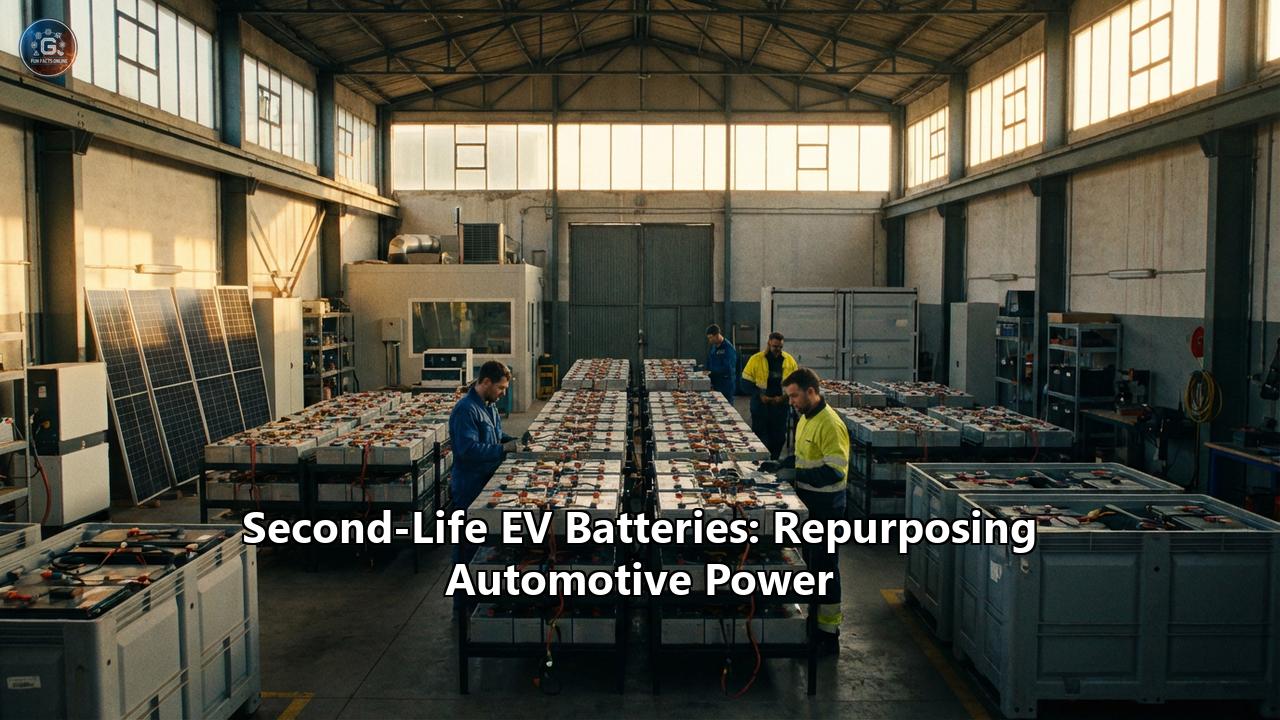
- Second Life (Stationary Storage): Once removed from the vehicle, the battery is tested, graded, and repurposed. Because stationary applications do not require rapid bursts of power or have strict weight and space constraints, the "retired" battery can easily serve for an additional 10 to 15 years storing energy for the grid, businesses, or homes.
- End-of-Life (Recycling): Only after the battery has exhausted its secondary utility (typically dropping below 50% total capacity) is it sent to a recycling facility. Here, hydrometallurgical or pyrometallurgical processes recover up to 95% of critical minerals like lithium, cobalt, nickel, and copper, which are then injected back into the manufacturing of brand-new batteries.
By inserting a "second life" between the vehicle and the recycling plant, we effectively double the useful lifespan of the battery pack. This delay is incredibly valuable. It reduces the immediate demand for new, virgin mineral mining, cuts down the carbon footprint associated with manufacturing new energy storage systems, and significantly lowers the cost of grid-scale energy storage.
The Engineering of a Second Life: How Repurposing Works
Transitioning a battery from a car chassis to a stationary storage rack is not as simple as plug-and-play. EV batteries are intricately integrated into the structural architecture of the vehicles. Safely repurposing them requires a blend of advanced hardware engineering, software analytics, and strict safety protocols.
1. Disassembly and Inspection
When an EV reaches the end of its road-worthy life, technicians safely remove the high-voltage battery pack. The pack undergoes a rigorous visual and physical inspection to ensure the casing hasn't been compromised by accidents, water intrusion, or extreme thermal events. Depending on the repurposing strategy, the pack may be kept fully intact, disassembled into smaller modules, or broken all the way down to individual cells. Keeping the pack intact is the most cost-effective method, but disassembling into modules allows engineers to weed out the few "bad apple" cells that may be dragging down the performance of the entire unit.
The rise of Cell-to-Pack (CTP) and Cell-to-Chassis (CTC) designs in newer EVs presents a unique engineering hurdle. These modern designs utilize strong structural adhesives and complex spot-welding to maximize energy density and vehicle rigidity. While excellent for the car, these adhesives make non-destructive disassembly highly challenging, often requiring specialized solvents or thermal treatments to separate modules for second-life use.
2. State of Health (SoH) Estimation and AI Diagnostics
The most critical step in repurposing is determining the battery's State of Health (SoH)—a metric representing its remaining capacity and internal resistance. Because no two drivers treat their vehicles exactly the same way, two identical EV batteries retired on the same day can have vastly different SoH profiles.
Engineers utilize techniques like Incremental Capacity Analysis (ICA) to track the internal electrochemical variations, plotting voltage against charge to detect the loss of active lithium inventory or the degradation of the anode.
In 2026, Artificial Intelligence (AI) and machine learning have revolutionized this grading process. Companies utilizing AI-driven software can rapidly analyze historical charge cycles, thermal data, and real-time impedance to predict the battery's remaining useful life with stunning accuracy. AI ensures that only batteries with matching degradation profiles are paired together in a new storage array, preventing a weaker module from bottlenecking the performance of a stronger one. Startups like ReJoule have commercialized proprietary hardware and software solutions that slash the time it takes to assess battery health, clearing the bottleneck in the repurposing supply chain.
3. Re-integration and the New BMS
Once graded, the modules are reconfigured into stationary storage racks. Because they have been separated from the EV's proprietary computer system, they require a new, custom Battery Management System (BMS). This new BMS acts as the brain of the storage unit, monitoring voltage, balancing the cells, managing thermal conditions, and communicating with the external power inverter to ensure smooth integration with the electrical grid.
Powering the Future: Key Applications for Second-Life Batteries
The applications for second-life EV batteries are as diverse as the energy sector itself. By offering a lower-cost alternative to newly manufactured "first-life" lithium-ion systems, repurposed batteries are unlocking energy storage opportunities across the globe.
Grid-Scale Storage and Renewable Integration
The transition to renewable energy sources like solar and wind faces a fundamental challenge: intermittency. The sun doesn't always shine, and the wind doesn't always blow. To maintain grid stability, utility companies require massive energy storage systems to capture excess power generated during peak production hours and dispatch it during peak demand.
Second-life EV batteries are perfectly suited for this role. Arrayed in megawatt-scale shipping containers, these repurposed packs perform critical grid services. They provide "peak shaving"—absorbing cheap, abundant solar energy at noon and discharging it at 6:00 PM when people return home and turn on their appliances, thereby saving utilities from firing up expensive, highly polluting natural gas "peaker" plants. Facilities like the Johan Cruyff Arena in Amsterdam use a 3-megawatt-hour (MWh) storage system built entirely from repurposed EV batteries to pair with the stadium’s rooftop solar panels, ensuring uninterrupted power during major events.
Commercial and Industrial (C&I) Backup
For manufacturing plants, data centers, and telecommunications towers, a power outage can result in millions of dollars in lost revenue. Traditionally, these facilities relied on noisy, polluting diesel generators or heavy, inefficient lead-acid batteries for backup power. Second-life lithium-ion batteries provide a clean, silent, and highly responsive alternative. Furthermore, businesses can use these batteries to perform energy arbitrage—buying electricity from the grid when rates are low, storing it in the repurposed EV batteries, and running their facilities off the batteries when utility rates spike.
EV Charging Infrastructure Support
Ironically, second-life batteries are playing a crucial role in expanding the EV revolution that created them. As the adoption of Direct Current (DC) fast chargers accelerates, the sudden, massive draw of electricity required to charge multiple vehicles simultaneously can strain local power grids, triggering exorbitant "demand charges" from utility companies. By installing second-life battery buffers at charging stations, operators can trickle-charge the stationary batteries from the grid at low speeds, and then dump that stored energy rapidly into visiting EVs. This circumvents grid upgrades, lowers operating costs, and ensures fast charging is viable even in areas with older electrical infrastructure.
Residential Home Storage
With the booming popularity of residential rooftop solar, homeowners are increasingly looking for ways to store their generated electricity for nighttime use. While brand-new home battery systems can be prohibitively expensive, systems built from second-life EV modules can reduce hardware costs significantly. Studies have shown that utilizing second-life batteries for home storage can cut a homeowner's electricity bill by 42% to 64% compared to relying solely on the grid.
Empowering the Global South and Rural Electrification
Perhaps the most profound impact of second-life batteries is felt in remote, off-grid regions where energy poverty is a daily reality. Pairing repurposed EV batteries with solar microgrids provides a stable, low-cost path to electrification. A breakthrough study published in Scientific Reports highlighted how second-life EV batteries proved to be a highly viable and cost-effective solution for electrifying rural primary schools in Kenya. Startups like Canada's Moment Energy are actively transforming EV batteries into microgrid solutions that provide clean, reliable power to off-grid communities, replacing expensive and polluting diesel generators.
Market Dynamics: A Booming Multi-Billion-Dollar Industry
The economics of second-life batteries are compelling. As of 2026, the global second-life EV battery market has entered a period of explosive, exponential growth. Valued at approximately USD 1.6 to 1.7 billion in 2025/2026, the market is aggressively tracking toward an estimated USD 32 billion to USD 59 billion by the mid-2030s, boasting a staggering Compound Annual Growth Rate (CAGR) of over 25% to 40%.
Volume projections are equally staggering. Analysts estimate that the global availability of second-life batteries will skyrocket from roughly 25–30 Gigawatt-hours (GWh) in 2025 to an astounding 330–350 GWh by 2030. To put that into perspective, 350 GWh is enough energy to power tens of millions of homes.
Regional Leadership:- Asia-Pacific (APAC): Unsurprisingly, the APAC region, led by China, dominates the global second-life battery market. China was the earliest and most aggressive adopter of electric mobility. Consequently, it is experiencing the first massive wave of retiring batteries. With robust government policies, heavy investments in renewable energy, and established battery manufacturing ecosystems, APAC is the undisputed volume leader.
- Europe: Europe is widely considered the fastest-growing market and the global leader in regulatory innovation. Driven by stringent carbon neutrality goals, rapid EV adoption, and high energy costs, European companies are aggressively deploying second-life BESS (Battery Energy Storage Systems). The region’s commitment to a circular economy has fostered a highly collaborative environment between automakers (OEMs) and clean energy startups.
- North America: The United States and Canada are rapidly scaling their second-life infrastructure, bolstered by federal incentives. Companies like B2U Storage Solutions have already deployed massive, commercial-scale solar-plus-storage facilities utilizing hundreds of intact, used EV batteries in places like California, proving the commercial viability of large-scale repurposing.
The 2026 Regulatory Landscape: Writing the Rules of the Circular Economy
A market expanding this rapidly requires robust guardrails. Historically, the management of end-of-life vehicle batteries was a legal gray area. Unlike internal combustion engine (ICE) lead-acid batteries, which have long-established recycling protocols, lithium-ion EV batteries operated in a regulatory vacuum. However, the landscape has radically transformed, with policymakers moving aggressively to standardize and incentivize the second-life ecosystem.
The European Union's Pioneering Approach
The European Union has set the gold standard for battery regulation. The sweeping EU Battery Regulation, rolled out in phases through 2025 and beyond, mandates strict adherence to circular economy principles. Under the Extended Producer Responsibility (EPR) mandate, automakers and battery producers are legally responsible for the end-of-life management of their products. They cannot simply wash their hands of the battery once the car is sold; they must finance and facilitate its collection, repurposing, or recycling.
Crucially, in late 2025, the EU introduced EN 18061:2025, a landmark standard explicitly focused on the safe repurposing of EV batteries for energy storage. This framework standardizes the safety rules, testing protocols, and documentation required for second-life applications, transforming an ad-hoc practice into a certified, highly regulated industry.
Furthermore, by 2027, the EU requires the implementation of a Digital Battery Passport. Every industrial and EV battery over 2 kWh will feature a digital twin—a transparent, immutable record detailing the battery's manufacturing origin, chemical composition, carbon footprint, operational history, and real-time State of Health (SoH). This passport is a game-changer for the second-life market. By eliminating information asymmetry, repurposers no longer have to guess a battery's history; they can instantly verify its suitability for a second life, drastically reducing assessment costs and liability risks.
Global Ripple Effects
The EU's aggressive stance is rippling across the globe. While the United States currently lacks a unified federal battery recycling or repurposing mandate, state-level actions and federal funding initiatives are stepping in. The U.S. government has poured billions into domestic battery manufacturing and recycling through legislation, indirectly stimulating the second-life market by funding research into battery diagnostics and circular supply chains. Industry advocates continue to push for policies that mandate automakers to share critical battery data with third-party repurposers, ensuring an open and competitive aftermarket.
Simultaneously, governments worldwide are establishing mandates for recycled material content. By 2031, the EU requires new batteries to contain a minimum percentage of recycled cobalt, lead, lithium, and nickel. While this drives the recycling industry, second-life applications serve as the critical intermediary step—extracting decades of additional utility from the battery before it is ultimately melted down to satisfy these recycled content quotas.
Economic and Environmental Alchemy
The repurposing of EV batteries represents a rare alignment of robust economic opportunity and profound environmental stewardship.
From an environmental perspective, second-life batteries represent a massive reduction in greenhouse gas emissions. Manufacturing a new lithium-ion battery is an incredibly energy-intensive process, heavily reliant on the extraction of virgin minerals like lithium, cobalt, and nickel. Mining these critical raw materials often entails significant environmental degradation, massive water consumption, and complex geopolitical supply chain vulnerabilities.
By substituting newly manufactured grid-storage batteries with repurposed EV batteries, we instantly offset the carbon emissions and mining impact associated with new battery production. The lifecycle emissions of the battery are amortized over 20 to 25 years instead of just 10, drastically lowering the overall ecological footprint of the clean energy transition.
From an economic perspective, second-life batteries are violently disrupting the energy storage market. Because the capital cost of the battery was largely subsidized during its first life in the electric vehicle, repurposed batteries can be acquired and deployed at a fraction of the cost of new systems. This cost advantage lowers the barrier to entry for renewable energy projects, making solar-plus-storage economically viable for smaller businesses, residential communities, and developing nations.
Challenges on the Horizon
Despite the incredible momentum, the second-life battery market is not without its hurdles.
- Standardization and Heterogeneity: The biggest engineering headache is the lack of standardization across automakers. A Tesla battery pack is fundamentally different in chemistry, shape, voltage, and cooling architecture from a Nissan, Ford, or Hyundai pack. Repurposers must design highly flexible systems capable of integrating radically different batteries, or focus on massive volumes of a single vehicle model to achieve economies of scale.
- Shifting Chemistries: The automotive industry is rapidly pivoting from Nickel Manganese Cobalt (NMC) to Lithium Iron Phosphate (LFP) chemistries. While LFP batteries are cheaper, safer, and last longer, they have a flatter voltage discharge curve, making it more difficult to accurately estimate their State of Health. The second-life industry must continuously adapt its diagnostic algorithms to handle evolving cell chemistries.
- Declining Costs of New Batteries: As global gigafactories scale up, the cost of brand-new LFP batteries continues to plummet. If the price of new batteries drops low enough, the economic margin for second-life batteries could be squeezed. To survive, repurposers must ruthlessly optimize their logistics, automated testing, and reassembly processes to ensure repurposed packs remain the most cost-effective solution on the market.
- Transport and Logistics: Moving massive, heavy, high-voltage battery packs that are classified as hazardous materials is expensive and heavily regulated. Establishing localized, regional hubs for testing and repurposing is essential to keep logistical costs and transportation emissions in check.
The Power of Reinvention
The story of the second-life EV battery is a testament to human ingenuity and the principles of the circular economy. It transforms a perceived liability—millions of aging electric vehicles—into one of the most vital assets of the 21st century.
As we look toward the 2030s, the line between the automotive industry and the energy sector will continue to blur. The car parked in the driveway is no longer just a mode of transportation; it is an active node in the global energy grid, and its battery will live on to power stadiums, secure data centers, and bring light to off-grid villages long after the car’s tires have stopped spinning.
By extending the lifespan of these remarkable energy reservoirs, we are honoring the materials extracted from the earth, driving down the cost of renewable energy, and taking a massive, definitive step toward a truly sustainable future. The second life of the EV battery proves that in the modern energy transition, nothing is wasted, and everything has the potential for a powerful reinvention.
Reference:
- https://www.researchandmarkets.com/reports/4985981/second-life-ev-batteries-market-global
- https://backend.orbit.dtu.dk/ws/portalfiles/portal/377537884/2nd_life_battery_final_Reviewed_.pdf
- https://americanbatterytechnology.com/ev-batteries-can-be-repurposed-as-grid-storage-to-reduce-battery-supply-chain-impacts-report/
- https://www.insightaceanalytic.com/report/second-life-ev-batteries-market/3142
- https://www.rootsanalysis.com/second-life-ev-battery-market
- https://www.no-burn.org/wp-content/uploads/2024/06/04-Battery-Infosheet-Electric-Vehicle-Battery-Repurposing-and-Second-Life.pdf
- https://www.circunomics.com/blog/second-life-applications-for-ev-batteries
- https://evboosters.com/ev-charging-news/ev-battery-capacity-retains-over-80-even-after-200-000-km-how-residual-value-evolves-across-lifecycle-phases/
- https://ev.com/news/study-debunks-ev-battery-myths-most-retain-80-capacity-after-200000-km
- https://www.reddit.com/r/OptimistsUnite/comments/1mw7e8o/many_electric_cars_will_still_have_more_than_80/
- https://ieeexplore.ieee.org/iel7/6287639/10380310/10517580.pdf
- https://www.mdpi.com/2313-0105/10/12/452
- https://www.evconnect.com/blog/how-long-does-an-electric-car-battery-last/
- https://www.idtechex.com/en/research-report/second-life-ev-batteries-2025/1056
- https://www.anernstore.com/blogs/diy-solar-guides/2025-battery-eol-policy-outlook
- https://westernresourceadvocates.org/wp-content/uploads/2024/04/Emerging-Policies-and-Best-Practices-to-Promote-Lithium-Ion-Battery-Second-Life-Applications-FINAL.pdf
- https://www.circunomics.com/blog/europes-second-life-battery-challenge-2025-review-
- https://www.precedenceresearch.com/second-life-electric-vehicle-batteries-market
- https://www.marketsandmarkets.com/blog/AT/second-life-ev-battery-market
- https://www.aceee.org/policy-brief/2025/07/repurposing-ev-batteries-second-life-stationary-storage-market-landscape-and