
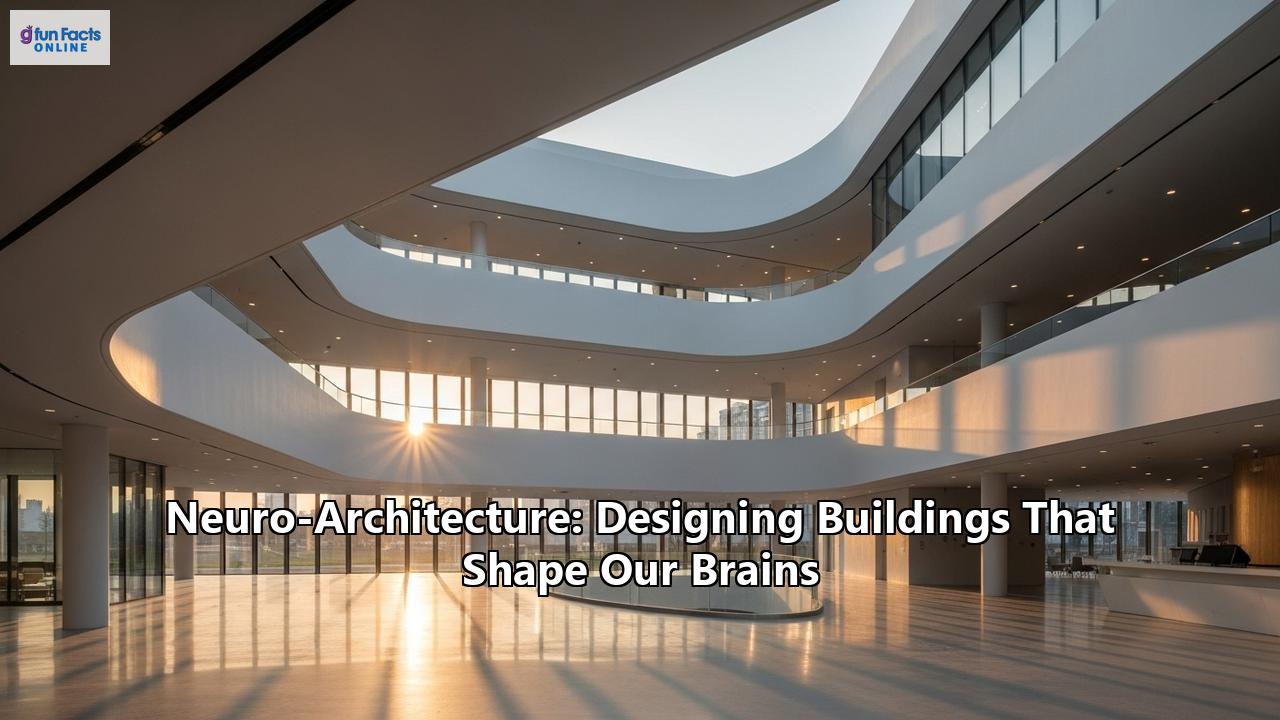
Neuro-Architecture: Designing Buildings That Shape Our Brains
We spend a vast majority of our lives, between 80% and 90%, indoors, yet we often don't consider how the design of these spaces affects our physical and mental health. This is where neuroarchitecture comes in, a burgeoning field that merges architecture and neuroscience to explore the profound connection between our built environment and our brains. It's a paradigm shift in design, moving beyond mere aesthetics and functionality to create spaces that actively enhance our well-being, productivity, and overall quality of life.
Neuroarchitecture is founded on a simple yet powerful premise: the spaces we inhabit are not just passive backdrops to our lives, but active participants in shaping our thoughts, emotions, and behaviors. It delves into the science of how our brains perceive and react to our surroundings, from the subtle interplay of light and shadow to the grand sweep of a building's form. By understanding these neural responses, architects and designers can move from a practice based on intuition and artistic concepts to one grounded in scientific evidence, creating environments that are not only beautiful but also deeply attuned to the needs of the human mind.
The core idea is to flip the traditional design process on its head. Instead of creating a space and then observing its effect on people, neuroarchitecture starts by understanding how the brain processes the built environment. This knowledge is then used to make conscious, evidence-based design decisions. The ultimate goal is to craft spaces that can boost our memory, enhance cognitive function, spark creativity, and reduce stress, all while fostering a sense of well-being.
The Historical Roots and Evolution of Neuro-Architecture
While the term "neuroarchitecture" may sound futuristic, its conceptual underpinnings have a surprisingly long history. The idea that our surroundings influence our minds is not a new one. Even early humans instinctively chose specific types of habitats that made them feel safer, demonstrating a primal understanding of the psychological impact of space.
The formal seeds of neuroarchitecture, however, were sown in the mid-20th century. In the 1950s, pioneering architect Richard Neutra championed the idea that architecture should cater to the neurological needs of its inhabitants. His work was a precursor to the more formalized field that would emerge decades later.
The true birth of neuroarchitecture as a distinct discipline can be traced to a groundbreaking discovery in 1998 by neuroscientists Fred Gage and Peter Eriksson. They revealed that the adult human brain is not static, but can actually generate new neurons in an environment that provides stimulation. This concept of neurogenesis opened up a world of possibilities for understanding how our surroundings can physically alter our brains.
Just a few years later, in 2003, the term "neuroarchitecture" was officially coined by Fred Gage, and the Academy of Neuroscience for Architecture (ANFA) was established. This marked a pivotal moment, creating a formal platform for collaboration between neuroscientists and architects and paving the way for a new era of evidence-based design.
Since then, the field has been rapidly gaining momentum, fueled by a growing public awareness of the importance of mental and physical well-being. Today, neuroarchitecture is no longer a niche interest but a burgeoning area of research and practice, with a growing body of scientific literature and an increasing number of architects and designers who are embracing its principles.
The Core Principles: How Our Brains Respond to the Built World
At the heart of neuroarchitecture lies a set of core principles that explain how different elements of our environment can trigger specific responses in our brains. These principles are not rigid rules, but rather a set of guidelines that can be adapted and applied to a wide range of spaces and contexts.
Light: The Body's Natural ClockNatural light is one of the most powerful tools in the neuroarchitect's arsenal. It plays a crucial role in regulating our circadian rhythms, the body's internal clock that governs our sleep-wake cycles. Exposure to natural light, especially in the morning, can boost mood, increase energy levels, and improve concentration. Conversely, a lack of natural light can disrupt our circadian rhythms, leading to a host of problems, from fatigue and irritability to more serious health issues.
Color: Painting Our EmotionsColor has a profound impact on our emotions and can be used to create specific moods and atmospheres in a space. Warm colors like red and yellow can be stimulating and are often used in spaces where energy and excitement are desired. Cool colors like blue and green, on the other hand, are known for their calming and relaxing effects. In fact, shades that are reminiscent of nature, such as green, blue, and yellow, have been shown to reduce stress and increase feelings of comfort.
Space and Form: The Shape of Our FeelingsThe way a space is configured can have a significant impact on our sense of comfort and security. Open, expansive spaces can evoke feelings of freedom and creativity, while smaller, more enclosed spaces can provide a sense of safety and intimacy. Even the shape of architectural elements can influence our emotional state. Sharp, angular forms can trigger feelings of stress or anxiety, while curved, organic shapes are often perceived as more calming and inviting.
Biophilia: Our Innate Connection to NatureBiophilia is the idea that humans have an innate tendency to connect with nature. Incorporating natural elements into our built environments, a practice known as biophilic design, can have a host of benefits, from reducing stress and improving focus to boosting creativity and overall well-being. This can be achieved through the use of plants, indoor gardens, natural materials like wood and stone, or simply by providing views of the outdoors.
The Science in Action: Case Studies in Neuro-Architecture
The principles of neuroarchitecture are not just theoretical concepts; they are being applied in a growing number of real-world projects, with impressive results.
Healthcare: Designing for HealingThe healthcare sector has been one of the earliest and most enthusiastic adopters of neuroarchitectural principles. Studies have shown that well-designed hospital environments can have a significant impact on patient recovery rates, stress levels, and overall satisfaction. By incorporating elements like natural light, views of nature, and calming color palettes, hospitals can create healing environments that support both the physical and emotional needs of patients.
Education: Creating Environments for LearningNeuroarchitecture is also transforming the design of schools and other educational facilities. By creating spaces that are stimulating, supportive, and inclusive, we can enhance students' academic performance, emotional well-being, and physical health. This can involve everything from designing flexible learning spaces that can be adapted to different activities to incorporating natural materials and colors that create a calming and conducive atmosphere for learning.
Workplaces: Fostering Productivity and Well-beingIn the corporate world, neuroarchitecture is being used to create workplaces that are not only more productive but also more enjoyable and supportive of employee well-being. This can involve designing offices with ample natural light and greenery, creating a variety of workspaces to suit different tasks and work styles, and incorporating ergonomic furniture to reduce physical strain.
The Tools of the Trade: Measuring the Brain's Response to Space
One of the things that sets neuroarchitecture apart from other design philosophies is its reliance on scientific evidence. To understand how our brains respond to the built environment, researchers use a variety of cutting-edge tools and techniques.
- EEG (Electroencephalography): This non-invasive technique measures electrical activity in the brain using sensors placed on the scalp. It can be used to track changes in brainwave patterns in response to different environmental stimuli.
- fMRI (Functional Magnetic Resonance Imaging): This powerful imaging technique measures brain activity by detecting changes in blood flow. It can be used to identify which areas of the brain are activated when we experience different architectural spaces.
- Virtual Reality (VR): VR technology allows researchers to create immersive, interactive simulations of different environments. This allows them to test the effects of different design choices in a controlled setting before they are built in the real world.
- Biometric Sensors: These devices can be used to track a variety of physiological responses, such as heart rate, skin conductance, and facial expressions. This data can provide valuable insights into our emotional responses to different spaces.
The Road Ahead: Challenges and Future Directions
While neuroarchitecture has the potential to revolutionize the way we design our built environments, it is not without its challenges. One of the biggest hurdles is the need for more interdisciplinary collaboration between architects, neuroscientists, and other experts. There is also a need for more research to validate the principles of neuroarchitecture and to develop a more robust evidence base for design decisions.
Despite these challenges, the future of neuroarchitecture looks bright. As our understanding of the brain continues to grow, so too will our ability to design spaces that are truly attuned to our needs. The ultimate goal is to create a world where our built environments are not just functional and aesthetically pleasing, but also actively contribute to our health, happiness, and well-being. By embracing the principles of neuroarchitecture, we can create a future where our buildings are not just places where we live and work, but also places that help us thrive.
Reference:
- https://www.inmocolonial.com/en/blog/neuroarchitecture-how-mind-conditions-space
- https://www.archdaily.com/1018573/neuroscience-and-architecture-designing-for-the-human-experience
- https://ugreen.io/transforming-spaces-transforming-minds-the-comprehensive-guide-to-neuroarchitecture/
- https://www.render4tomorrow.com/neuroarchitecture
- https://www.dalbrands.com.au/what-exactly-is-neuro-architecture/
- https://climate.sustainability-directory.com/term/neuro-architecture-principles/
- https://www.fosterandpartners.com/insights/plus-journal/brain-body-building-neuroarchitecture-and-design
- https://www.theunitedworkplace.com/insights/neuroarchitecture
- https://publications.lib.chalmers.se/records/fulltext/142385.pdf
- https://www.almadeluce.com/blog/neuroarchitecture-how-interior-design-influences-mental-well-being/
- https://www.re-thinkingthefuture.com/architectural-styles/a12562-an-overview-of-neuroarchitecture-in-the-past/
- https://pmc.ncbi.nlm.nih.gov/articles/PMC9124889/
- https://educationdesign.com/wp-content/uploads/2023/04/Neuroarchitecture-Whitepaper_Web.pdf
- https://www.neuroau.com/post/principles-of-neuroarchitecture