
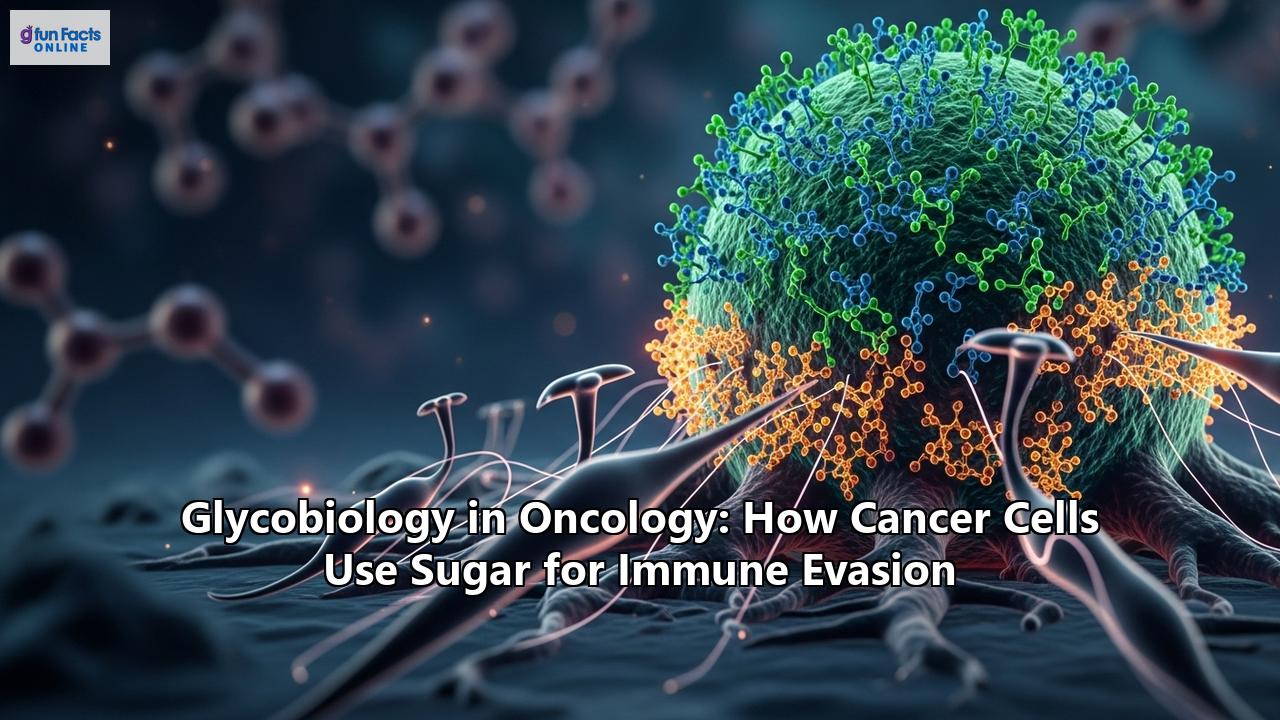
The Sweet Deception: How Cancer Cells Exploit Sugar to Evade the Immune System
In the intricate and often perilous landscape of the human body, a silent but deadly battle is constantly being waged. On one side, the immune system stands as a vigilant guardian, a complex and coordinated force tasked with identifying and eliminating threats, including rogue cells that have turned cancerous. On the other side, cancer cells, driven by a relentless survival instinct, develop a remarkable arsenal of strategies to outwit and disable their pursuers. One of their most sophisticated and insidious tactics lies not in overt aggression, but in a subtle and sweet deception: the manipulation of sugar molecules that coat their surface. This is the world of glycobiology in oncology, a field that is rapidly unveiling how cancer's sweet tooth is a key to its ability to hide from, suppress, and ultimately conquer the body's defenses.
Every cell in the human body is adorned with a dense and complex layer of sugar chains, known as glycans. This "sugar coat," or glycocalyx, is far from being a mere passive decoration. It is a dynamic and vital interface that mediates a vast array of biological processes, from cell-to-cell communication and adhesion to protein folding and signaling. Glycans are, in essence, the gatekeepers of cellular identity, and it is through reading this "glyco-code" that the immune system learns to distinguish "self" from "non-self."
However, as a healthy cell transforms into a malignant one, this sugar coating undergoes a dramatic and predictable transformation. This process, known as aberrant glycosylation, is now recognized as a universal hallmark of cancer. The glycans on cancer cells are often truncated, over-expressed, or decorated with unusual structures not found on their healthy counterparts. These altered sugar structures, collectively termed Tumor-Associated Carbohydrate Antigens (TACAs), are not just byproducts of malignant transformation; they are active participants in the drama of cancer progression. They play pivotal roles in metastasis, the spread of cancer to distant organs, and perhaps most critically, in the cancer cell's ability to orchestrate a multifaceted campaign of immune evasion.
This article will delve into the fascinating and complex world of cancer glycobiology, exploring the molecular mechanisms by which cancer cells use their altered sugar coat to build a fortress against the immune system. We will uncover how they create a physical shield, mask their identity, and actively send "do not eat me" signals to approaching immune cells. Furthermore, we will examine the exciting therapeutic frontiers that are opening up as scientists learn to crack cancer's glyco-code, developing innovative strategies that turn this sweet deception into a fatal vulnerability.
The Aberrant Glycocalyx: A Sugar Shield and a Deceptive Mask
The first line of defense for a cancer cell against the immune system is its own altered glycocalyx. In many cancers, this sugary coat becomes significantly thicker and denser than on normal cells, forming a formidable physical barrier that shields the cell from immune attack. This is not a passive process; it is an actively maintained shield that provides a "stealth cloak" against the immune system.
The Physical Barrier: A Nanoscale Fortress
The sheer physical presence of a thickened glycocalyx can prevent immune cells, such as Natural Killer (NK) cells and cytotoxic T lymphocytes (T-cells), from making direct contact with the cancer cell surface. Research has shown a direct inverse correlation between the thickness of the cancer cell's glycocalyx and its susceptibility to being killed by NK cells. Even a change in thickness of as little as 10 nanometers can significantly impact the ability of immune cells to carry out their cytotoxic function. This physical barrier effectively hides the tumor-specific protein antigens that would normally be recognized by T-cells, preventing the initiation of an adaptive immune response.
A key component of this thickened glycocalyx are mucins, large, heavily glycosylated proteins that are overexpressed in many types of cancer. Mucins like MUC1 and MUC16, with their extensive sugar branches, extend far from the cell surface, creating a dense, brush-like layer that physically pushes immune cells away. This creates a pericellular halo that can be up to 20 micrometers thick, acting as a slippery barrier that is difficult for immune cells and even therapeutic drugs to penetrate. The overexpression of these mucins not only provides a physical shield but also masks the detection of tumor-associated antigens, preventing both specific and non-specific lysis of the tumor cells by immune effectors.
Antigen Masking: Hiding in Plain Sight
Beyond creating a physical barrier, the aberrant glycosylation on cancer cells serves to mask the very antigens that the immune system is trained to recognize. In a healthy cell, protein antigens are presented on the cell surface by Major Histocompatibility Complex (MHC) molecules, signaling to T-cells whether the cell is healthy or infected/cancerous. However, the dense forest of glycans on a cancer cell can physically cover these MHC-presented antigens, effectively rendering the cancer cell invisible to T-cell surveillance.
MUC1, for example, is known to interfere with the interaction between tumor cell antigens and MHC class I receptors on innate immune cells. By doing so, it hampers the cross-presentation of processed antigens, a crucial step in activating a robust anti-tumor T-cell response. Similarly, the heavy glycosylation of other cell surface proteins can sterically hinder the binding of antibodies and the engagement of immune receptors, further contributing to the cancer cell's ability to hide in plain sight.
The Sweet Language of Immunosuppression: Active Sabotage of the Immune Response
While the physical properties of the glycocalyx provide a passive defense, cancer cells also use their altered glycans to actively manipulate and suppress the immune system. They do this by engaging with specific glycan-binding proteins, known as lectins, which are expressed on the surface of various immune cells. These interactions can trigger inhibitory signaling pathways within the immune cells, effectively disarming them and creating a localized state of immunosuppression within the tumor microenvironment.
Sialic Acids and Siglecs: A "Do Not Eat Me" Signal
One of the most significant changes in cancer cell glycosylation is an increase in sialylation, the addition of sialic acid molecules to the terminal ends of glycan chains. This "hypersialylation" is a common feature across many cancer types and plays a crucial role in immune evasion. Sialic acids act as ligands for a family of lectins called Siglecs (sialic acid-binding immunoglobulin-like lectins), which are primarily expressed on immune cells.
The interaction between sialic acids on cancer cells and Siglec receptors on immune cells often transmits an inhibitory signal, effectively telling the immune cell to stand down. This is a mechanism that some pathogens have also evolved to mimic, using sialic acids to subvert the host's immune response. In the context of cancer, this interaction has profound immunosuppressive effects on multiple arms of the immune system:
- T-cells and NK cells: The engagement of Siglec receptors on T-cells and NK cells can inhibit their activation and cytotoxic functions. For instance, tumor-derived sialylated mucins can trigger Siglec-9 on NK cells, leading to their inhibition. Tumor-derived sialoglycans can also disable a key killing mechanism of cytotoxic T-lymphocytes (CTLs) by inhibiting the trafficking and release of lytic granules towards the cancer cell.
- Dendritic Cells (DCs): Dendritic cells are crucial for initiating an anti-tumor immune response by presenting tumor antigens to T-cells. However, the interaction of sialylated glycans on cancer cells with Siglecs on DCs can promote an immature, tolerogenic DC phenotype. These immature DCs are less effective at activating T-cells, leading to a blunted immune response.
- Macrophages: Macrophages are versatile immune cells that can either promote or suppress an immune response. The binding of sialylated glycans to Siglecs on macrophages can polarize them towards an M2, or "tumor-promoting," phenotype. These M2 macrophages contribute to tissue remodeling, angiogenesis (the formation of new blood vessels that feed the tumor), and immunosuppression.
Galectins: Orchestrators of Immune Tolerance
Another important family of lectins involved in cancer immune evasion is the galectins, which bind to β-galactoside-containing glycans. Galectins are secreted by tumor cells and are found at high concentrations within the tumor microenvironment, where they act as powerful immunomodulators.
Galectin-1, for example, is overexpressed in many tumors and contributes to creating an immunosuppressive environment through several mechanisms:
- T-cell Apoptosis: Galectin-1 can induce apoptosis, or programmed cell death, in activated T-cells, effectively eliminating the very cells that are poised to attack the tumor.
- Tolerogenic Dendritic Cells: Similar to the effect of Siglec engagement, galectin-1 promotes the development of tolerogenic dendritic cells that are unable to properly activate anti-tumor T-cell responses.
- Angiogenesis: Beyond its direct effects on immune cells, galectin-1 also promotes angiogenesis, helping the tumor to build its own blood supply and thrive.
Galectin-3 is another key player, contributing to immune tolerance by regulating T-cell expansion and the function of regulatory T-cells (Tregs), a subset of T-cells that actively suppress the immune response. The interaction of Galectin-9 with its receptor TIM-3 on T-cells is another critical immune checkpoint pathway that is exploited by cancer cells to induce T-cell exhaustion and apoptosis.
A Closer Look at the Culprits: Key Tumor-Associated Carbohydrate Antigens (TACAs)
The aberrant glycosylation in cancer gives rise to a host of specific TACAs that are now known to be key players in immune evasion. While there are many, some of the most well-studied include:
- Tn and Sialyl-Tn (sTn) Antigens: These are truncated O-glycans that result from the incomplete synthesis of longer glycan chains. Their expression is rare in normal tissues but common in many carcinomas, including gastrointestinal cancers. The expression of Tn and sTn on tumor cells has been found to regulate the function of macrophages, NK cells, and dendritic cells, altering their normal anti-tumor role and contributing to an immunosuppressed microenvironment. For example, they can interact with the macrophage-galactose lectin (MGL) on macrophages and dendritic cells, preventing their maturation. Furthermore, sTn has been shown to inhibit the cytotoxicity of NK cells and lymphocytes.
- Sialyl-Lewis A (sLea) and Sialyl-Lewis X (sLex): These tetrasaccharide structures are crucial for the adhesion of cancer cells to the endothelial cells lining blood vessels, a key step in metastasis. They achieve this by binding to selectins, a family of lectins expressed on endothelial cells. While their role in metastasis is well-established, they also influence immune recognition. Interestingly, while moderate expression of sLex can promote metastasis, very high levels of expression on tumor cells have been shown to be unfavorable for metastasis, as it can trigger an attack by NK cells. This highlights the complex and sometimes contradictory roles that glycans can play in cancer progression.
- Gangliosides (GD2 and GD3): Gangliosides are glycosphingolipids that are abundantly present in the tumor microenvironment, as they are shed by tumor cells. GD2 and GD3 are overexpressed in many cancers, including neuroblastoma and melanoma, and are involved in promoting tumor progression and immune evasion. They can suppress T-cell activation and dendritic cell maturation when released into the circulation. For example, tumor-shed GD2 and GM3 can inhibit the generation of dendritic cells from their precursors, and GM3 can hamper the antigen-presenting ability of these dendritic cells. Furthermore, overexpression of GD3 has been shown to have an immunosuppressive effect on NK cells.
The Architects of Deception: Dysregulated Glycosylation Machinery
The appearance of TACAs on the surface of cancer cells is not a random occurrence. It is the direct result of profound changes in the expression and activity of the enzymes responsible for building glycan chains: the glycosyltransferases and glycosidases.
Glycosyltransferases are the enzymes that add sugar molecules to growing glycan chains, while glycosidases are responsible for removing them. In cancer cells, the delicate balance of these enzymatic activities is disrupted. For example, the upregulation of certain sialyltransferases leads to the hypersialylation characteristic of many cancers. Conversely, the downregulation of other glycosyltransferases can lead to the production of truncated glycans like the Tn and sTn antigens.
The expression of these enzymes is controlled by a complex network of factors, including genetic mutations, epigenetic modifications, and changes in the tumor microenvironment. For instance, the gene encoding GD3 synthase (GD3S), the key enzyme for GD2 and GD3 biosynthesis, is significantly upregulated in some aggressive cancers like triple-negative breast cancer. This upregulation is associated with T-cell exhaustion and the maintenance of an immunosuppressive microenvironment.
Understanding the dysregulation of this enzymatic machinery is crucial, as these enzymes themselves represent promising targets for novel anti-cancer therapies.
Glycosylation's Influence on Immune Checkpoints: A Deeper Level of Control
The discovery of immune checkpoint pathways, such as the PD-1/PD-L1 axis, has revolutionized cancer therapy. PD-1 is a receptor on activated T-cells that, when bound by its ligand PD-L1 on cancer cells, delivers an inhibitory signal that shuts down the T-cell response. Therapies that block this interaction can "release the brakes" on the immune system, allowing it to attack cancer cells.
Recent research has revealed that glycosylation plays a critical role in regulating this crucial immune checkpoint. PD-L1 is a glycoprotein, and its N-linked glycosylation is essential for its stability and function. Glycosylation of PD-L1 at specific sites protects it from degradation, thereby maintaining its presence on the cancer cell surface and enhancing its ability to suppress T-cells.
Furthermore, the glycan structures on PD-L1 can directly influence its interaction with PD-1. The enzyme B3GNT3, for example, adds specific glycan structures to PD-L1 that are necessary for its efficient binding to PD-1. Conversely, the loss of certain enzymes involved in N-glycan maturation can alter the glycosylation pattern of PD-L1 in a way that it can no longer be effectively recognized by PD-1, thus impairing its immunosuppressive function.
This intricate interplay between glycosylation and immune checkpoint proteins adds another layer of complexity to cancer's immune evasion strategies. It also presents new therapeutic opportunities. For instance, drugs that inhibit the glycosylation of PD-L1 could potentially destabilize the protein or disrupt its interaction with PD-1, making cancer cells more vulnerable to T-cell attack. Moreover, the glycan "shield" on PD-L1 can sometimes mask the protein from being detected by the antibodies used in diagnostic tests, leading to inaccurate assessments of PD-L1 levels. Removing these glycans with enzymes before testing can significantly improve the sensitivity of PD-L1 detection, potentially leading to better patient stratification for immunotherapy.
Exploiting the Sweet Tooth: Therapeutic Strategies Targeting Glycans
The growing understanding of the central role of aberrant glycosylation in cancer immune evasion has paved the way for a host of innovative therapeutic strategies that aim to turn cancer's sweet armor into its Achilles' heel. These approaches are broadly categorized into antibody-based therapies, cancer vaccines, and adoptive cell therapies.
Antibody-Based Therapies: Homing in on Sugar Targets
The fact that TACAs are highly expressed on cancer cells but rare on normal cells makes them attractive targets for antibody-based therapies.
- Monoclonal Antibodies (mAbs): Scientists have developed mAbs that specifically recognize and bind to TACAs. These antibodies can then trigger the immune system to attack the cancer cells through mechanisms like antibody-dependent cellular cytotoxicity (ADCC), where immune cells like NK cells are recruited to kill the antibody-coated cancer cell. The first immunotherapeutic drug approved to target a glycan antigen was Dinutuximab, an anti-GD2 antibody used to treat high-risk neuroblastoma.
- Antibody-Drug Conjugates (ADCs): ADCs take the targeting ability of antibodies a step further by linking them to a potent cytotoxic drug. The antibody serves as a homing device, delivering the drug directly to the cancer cell, thereby minimizing damage to healthy tissues. ADCs targeting TACAs like sialyl-di-Lewisa are showing promise in preclinical studies for treating solid tumors like colorectal and pancreatic cancer.
TACA-Based Cancer Vaccines: Training the Immune System to Recognize Sugar
The goal of a cancer vaccine is to stimulate the patient's own immune system to recognize and attack cancer cells. TACA-based vaccines use TACAs as antigens to train the immune system to see them as foreign. However, developing effective TACA-based vaccines has been challenging. Carbohydrate antigens are often poorly immunogenic, meaning they don't provoke a strong immune response. Specifically, they tend to elicit an antibody response (humoral immunity) but fail to induce a robust T-cell response (cellular immunity), which is critical for long-term cancer control.
Despite these challenges, researchers are making progress. Some strategies to improve the immunogenicity of TACA-based vaccines include:
- Conjugating TACAs to carrier proteins: Linking TACAs to a larger protein can help to stimulate a stronger immune response.
- Multi-epitope vaccines: Some vaccines are being developed that include multiple different TACAs to broaden the immune response.
- Using unnatural TACA analogues: Synthesizing artificial versions of TACAs that are more immunogenic than their natural counterparts is a promising strategy.
- Combining with immune checkpoint inhibitors: Combining TACA-based vaccines with checkpoint inhibitors like anti-PD-1 antibodies could help to overcome the immunosuppressive tumor microenvironment and enhance the anti-tumor immune response.
Adoptive Cell Therapy: Engineering Immune Cells to Target Glycans
Adoptive cell therapy involves taking a patient's own immune cells, modifying them in the lab to better recognize and kill cancer cells, and then infusing them back into the patient. Chimeric Antigen Receptor (CAR) T-cell therapy is a powerful form of adoptive cell therapy that has shown remarkable success in treating certain blood cancers.
Researchers are now developing CAR T-cells that are engineered to recognize and target TACAs on cancer cells. This approach has the potential to overcome the low immunogenicity of TACAs and direct a powerful T-cell attack against tumors. CAR T-cells targeting a variety of TACAs, including GD2, Tn-MUC1, Lewis Y, and sTn, are currently in preclinical and clinical development for both solid and hematological cancers.
Another innovative approach involves engineering immune cells, such as NK cells, to display enzymes on their surface that can "edit" the cancer cell's glycocalyx. These "glycocalyx-editing" immune cells can be equipped with mucinases or sialidases, enzymes that can break down the mucins and sialic acids that form the cancer cell's protective shield. This strategy has been shown to enhance the ability of immune cells to breach the glycocalyx armor and kill cancer cells, sometimes with an efficacy that rivals or even exceeds that of CARs.
Conclusion: A New Frontier in the War on Cancer
The study of glycobiology has opened up a new and exciting frontier in our understanding of cancer. We now know that the aberrant glycosylation that is a hallmark of cancer is not a mere bystander effect but a key driver of malignancy, particularly in the critical battle between the cancer cell and the immune system. From building a physical shield and masking its identity to actively disarming approaching immune cells, cancer's manipulation of its sugar coat is a testament to its remarkable adaptability and cunning.
This "sweet deception," however, also represents a profound vulnerability. The unique sugar structures that cancer cells use to their advantage are also a set of highly specific targets that can be exploited for therapeutic intervention. The development of TACA-targeting antibodies, vaccines, and engineered immune cells represents a paradigm shift in cancer immunotherapy, moving beyond protein antigens to the complex world of carbohydrates.
While many challenges remain, the progress in this field is rapid and promising. By continuing to unravel the sweet secrets of cancer, scientists and clinicians are poised to develop a new generation of therapies that can strip away cancer's sugary disguise, exposing it to the full force of a reawakened immune system. The future of oncology may very well be written in the language of sugars, as we learn to turn cancer's greatest deception into its ultimate downfall.
Reference:
- https://pmc.ncbi.nlm.nih.gov/articles/PMC6240699/
- https://www.life-science-alliance.org/content/7/3/e202302368
- https://aacrjournals.org/cancerres/article/82/4_Supplement/P5-06-10/681207/Abstract-P5-06-10-Tumor-microenvironment-modulates
- https://pmc.ncbi.nlm.nih.gov/articles/PMC4865499/
- https://jitc.bmj.com/content/8/2/e001222
- https://pmc.ncbi.nlm.nih.gov/articles/PMC3874797/
- https://www.frontiersin.org/journals/pharmacology/articles/10.3389/fphar.2023.1282572/full
- https://pmc.ncbi.nlm.nih.gov/articles/PMC7039198/
- https://www.mdpi.com/1467-3045/47/6/406
- https://pmc.ncbi.nlm.nih.gov/articles/PMC11471287
- https://www.researchgate.net/publication/378239367_Immunoengineering_can_overcome_the_glycocalyx_armour_of_cancer_cells
- https://www.researchgate.net/publication/358298563_Mucins_form_a_nanoscale_material_barrier_against_immune_cell_attack
- https://www.asbmb.org/asbmb-today/science/032623/thicker-glycocalyx-barrier-helps-cancer
- https://pmc.ncbi.nlm.nih.gov/articles/PMC5500204/
- https://pmc.ncbi.nlm.nih.gov/articles/PMC6614013/
- https://pmc.ncbi.nlm.nih.gov/articles/PMC10584724/
- https://ecancer.org/en/video/4759-galectins-in-tumour-immunity
- https://pmc.ncbi.nlm.nih.gov/articles/PMC7277089/
- https://pmc.ncbi.nlm.nih.gov/articles/PMC9852904/
- https://pubmed.ncbi.nlm.nih.gov/36686742/
- https://pmc.ncbi.nlm.nih.gov/articles/PMC5372009/
- https://www.embopress.org/doi/10.1093/emboj/18.6.1516
- https://www.researchgate.net/figure/Proposed-role-of-tumor-gangliosides-in-the-tumor-microenvironment-Gangliosides-are_fig1_6718013
- https://pubmed.ncbi.nlm.nih.gov/40237717/
- https://pmc.ncbi.nlm.nih.gov/articles/PMC7855613/
- https://pmc.ncbi.nlm.nih.gov/articles/PMC8198577/
- https://pmc.ncbi.nlm.nih.gov/articles/PMC11290144/
- https://pmc.ncbi.nlm.nih.gov/articles/PMC11274725
- https://hub.tmu.edu.tw/en/publications/regulation-of-pd-l1-glycosylation-and-advances-in-cancer-immunoth
- https://aacrjournals.org/mct/article/19/3/790/92797/Monoclonal-Antibody-Targeting-Sialyl-di-Lewisa
- https://pubmed.ncbi.nlm.nih.gov/31871270/
- https://pmc.ncbi.nlm.nih.gov/articles/PMC2787790/
- https://www.synabs.be/2022/06/09/taca-promising-oncology-targets/
- https://cordis.europa.eu/project/id/957512