
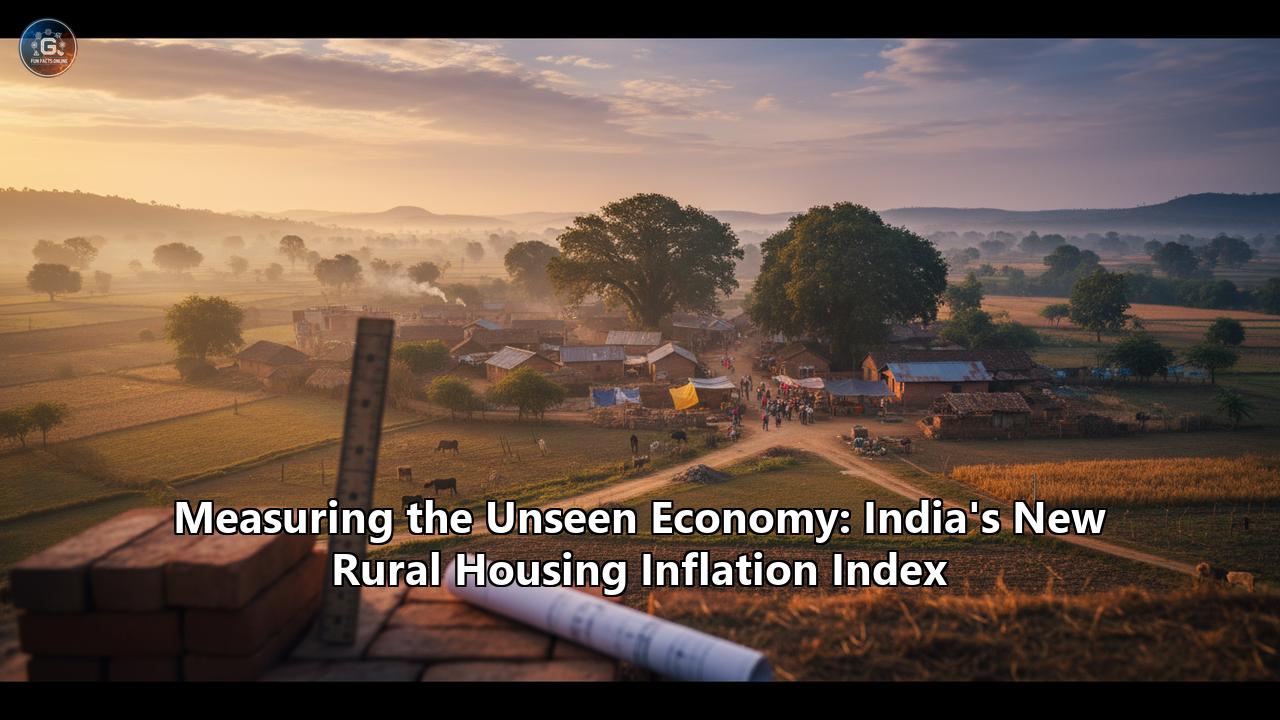
Measuring the Unseen Economy: India's New Rural Housing Inflation Index
In a landmark move set to redefine the landscape of economic data in India, the Ministry of Statistics and Programme Implementation (MoSPI) is spearheading a significant overhaul of the Consumer Price Index (CPI). At the heart of this transformation lies the inclusion of a rural housing inflation index, a metric that has been conspicuously absent from the nation's primary gauge of retail inflation. This pioneering initiative, expected to roll out with the new CPI series in February 2026, promises to illuminate a crucial but hitherto unmeasured segment of the Indian economy, offering a more granular and realistic picture of the cost of living across the country.
This comprehensive article delves deep into the multifaceted dimensions of India's new rural housing inflation index. We will explore the historical context that led to this pivotal change, dissect the intricate methodologies being adopted, and analyze the far-reaching implications for India's monetary policy, social welfare schemes, and the real estate sector. This is the story of how India is gearing up to measure the unseen economy, one rural dwelling at a time.
A Blind Spot in the Economy: The Historical Exclusion of Rural Housing from CPI
For decades, India's primary tool for measuring retail inflation, the Consumer Price Index, has carried a significant blind spot: it did not account for the housing inflation experienced by the vast majority of its rural population. The current CPI series, with a base year of 2012, only captures housing inflation in urban areas. This omission was not a matter of oversight but a consequence of practical challenges, primarily the lack of credible data on rural rental markets.
The erstwhile methodology relied on the Household Consumption Expenditure Survey (HCES) of 2011-12, which did not provide estimates for imputed rent for owner-occupied houses in rural India. Imputed rent is an estimate of the rent that a homeowner would have to pay if they were to rent their own property. Given that a vast majority of rural dwellings are owner-occupied and formal rental markets are nascent in these areas, collecting reliable data was a formidable task. The actual house rent expenditure in rural areas, as per the 2011-12 HCES, accounted for a mere 0.44% of the total rural consumption expenditure, further contributing to the decision to exclude it from the index.
This exclusion, however, has become increasingly untenable. India is undergoing a significant economic transformation, with rising rural incomes, increased mobility for work, and evolving lifestyle preferences. These factors have led to the emergence of rental markets even in rural areas, a trend that the existing CPI framework was failing to capture. The result was a skewed understanding of inflationary pressures, with the potential for misinformed policy decisions that did not reflect the ground realities of a significant portion of the population.
The turning point came with the Household Consumption Expenditure Survey (HCES) for 2023-24. For the first time, this comprehensive survey has captured house rent data for rural areas, including the crucial element of imputed rent for owner-occupied dwellings. This breakthrough has paved the way for the MoSPI, through its National Statistical Office (NSO), to undertake the much-needed revision of the CPI and introduce a more inclusive and representative housing index.
The Architecture of the New Index: A Methodological Deep Dive
The introduction of the rural housing inflation index is not merely an addition but a fundamental restructuring of how housing inflation is measured in India. The new methodology, developed in consultation with experts and incorporating recommendations from the International Monetary Fund (IMF), is designed to be more robust, representative, and in line with global best practices.
Expanding the Canvas: Inclusion of Rural and Exclusion of Non-Market Dwellings
The most significant change is, of course, the inclusion of rural areas in the housing index. This will be complemented by another crucial modification: the exclusion of government and employer-provided accommodations. In the current CPI, these dwellings, which often come with concessional rents or have their rental value linked to an employee's House Rent Allowance (HRA), have been a source of distortion. Since the HRA is tied to an employee's pay grade and not the prevailing market rental rates, it does not accurately reflect the dynamics of the rental market. This has been a long-standing concern for economists, who have argued that it can lead to an underestimation of true housing inflation. By removing these non-market transactions from the calculation, the new index will provide a clearer picture of actual rental market trends.
From Bi-Annual to Monthly: The Shift in Data Collection Frequency
Another key reform is the move from bi-annual to monthly rent data collection in both rural and urban areas. The current practice of collecting rent data every six months has been criticized for its inability to capture the real-time dynamics of the housing market, leading to what has been described as "unexplainable" movements in monthly housing inflation rates. The new approach will ensure that the index is more responsive to the fast-changing rental landscape, providing a more accurate and timely measure of housing inflation.
The Intricacies of Imputed Rent: Valuing Owner-Occupied Homes
The inclusion of owner-occupied dwellings, which constitute a significant portion of the housing stock in both rural and urban India, presents a unique challenge: how to assign a rental value to a property that is not actually rented. This is where the concept of "imputed rent" comes into play. The new CPI will employ the "Rental Equivalent Approach" to estimate the imputed rent for owner-occupied houses.
This approach involves collecting rent data from a sample of rented dwellings in each selected area and then using this data to impute the rent for similar owner-occupied dwellings. The selection of these rental units will be done in a way that they represent various categories of dwellings with different numbers of living rooms.
While the "Rental Equivalent Approach" is a widely accepted method, its application in rural India's nascent rental markets will require a nuanced strategy. The World Bank has extensively reviewed various methods for imputing rent in developing countries, including hedonic regression models that consider various housing characteristics to predict rental values. While the MoSPI's discussion paper primarily focuses on the rental equivalence approach, it is likely that sophisticated statistical techniques will be employed to ensure the accuracy of imputed rent calculations in diverse rural settings.
The 'Chain-Linking' Method: Ensuring Continuity and Comparability
To ensure a seamless transition from the old CPI series to the new one, the MoSPI will employ the "chain-linking" method. A chain-linked index measures economic change over time by linking successive periods with the previous period's reading. This approach allows for the periodic updating of weights and the introduction of new items into the index without breaking the continuity of the time series.
In the context of the new housing index, this means that an overlapping period will be used where the index is calculated using both the old and the new sets of weights. This will allow for the creation of a conversion factor that can be used to link the two series, ensuring that long-term comparisons of inflation trends remain possible. The IMF has provided technical assistance to India on the base revision of the CPI, advising on the use of a "short index" or "chain index" to make inflation estimates more current and reliable.
Overcoming the Hurdles: Challenges in Rural Data Collection
The success of the new rural housing inflation index hinges on the ability of the NSO to collect accurate and representative data from the vast and diverse rural landscape of India. This is a task fraught with challenges.
The Nascent Nature of Rural Rental Markets
One of the primary challenges is the nascent and often informal nature of rental markets in many rural areas. Unlike urban centers with well-established rental markets, a significant portion of rural housing is owner-occupied. Finding a sufficient number of rental dwellings to form a representative sample for the "Rental Equivalent Approach" could be a significant hurdle in some regions.
The Diversity of Rural India
Rural India is not a monolith. Housing types, construction materials, and living standards vary dramatically from one region to another. A 'pucca' house in one part of the country might be very different from one in another. Capturing this diversity and ensuring that the data collected is comparable across regions will require a carefully designed sampling strategy and robust data collection protocols.
Logistical and Infrastructural Barriers
The sheer geographical spread of rural India poses significant logistical challenges. Reaching remote villages, the lack of proper addresses for many houses, and the potential for technological barriers in some areas can make the process of monthly data collection a complex and resource-intensive endeavor.
To address these challenges, the NSO is likely to employ a multi-pronged strategy. This will likely involve:
- Leveraging Technology: The use of handheld devices and mobile applications for data collection can help in ensuring accuracy and speed. GIS mapping could also be used to overcome the challenge of locating dwellings.
- Capacity Building: Training of field staff to handle the nuances of rural data collection, including techniques for eliciting accurate information on imputed rent, will be crucial. The National Buildings Organisation (NBO), which has a mandate to organize training programs for state government staff in housing statistics, could play a vital role here.
- Community Engagement: Involving local communities and leaders could help in identifying rental properties and gaining the trust and cooperation of households.
The Ripple Effect: Economic and Social Implications of the New Index
The inclusion of a rural housing inflation index in the CPI is not just a statistical exercise; it is a move with profound economic and social implications.
A Sharper Lens for Monetary Policy
For the Reserve Bank of India (RBI), the CPI is the primary anchor for its monetary policy decisions. A more accurate and comprehensive measure of inflation will enable the central bank to make more informed decisions on interest rates. By capturing the inflationary pressures in the rural housing sector, the new index will provide a more complete picture of the overall price stability in the economy, potentially leading to more effective inflation targeting.
Recalibrating Social Welfare Schemes
The new index will have a significant bearing on a range of social welfare schemes aimed at improving the living standards of the rural population. For instance, the Pradhan Mantri Awas Yojana (PMAY), a flagship program aimed at providing "Housing for All," could be better targeted and its impact more accurately assessed with the help of a rural housing inflation index. The data on rural housing costs could also inform the wage rates under the Mahatma Gandhi National Rural Employment Guarantee Scheme (MGNREGS), ensuring that they keep pace with the cost of living. The linkage between PMAY-G and MGNREGS, where beneficiaries are entitled to unskilled labor wages for house construction, further underscores the importance of an accurate housing cost measure.
Transforming the Housing Finance and Real Estate Sectors
The new index is also expected to have a significant impact on the housing finance and real estate sectors. For housing finance companies, a more reliable measure of rural housing inflation will help in better risk assessment and the development of more tailored loan products for the rural market. The Indian housing finance sector is already on a growth trajectory, and a clearer understanding of the rural market dynamics could further fuel this expansion.
For the real estate sector, the index will provide valuable data on the emerging trends in rural housing, potentially attracting more investment and development in these areas. The increasing contribution of Tier II and III cities to the housing market is a clear indicator of the growing importance of non-metro areas, and the new index will provide a much-needed tool to track this trend.
A Global Perspective: India in the Context of Other Nations
India is not alone in grappling with the challenge of measuring housing inflation, particularly in the context of a large rural and owner-occupied housing sector. A comparative look at how other countries, especially developing economies, handle this issue provides valuable context.
For instance, a study on housing prices in BRICS countries (Brazil, Russia, India, China, and South Africa) highlights the diverse methodologies and challenges in these emerging economies. Brazil, with a significant homeownership rate, has also explored hedonic price models to estimate its housing stock, a technique that could offer insights for India. Many countries in Eastern Europe, the Caucasus, and Central Asia, where homeownership rates are high, use the "user cost" approach for imputing rent, an alternative to the "rental equivalence" method.
A review of international practices by organizations like the World Bank and the OECD reveals a lack of a single, universally accepted method for imputing rent. However, the consensus is that including housing in welfare and inflation measures is crucial for accurate economic analysis. India's move to a more comprehensive housing index, therefore, aligns with global best practices and will enhance the international comparability of its economic data.
The Road Ahead: A More Inclusive and Data-Driven Future
The introduction of India's new rural housing inflation index marks a significant milestone in the country's journey towards a more data-driven and inclusive economic policy framework. By bringing a vast, previously unmeasured segment of the economy into the light, this initiative will provide policymakers, economists, and citizens with a more accurate and nuanced understanding of the cost of living in the world's most populous nation.
The path ahead is not without its challenges. The successful implementation of the new index will require a concerted effort from the MoSPI and the NSO to overcome the hurdles of rural data collection. Transparency in methodology and continuous engagement with stakeholders will be key to building trust and ensuring the credibility of the new index.
Ultimately, the new rural housing inflation index is more than just a number. It is a testament to India's commitment to understanding the economic realities of all its citizens, from the bustling metropolises to the remotest villages. It is a tool that has the potential to shape more equitable and effective policies, fostering a more inclusive and prosperous future for all. As the Indian economy continues its dynamic growth trajectory, this new measure of the unseen economy will be an indispensable guide for navigating the complexities of the 21st century.
Reference:
- https://upstox.com/news/business-news/latest-updates/govt-proposes-overhaul-in-cpi-housing-index-what-s-changing-why-it-matters-and-what-happens-next/article-183822/
- https://mospi.gov.in/sites/default/files/announcements/Discussion_paper_HICM_newCPI_series30102025.pdf
- https://timesofindia.indiatimes.com/business/india-business/overhaul-housing-index-compilation-method-statistics-ministry/articleshow/124967680.cms
- https://www.realtysamachar.com/news/markets/national/india-updates-cpi-housing-index-for-better-inflation-data
- https://visionias.in/current-affairs/upsc-daily-news-summary/article/2025-10-31/business-standard/economics-indian-economy/stats-ministry-plans-fresh-look-at-cpi-housing-gauge-seeks-public-feedback
- https://indianexpress.com/article/business/new-cpi-to-measure-rural-housing-inflation-exclude-employer-provided-dwellings-10336811/
- https://www.business-standard.com/markets/capital-market-news/discussion-paper-highlights-proposed-changes-in-housing-index-compilation-methodology-in-new-cpi-series-125103100383_1.html
- https://visionias.in/current-affairs/upsc-daily-news-summary/article/2025-10-31/the-indian-express/economics-indian-economy/new-cpi-to-measure-rural-housing-inflation-exclude-employer-provided-dwellings
- https://www.researchgate.net/publication/305603137_Rent-Imputation_for_Welfare_Measurement_A_Review_of_Methodologies_and_Empirical_Findings
- https://vajiramandravi.com/current-affairs/mospi-proposes-overhaul-in-cpi-housing-index/
- https://economictimes.indiatimes.com/news/economy/policy/housing-index-rural-rent-in-staff-accommodation-out/articleshow/124968480.cms
- http://www.roiw.org/2017/n4/15.pdf
- https://openknowledge.worldbank.org/entities/publication/e8f9023b-a8f7-58d3-ab27-fb3c6e80ade8
- https://economictimes.indiatimes.com/news/economy/indicators/for-more-accurate-data-iip-to-use-chain-based-approach/articleshow/121785145.cms?from=mdr
- https://w3.unece.org/Stories/2025/04/cpi_class_n/webpage6.html
- https://www.elibrary.imf.org/downloadpdf/book/9781484354841/ch09.pdf
- https://www.informistmedia.com/MoneyWire/38284/Housing-Index-Statistics-ministry-proposes-covering-rural-areas-in-housing-index-of-new-CPI-series
- https://www.business-standard.com/economy/news/new-cpi-series-from-february-2026-to-include-rural-housing-inflation-125040600645_1.html
- https://openknowledge.worldbank.org/entities/publication/d986c181-ee16-55ef-82a4-32c0dbc25982
- https://realestate.wharton.upenn.edu/working-papers/housing-and-government-policy-in-the-global-economy-the-cases-of-korea-and-the-us/
- https://m.rediff.com/business/column/indias-housing-finance-sector-hits-home-run/20251029.htm
- https://www.financialexpress.com/money/indias-housing-market-in-2025-a-transformation-on-the-horizon-3693000/
- https://www.bis.org/publ/bppdf/bispap21u.pdf
- https://csu.gov.cz/methodological-note-to-consumer-price-index-imputed-rentals
- https://www.oecd.org/en/data.html
- https://www.oecd.org/en/publications.html