
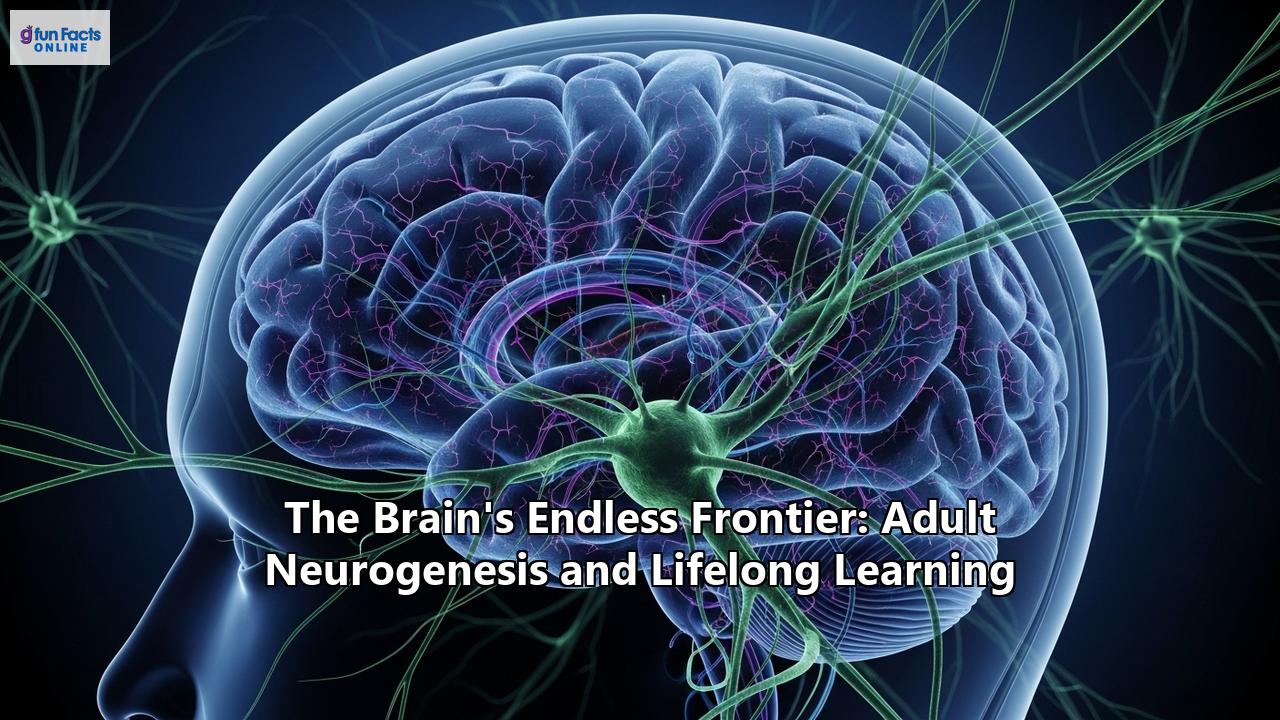
For centuries, the prevailing belief in neuroscience was that the adult brain was a fixed and finite entity. The idea that we are born with all the neurons we will ever have was a central dogma, a concept that shaped our understanding of learning, memory, and the potential for recovery from brain injury. This long-held view, however, has been overturned by one of the most exciting discoveries in modern neuroscience: adult neurogenesis, the brain's remarkable ability to generate new neurons throughout life. This paradigm shift has opened up an "endless frontier" in our quest to understand the brain's capacity for lifelong learning, adaptation, and repair.
A Look Back: Overturning a Long-Held Dogma
The story of adult neurogenesis is a testament to scientific perseverance and the courage to challenge established beliefs. For much of the 20th century, the "no new neurons" doctrine, heavily influenced by the foundational work of scientists like Santiago Ramón y Cajal, held sway. Ramón y Cajal, who shared the Nobel Prize in 1906 for his work on the structure of the nervous system, proposed the "neuron doctrine," which correctly identified neurons as the individual functional units of the brain. However, his observations also led him to conclude that the neural circuits of the adult brain were fixed and incapable of adding new cells.
The first cracks in this rigid view appeared in the 1960s. In 1962, a scientist named Joseph Altman published groundbreaking research that provided the first evidence of neurogenesis in the adult rat brain. Using a technique called ³H-thymidine autoradiography, Altman was able to label newly divided cells and demonstrate their differentiation into neurons in a region called the hippocampus. His findings, published in prestigious journals like Science and Anatomical Record, showed extensive adult neurogenesis in the hippocampus and even sparsely in the neocortex. However, his work was largely met with skepticism and was not widely accepted by the neuroscience community at the time.
It wasn't until the 1980s that the evidence began to mount. Shirley Bayer's work in the 1980s confirmed and expanded upon Altman's findings, showing that the new neurons in the dentate gyrus of the hippocampus actually add to the adult population in rats. Around the same time, Fernando Nottebohm's research on canaries provided a compelling functional context for adult neurogenesis. He discovered that the number of neurons in the forebrains of male canaries increased dramatically during the mating season, a period of intense new song learning. This suggested a direct link between the birth of new neurons and the acquisition of new knowledge.
The final acceptance of adult neurogenesis came in the 1990s, fueled by the discovery of neural stem cells in the adult brain. In 1992, Perry Bartlett and Linda Richards identified these remarkable cells in the adult mouse brain, providing a cellular source for the continuous generation of new neurons. This discovery was a turning point, as stem cells have the unique ability to divide and differentiate into various cell types, holding immense promise for brain repair. Finally, in 1998, a study on post-mortem brain tissue from cancer patients who had received injections of a cell-labeling compound called Bromodeoxyuridine (BrdU) provided the first definitive evidence of adult neurogenesis in humans.
The Birthplaces of New Neurons: Neurogenic Niches
Adult neurogenesis doesn't happen everywhere in the brain. It is primarily restricted to two specific regions, often referred to as "neurogenic niches":
- The Subgranular Zone (SGZ) of the Dentate Gyrus in the Hippocampus: The hippocampus is a seahorse-shaped structure deep within the temporal lobe that plays a critical role in learning and memory. The new neurons born in the SGZ are primarily granule cells, the main excitatory neurons of the dentate gyrus. These newborn neurons are thought to be particularly important for forming new memories and for distinguishing between similar experiences, a process known as pattern separation.
- The Subventricular Zone (SVZ) of the Lateral Ventricles: The SVZ lines the walls of the lateral ventricles, which are fluid-filled spaces in the brain. Neurons born in the SVZ have a more complex journey. They migrate a considerable distance to the olfactory bulb, the brain region responsible for our sense of smell. Once they arrive, they differentiate into interneurons and integrate into the olfactory circuitry, playing a role in olfactory memory and discrimination. More recently, evidence has also suggested the possibility of neurogenesis in the amygdala, a brain region associated with emotions.
These neurogenic niches are highly specialized microenvironments that provide the necessary support and signaling molecules to sustain the process of neurogenesis. They are rich in blood vessels, which supply nutrients and oxygen, and contain a diverse population of cells, including glial cells and astrocytes, that regulate the proliferation and differentiation of neural stem cells.
The Life of a Newborn Neuron: A Journey of Integration
The creation of a new, functional neuron is a complex and multi-stage process. It begins with the division of a neural stem cell, which gives rise to progenitor cells that are more committed to a neuronal fate. These progenitor cells then differentiate into neuroblasts, which are immature neurons.
For a newborn neuron to become a functional part of the brain's circuitry, it must undergo a remarkable journey of maturation and integration. This process includes:
- Migration: In the SVZ, newly born neurons embark on a long migration to the olfactory bulb. In the hippocampus, the migration is shorter, as new granule cells move from the SGZ into the granule cell layer.
- Differentiation: Once they reach their final destination, the neuroblasts differentiate into specific types of neurons, developing the characteristic morphology and neurochemical properties of the surrounding cells. This includes growing an axon, the long projection that sends signals, and dendrites, the branching extensions that receive signals.
- Synaptic Integration: The most crucial step is the formation of synapses, the specialized connections that allow neurons to communicate with each other. The new neuron must form connections with both incoming (afferent) and outgoing (efferent) neurons to become a fully integrated member of the existing network.
Interestingly, the survival of these newborn neurons is not guaranteed. A significant portion of them die within the first few weeks of their existence. Their survival is highly dependent on the environment and the experiences of the individual.
The Symphony of Regulation: Factors that Shape Neurogenesis
One of the most fascinating aspects of adult neurogenesis is its remarkable plasticity. The rate at which new neurons are born and survive is not fixed but is dynamically regulated by a wide array of factors. This opens up the exciting possibility of actively influencing our brain's capacity for learning and well-being.
Positive Regulators: Boosting BrainpowerA growing body of research has identified several factors that can enhance adult neurogenesis:
- Learning and Cognitive Stimulation: Engaging in mentally challenging activities is a powerful stimulus for neurogenesis. Studies have shown that hippocampus-dependent learning tasks, such as spatial navigation in a water maze, can increase the survival of new neurons. The idea of "use it or lose it" applies directly here; effortful learning experiences seem to rescue new neurons from programmed cell death and help them integrate into the neural circuits involved in the learning process. This suggests a reciprocal relationship: learning promotes neurogenesis, and neurogenesis, in turn, supports further learning.
- Physical Exercise: Aerobic exercise is one of the most robust and well-documented enhancers of adult neurogenesis. Running, for example, has been shown to increase the proliferation of neural stem cells in the hippocampus, leading to a greater number of newborn neurons. This effect is thought to be mediated by a variety of factors, including increased blood flow to the brain, the release of growth factors like brain-derived neurotrophic factor (BDNF), and a reduction in stress hormones.
- Environmental Enrichment: Living in a stimulating and enriched environment can also boost neurogenesis. For animals, this might mean a larger cage with toys, running wheels, and social interaction. For humans, it translates to a life filled with novelty, social engagement, and diverse experiences. An enriched environment provides a constant stream of new information and challenges that can promote the survival and integration of new neurons.
- Diet: What we eat can also have a profound impact on our brain. Diets rich in flavonoids (found in blueberries, dark chocolate), and omega-3 fatty acids (found in fatty fish) have been shown to promote adult neurogenesis. Caloric restriction has also been linked to increased neurogenesis in some studies.
Just as some factors can enhance neurogenesis, others can suppress it:
- Stress: Chronic stress is a potent inhibitor of adult neurogenesis. The release of stress hormones, such as glucocorticoids, can suppress the proliferation of neural stem cells and reduce the survival of new neurons. This may be one of the underlying mechanisms through which chronic stress contributes to cognitive impairments and mood disorders like depression.
- Aging: The rate of adult neurogenesis naturally declines with age. This age-related decline is thought to contribute to the cognitive deficits often seen in older adults. However, the good news is that even in the aging brain, neurogenesis does not completely cease, and it can still be stimulated by factors like exercise and learning.
- - Depression and Inflammation: Depression has been found to decrease neurogenesis, and chronic inflammation in the body can also have a negative impact on the birth of new neurons. The link between these conditions and reduced neurogenesis is an active area of research, with implications for developing new treatments for mental health disorders.
The Functional Significance of New Neurons: More Than Just Spare Parts
The discovery of adult neurogenesis raised a fundamental question: what do these new neurons actually do? While the full picture is still emerging, research has pointed to several key functions, particularly for the new neurons born in the hippocampus:
- Pattern Separation: The hippocampus plays a crucial role in forming distinct memories for similar events. This ability, known as pattern separation, is thought to be heavily reliant on the continuous addition of new neurons. Because newborn neurons are highly excitable and have unique plastic properties, they are well-suited to encode the subtle differences between overlapping experiences, preventing memories from becoming jumbled and confused.
- Memory and Learning: There is a strong correlation between the number of new neurons and performance on learning and memory tasks. The integration of new neurons into the hippocampal circuitry is thought to enhance the brain's capacity to learn and store new information. Some computational models suggest that young, immature neurons may act as "pattern integrators," linking events that occur close in time, while more mature neurons contribute to the precise encoding of new memories. A 2024 study provided the first direct evidence that the generation of new brain cells in adulthood is essential for verbal learning and memory in humans.
- Cognitive Flexibility and Mood Regulation: Beyond memory, adult neurogenesis is also implicated in cognitive flexibility, the ability to adapt our thinking and behavior in response to changing circumstances. The continuous addition of new neurons may provide the hippocampus with a degree of plasticity that allows it to adapt to new challenges and environments. Furthermore, there is growing evidence linking adult neurogenesis to mood regulation. The antidepressant effects of some medications are thought to be mediated, at least in part, by their ability to stimulate neurogenesis.
- The "Spacing Effect": The way we learn can also influence the survival of new neurons. The "spacing effect" is a well-known phenomenon in psychology where learning is more effective when study sessions are spaced out over time. Research has shown that spaced learning enhances both memory and the survival of new neurons, suggesting a direct link between effective learning strategies and the long-term health of the brain.
The Endless Frontier: Future Directions and Therapeutic Potential
The field of adult neurogenesis is a vibrant and rapidly evolving area of research. Scientists are continually developing new tools and techniques to study the birth and function of new neurons with unprecedented detail. Techniques like two-photon microscopy, optogenetics, and single-cell RNA sequencing are providing deeper insights into the molecular and cellular mechanisms that govern this process.
The therapeutic potential of harnessing adult neurogenesis is immense. By understanding the factors that regulate the birth of new neurons, we may be able to develop new treatments for a wide range of neurological and psychiatric conditions:
- Neurodegenerative Diseases: In conditions like Alzheimer's and Parkinson's disease, where specific populations of neurons are lost, stimulating the brain's own neural stem cells to produce new neurons could offer a powerful new approach to treatment. While this is still in the early stages of research, it represents a significant shift from simply managing symptoms to potentially repairing the damaged brain.
- Depression and Anxiety: Given the link between stress, depression, and reduced neurogenesis, therapies that boost the production of new neurons could be effective in treating these mood disorders. This could involve not only new medications but also lifestyle interventions like exercise and mindfulness that are known to promote neurogenesis.
- Brain Injury: After a stroke or traumatic brain injury, the ability to stimulate the birth of new neurons in the damaged area could significantly improve recovery and restore lost function.
Living a Brain-Healthy Life: Practical Implications for Lifelong Learning
The discovery of adult neurogenesis is not just a fascinating scientific story; it has profound practical implications for how we can live our lives to maintain a healthy and vibrant brain. It empowers us with the knowledge that our brains are not static but are constantly changing and adapting in response to our choices and experiences. By embracing a lifestyle that promotes neurogenesis, we can enhance our capacity for lifelong learning and build a more resilient brain.
Here are some key takeaways for nurturing your brain's endless frontier:
- Never Stop Learning: Continuously challenge your brain with new and complex information. Learn a new language, take up a musical instrument, or delve into a subject that fascinates you. The effortful process of learning is a powerful signal to your brain to keep producing and integrating new neurons.
- Move Your Body: Make regular aerobic exercise a non-negotiable part of your routine. Whether it's brisk walking, running, swimming, or cycling, physical activity is one of the most effective ways to boost neurogenesis.
- Embrace Novelty and Enrichment: Step out of your comfort zone and seek out new experiences. Travel to new places, meet new people, and engage in activities that expose you to different perspectives and environments.
- Manage Stress: Chronic stress is a major enemy of neurogenesis. Incorporate stress-reducing practices into your daily life, such as mindfulness, meditation, yoga, or spending time in nature.
- Eat a Brain-Healthy Diet: Fuel your brain with the nutrients it needs to thrive. A diet rich in fruits, vegetables, whole grains, and healthy fats can support the birth of new neurons.
The journey into the brain's endless frontier is far from over. The ongoing exploration of adult neurogenesis promises to unlock even more secrets about the brain's remarkable capacity for change and renewal. It is a powerful reminder that we are active participants in the health and function of our own brains, and that the potential for learning and growth truly lasts a lifetime.
Reference:
- https://en.wikipedia.org/wiki/History_of_neuroscience
- https://en.wikipedia.org/wiki/Neuron
- https://www.medicalnewstoday.com/articles/248680
- https://www.ninds.nih.gov/health-information/public-education/brain-basics/brain-basics-life-and-death-neuron
- https://neurondevelopment.org/adult-neurogenesis/
- https://academic.oup.com/book/24764/chapter/188289976
- https://qbi.uq.edu.au/brain-basics/brain-physiology/adult-neurogenesis
- https://www.neuroscijournal.com/articles/jnnd-aid1102.php
- https://www.edujournal.com/the-neuroscience-of-lifelong-learning-how-our-brains-adapt-to-continuous-education/
- https://pmc.ncbi.nlm.nih.gov/articles/PMC5612417/
- https://pmc.ncbi.nlm.nih.gov/articles/PMC2886712/
- https://pmc.ncbi.nlm.nih.gov/articles/PMC3191246/
- https://solportal.ibe-unesco.org/articles/neurogenesis-learning-and-memory/
- https://pmc.ncbi.nlm.nih.gov/articles/PMC3289536/
- https://scitechdaily.com/researchers-link-new-neuron-growth-to-enhanced-memory-and-learning-in-adults/
- https://stemcell.keck.usc.edu/to-remember-conversations-keep-making-new-brain-cells/