
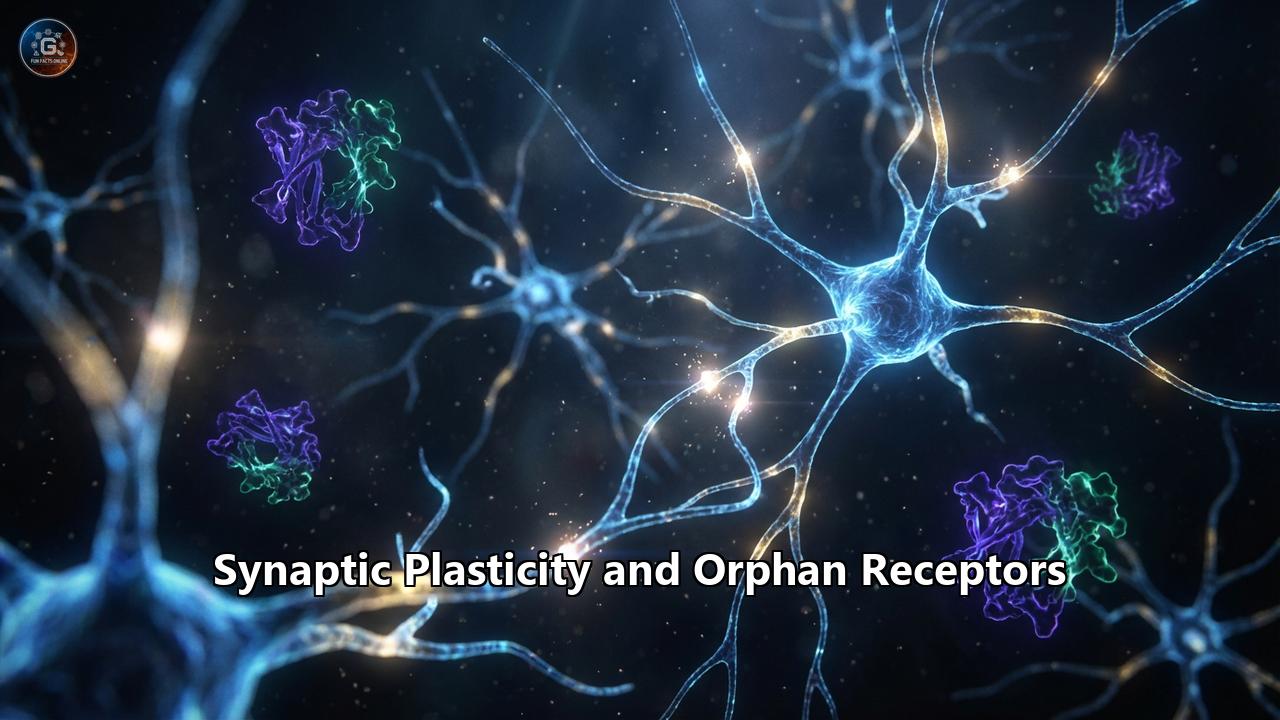
The human brain’s capacity to learn, adapt, and heal is fundamentally rooted in synaptic plasticity—the ability of synapses to strengthen or weaken over time. For decades, this process was viewed through the lens of canonical neurotransmitters like glutamate and dopamine acting upon well-characterized receptors. However, a "dark matter" of neurobiology has recently come to light: orphan receptors. These receptors, which lack identified endogenous ligands, were once considered evolutionary artifacts. Today, they are being revealed as critical gatekeepers of synaptic architecture, memory consolidation, and cognitive flexibility. This comprehensive article explores the cutting-edge intersection of synaptic plasticity and orphan receptors, detailing the molecular mechanisms of key players like GPR158, GPR12, and Nurr1, and evaluating their potential as therapeutic targets for neuropsychiatric and neurodegenerative disorders.
1. Introduction: The Hidden Architects of the Synapse
The synapse is not merely a passive junction for signal transmission; it is a dynamic computational unit that constantly remodels itself in response to experience. This remodeling, known as synaptic plasticity, is the cellular basis for learning and memory. Classically, this story has been told through the actions of ionotropic receptors (like NMDA and AMPA receptors) and known G protein-coupled receptors (GPCRs).
However, the genomic revolution revealed hundreds of GPCRs and nuclear receptors with no known binding partners—the so-called "orphans." Initially dismissed, these receptors are now understood to be constitutively active regulators or sensors of non-traditional signals (such as metabolic states or extracellular matrix components). They function not just as receivers of messages, but as architects that determine the structural stability and plasticity of the synapse itself.
This article delves into the "deorphanization" revolution and how it is reshaping our understanding of the brain. We will examine how these receptors control the delicate balance between Long-Term Potentiation (LTP) and Long-Term Depression (LTD), regulate the physical shape of dendritic spines, and maintain the synchrony of neural circuits.
2. Fundamentals of Synaptic Plasticity
To appreciate the role of orphan receptors, we must first establish the landscape upon which they act.
2.1 Hebbian Plasticity: LTP and LTD
At the heart of memory formation is the Hebbian principle: "Cells that fire together, wire together."
- Long-Term Potentiation (LTP): A persistent strengthening of synapses based on recent patterns of activity. It typically involves the influx of calcium via NMDA receptors, activation of kinases like CaMKII, and the insertion of AMPA receptors into the postsynaptic membrane.
- Long-Term Depression (LTD): The opposing process, crucial for pruning unnecessary connections and preventing saturation. It often involves the removal (endocytosis) of AMPA receptors.
2.2 Structural Plasticity
Plasticity is not just electrical; it is physical. Excitatory synapses reside on dendritic spines—tiny protrusions on neurons.
- Spine Genesis and Enlargement: Associated with LTP, where the actin cytoskeleton expands to accommodate more receptors.
- Spine Shrinkage and Pruning: Associated with LTD and the refining of neural circuits.
Orphan receptors have emerged as master regulators of these structural changes, often acting as the "brakes" or "accelerators" that determine whether a spine stabilizes or disappears.
3. The Striatal Conductors: GPR88, GPR6, and GPR52
The striatum is the brain's coordination center for movement, motivation, and reward. It relies on a delicate balance between the "Direct Pathway" (movement initiation) and the "Indirect Pathway" (movement inhibition). Orphan receptors are heavily enriched here, acting as fine-tuners of dopaminergic signaling.
3.1 GPR88: The Gatekeeper of Sensory Integration
GPR88 is almost exclusively expressed in the striatum, making it a highly attractive target for drug development.
- Mechanism: GPR88 is coupled to the Gi/o protein, which generally inhibits intracellular signaling (lowering cAMP). It resides on the postsynaptic membrane of Medium Spiny Neurons (MSNs).
- Role in Plasticity: GPR88 acts to dampen excitability. When GPR88 is removed (knockout models), neurons become hypersensitive to dopamine and glutamate. This suggests GPR88 sets the "threshold" for plasticity; without it, the striatum becomes noisy and hyperactive.
- Behavioral Impact: It integrates effort and reward information. Mice lacking GPR88 struggle with efficient foraging—they cannot effectively weigh the cost of effort against the value of a food reward, a cognitive deficit relevant to depression and schizophrenia.
3.2 GPR6: The Parkinson’s Brake
GPR6 is a constitutively active receptor found primarily in the Indirect Pathway neurons.
- Mechanism: Unlike GPR88, GPR6 is Gs-coupled, meaning it naturally raises cAMP levels inside the cell, even without a ligand. It acts as a counterbalance to the Dopamine D2 receptor (which lowers cAMP).
- Therapeutic Potential: In Parkinson’s disease, the loss of dopamine leads to overactivity of the Indirect Pathway (too much "braking" on movement). Blocking GPR6 reduces this overactivity, potentially alleviating stiffness and tremors without the side effects of direct dopamine replacement (like dyskinesia).
- Plasticity Link: By modulating cAMP, GPR6 directly influences the phosphorylation of DARPP-32, a master switch for synaptic plasticity in the striatum.
3.3 GPR52: The Schizophrenia Stabilizer
GPR52 acts as a bridge between the striatum and the prefrontal cortex, two regions dysregulated in schizophrenia.
- Mechanism: It is Gs-coupled and colocalizes with D2 receptors. Interestingly, it engages intracellular signaling via beta-arrestin-2, a scaffold protein that can trigger distinct downstream pathways (like ERK signaling) independent of G proteins.
- Psychiatric Relevance: GPR52 agonists have shown antipsychotic-like effects in animal models. By boosting cAMP in specific circuits, they can normalize the hypofunction of the cortex (negative symptoms) while stabilizing the striatum (positive symptoms).
4. The Memory Architects: GPR12 and GPR158
While the striatum manages movement and reward, the hippocampus and thalamus manage the encoding of facts and events. Here, orphan receptors play a crucial role in memory "persistence."
4.1 GPR12: The Thalamic Synchronizer
Working memory—the ability to hold a phone number in your head for a few seconds—relies on synchronized firing between the thalamus and the prefrontal cortex.
- The Discovery: Genetic mapping of "smart" vs. "forgetful" mice identified Gpr12 as a key determinant of working memory capacity.
- Mechanism: GPR12 is constitutively active and Gs-coupled. It promotes high-frequency bursting in thalamic neurons. This bursting drives the synchronization of thalamocortical circuits.
- Plasticity Consequence: Higher expression of GPR12 leads to stronger, more persistent neural activity during the "maintenance phase" of memory tasks. It effectively turns up the "volume" of the memory trace, preventing it from fading.
4.2 GPR158: The Stress-Memory Interface
GPR158 has recently taken center stage due to its link to stress-induced depression and its complex ligand interactions.
- The "Ligand" Controversy: For years, GPR158 was a complete orphan. Recent studies suggested it acts as a receptor for Osteocalcin (a bone-derived hormone) and potentially Glycine (acting in a metabotropic manner, distinct from its classic ion channel role). This "metabotropic glycine receptor" function is a paradigm shift.
- Mechanism:
Signaling: It does not use the canonical G-alpha proteins. Instead, it anchors a complex of RGS7-Gbeta5, which acts as a "brake" on G-protein signaling from other receptors (like GABAB or mGluR).
Structural: It physically interacts with PLCXD2 and GPC4 (Glypican-4). This complex organizes the spine apparatus—an organelle inside dendritic spines crucial for calcium handling.
- Plasticity Role:
Depression: Under chronic stress, GPR158 levels spike in the prefrontal cortex. This suppresses BDNF (Brain-Derived Neurotrophic Factor) and weakens synaptic connections, leading to depressive behaviors. Blocking GPR158 confers resilience to stress.
Memory: In the hippocampus (CA3 region), GPR158 is required for the proper formation of "mossy fiber" synapses. Without it, these synapses are structurally disorganized and weak.
5. Orphan Receptors in Neurodegeneration
The loss of synaptic plasticity is the earliest sign of neurodegenerative diseases like Alzheimer's, often occurring long before neurons actually die. Orphan receptors are now implicated in this early synaptic failure.
5.1 GPR3: The Amyloid Accelerator
GPR3 is highly expressed in the hippocampus and cortex, regions first hit by Alzheimer’s.
- Amyloid Production: GPR3 interacts directly with the Amyloid Precursor Protein (APP) and the gamma-secretase complex. It facilitates the cleavage of APP into the toxic Beta-Amyloid (A-beta) peptides.
- The Double-Edged Sword: Genetic deletion of GPR3 in Alzheimer's mouse models drastically reduces amyloid plaques and restores memory. However, GPR3 normally plays a role in maintaining cAMP levels required for neuron survival. Complete inhibition can lead to anxiety-like behaviors, suggesting that "biased" ligands (which block the amyloid interaction but preserve survival signaling) are the future of therapy.
5.2 GPR17: The Repairman's Dilemma
GPR17 is unique; it is phylogenetically related to purinergic (P2Y) and leukotriene receptors and is expressed on Oligodendrocyte Precursor Cells (OPCs).
- Function: It acts as a timer for myelination. When expressed, it keeps OPCs in an immature state. It must be downregulated for these cells to mature and wrap neurons in myelin.
- Pathology: In diseases like Multiple Sclerosis (and potentially Alzheimer's), GPR17 becomes abnormally upregulated in damage zones. This prevents the repair of myelin. Furthermore, GPR17 helps sense synaptic damage. Its blockade promotes remyelination and may indirectly support synaptic health by ensuring efficient signal transmission.
5.3 Nurr1: The Dopamine Guardian
Unlike the GPCRs discussed, Nurr1 is an orphan nuclear receptor (a transcription factor).
- Role: It is essential for the survival of dopaminergic neurons.
- Plasticity Connection: Nurr1 regulates the expression of synaptic adhesion molecules like Neuropilin-1 and potentially neurotrophic factors (BDNF/NT-3).
- Disease: Its dysfunction is a primary driver of Parkinson’s disease pathology. Activating Nurr1 (even without a natural ligand) using synthetic agonists has been shown to protect neurons and restore synaptic plasticity in the hippocampus, improving cognitive deficits associated with neurodegeneration.
6. Mechanisms of Action: How Orphans Shape the Synapse
Orphan receptors influence plasticity through three primary modes of action, distinct from classical neurotransmission.
6.1 Constitutive Activity: The Silent Hum
Many orphans (GPR6, GPR12, GPR3) are "always on." They provide a tonic level of intracellular signaling (e.g., constant cAMP production). This sets the "resting state" of the neuron.
- Plasticity Impact: This tonic activity determines how easily a neuron can be excited. If GPR12 keeps cAMP levels high, the neuron is "primed" to fire and encode memory. If levels drop, the neuron becomes silent.
6.2 Heterodimerization: The Modulators
Some orphan receptors function by binding to other receptors and changing their behavior.
- GPR50 & Melatonin: GPR50 is an X-linked orphan that forms a heterodimer with the Melatonin MT1 receptor. When bound, it completely inhibits MT1 signaling. This suggests GPR50 acts as a dominant-negative regulator, potentially influencing circadian plasticity and metabolic states without binding a ligand of its own.
- GPR37 & Adenosine: GPR37 pairs with Adenosine A2A receptors in the striatum, controlling their trafficking to the cell surface. This interaction modulates the induction of LTD in striatal circuits.
6.3 Non-Canonical Signaling: Beyond G Proteins
The GPR158 example highlights that orphans may act as scaffolds rather than traditional receptors. By recruiting RGS proteins or adhesion molecules (like Glypicans), they physically bridge the pre- and post-synaptic membranes. This structural role is vital for "synaptic specificity"—ensuring the right neuron connects to the right target.
7. Deorphanization: The Quest for Ligands
The field is currently in a "Gold Rush" to identify ligands for these receptors, utilizing "Reverse Pharmacology."
- Lipidomics: Many orphans (like GPR119 or GPR120) have been found to bind lipid metabolites. It is hypothesized that brain-specific lipids (neurosteroids or endocannabinoid-like molecules) may activate receptors like GPR12 or GPR88.
- The "Orphan" Debate: For some, like GPR158, the discovery of binders like Osteocalcin or Glycine challenges the "orphan" label. However, the binding often doesn't trigger classic G-protein cascades, leading to a reclassification of these proteins as "atypical" receptors or "scaffold" receptors.
8. Clinical Implications and Future Directions
The intersection of orphan receptors and synaptic plasticity offers a new frontier for medicine. Current drugs (SSRIs, L-DOPA) often flood the entire brain with transmitters, causing side effects. Orphan receptors offer precision:
- Region Specificity: GPR88 is only in the striatum; GPR12 is enriched in the thalamus. Targeting them allows for circuit-specific intervention.
- State Specificity: Because many orphans modulate responsiveness rather than direct transmission, drugs targeting them (allosteric modulators) might only work when the brain is active or stressed, preserving normal function at rest.
Orphan receptors are no longer the biological oddities they were once thought to be. They are the fine-tuners of the synaptic symphony. From GPR12's role in holding a thought in memory, to GPR158's involvement in the crushing weight of depression, these receptors bridge the gap between molecular signaling and complex behavior. As we continue to deorphanize these proteins and map their interactomes, we unlock new possibilities for restoring plasticity in a damaged brain, offering hope for conditions that have long resisted treatment.
References & Further Reading
- GPR158 and Stress: Sutton et al. (2018) & Khrimian et al. (2017) on Osteocalcin.
- GPR12 and Memory: Hsiao et al. (2020) in Cell.
- GPR3 and Alzheimer's: Thathiah et al. (2015) in Science Translational Medicine.
- GPR6/GPR52 in Striatum: Studies on dopamine modulation and schizophrenia models.
- Nurr1 and Neuroprotection: Evolving literature on nuclear receptors in PD.
Reference:
- https://www.vjneurology.com/video/ozijrlv481k-beyond-dopamine-exploring-gpr6-as-a-therapeutic-target-in-parkinsons-disease/
- https://www.medchemexpress.com/Targets/gpr52.html
- https://pubmed.ncbi.nlm.nih.gov/33198466/
- https://pubmed.ncbi.nlm.nih.gov/32519845/
- https://pmc.ncbi.nlm.nih.gov/articles/PMC6460361/
- https://pubmed.ncbi.nlm.nih.gov/24069330/
- https://neurosciencenews.com/gpr3-alzheimers-amyloid-beta-2893/
- https://research.uaeu.ac.ae/en/publications/the-orphan-gpr50-receptor-specifically-inhibits-mtsub1sub-melaton/
- https://www.scilit.com/publications/b8dc51c69e1450b1d5eccfbb7d918af4
- https://pmc.ncbi.nlm.nih.gov/articles/PMC1500982/
- https://pubmed.ncbi.nlm.nih.gov/16778767/
- https://www.researchgate.net/publication/7004548_The_orphan_GPR50_receptor_specifically_inhibits_MT1_melatonin_receptor_function_through_heterodimerization
- https://www.frontiersin.org/journals/pharmacology/articles/10.3389/fphar.2024.1394516/full
- https://public-pages-files-2025.frontiersin.org/journals/pharmacology/articles/10.3389/fphar.2024.1394516/pdf
- https://pmc.ncbi.nlm.nih.gov/articles/PMC9546571/
- https://synapse.patsnap.com/article/what-are-gpr52-agonists-and-how-do-they-work