
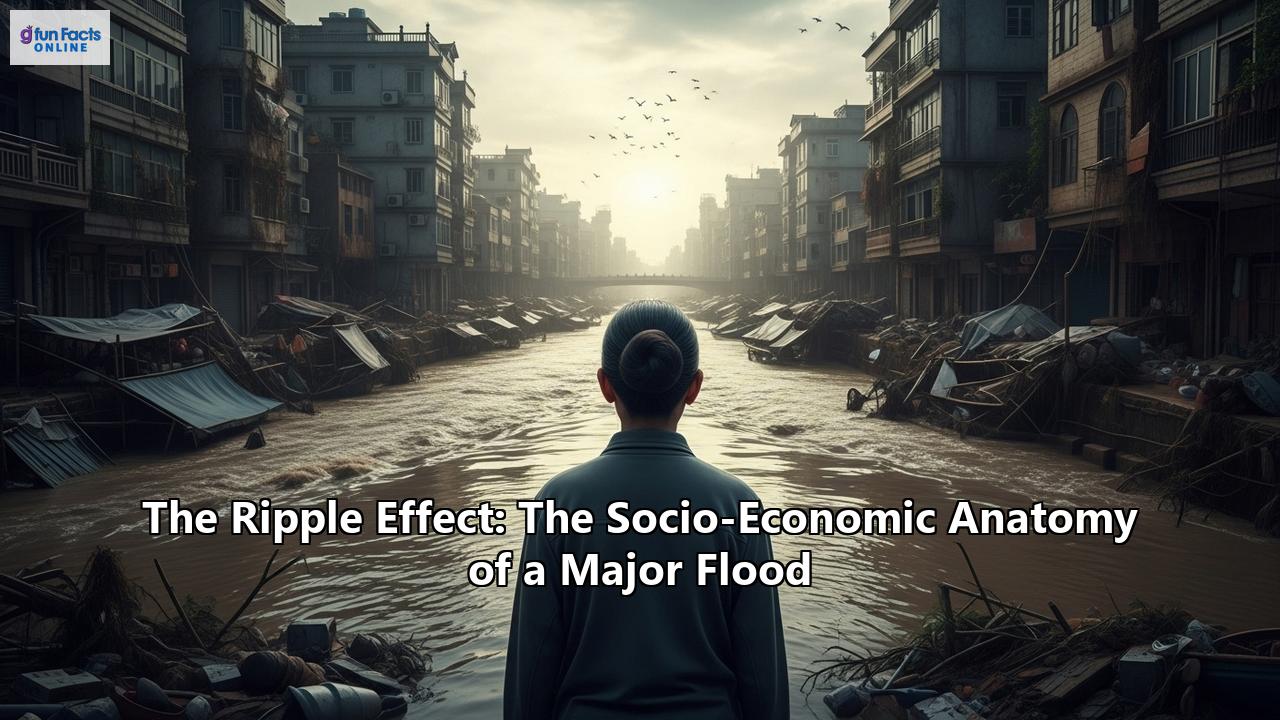
When the waters rise, they do more than just soak the earth and topple buildings. They seep into the very foundations of our society, sending shockwaves through economies, communities, and individual lives. A major flood is not a singular event but the start of a complex and often protracted crisis. The ripple effect of such a deluge is a study in the interconnectedness of our world, revealing the intricate anatomy of our socio-economic systems. From the initial, dramatic scenes of destruction to the quiet, long-term struggles of recovery, the impact of a major flood is a story of immense challenge, deep-seated inequality, and the remarkable, though often strained, resilience of the human spirit.
The Immediate Inundation: A Cascade of Crises
The first and most visceral impact of a major flood is the immediate threat to life and property. The sheer force of rapidly rising water can be devastating, with flash floods offering little to no warning and causing more fatalities than their slower-moving riverine counterparts. The loss of human life is the most tragic and irreversible consequence, a stark reminder of nature's power.
Beyond the immediate loss of life, the destruction of property is swift and widespread. Homes, businesses, and personal belongings are submerged, often resulting in complete loss. The emotional toll of losing irreplaceable possessions and the security of a home is immense, leading to grief, stress, and sadness. For many, this is just the beginning of a long and arduous journey through insurance claims and the search for resources to repair, rebuild, or relocate.
Infrastructure, the bedrock of modern society, is another immediate casualty. Roads, bridges, and railway lines can be washed away or severely damaged, cutting off entire communities and hampering rescue and relief efforts. The 2011 floods in the Somerset Levels in the UK, for example, left several villages completely isolated after roads were submerged. Power plants, communication networks, and water and sewage systems are also highly vulnerable. A breakdown in these essential services can render homes uninhabitable and businesses non-functional, forcing mass evacuations and long-term displacement. The costs associated with repairing and rebuilding this critical infrastructure are colossal and can extend over long periods, causing significant public inconvenience and economic strain.
The immediate economic consequences are staggering. According to the Joint Economic Committee, the annual cost of flooding in the United States alone ranges from $179.8 billion to $496 billion. These figures encompass not only property damage but also the disruption to commerce, transportation, and public health. For homeowners, even a single inch of water in a 2,500-square-foot home can lead to damages of up to $23,000. Businesses suffer from the direct costs of repairs and the loss of inventory and equipment. The 2011 floods in Thailand, for instance, shut down numerous factories, leading to over $30 billion in damages and significantly impacting global car and electronics manufacturing. The immediate halt to economic activity brings commerce to a standstill, with the loss of livelihoods extending far beyond the flood's duration.
The Long and Winding Road to Recovery: Economic Aftershocks
The initial deluge may recede, but the economic aftershocks of a major flood can be felt for years, and in some cases, decades. The long-term financial consequences are a complex web of interconnected issues that can stifle growth and deepen existing inequalities.
One of the most significant long-term economic impacts is the damage to a region's productive capacity. Agricultural land can be rendered infertile by saltwater intrusion or contaminated by pollutants, leading to crop failure and the loss of livestock. In the 2011 Mississippi River floods, vast swathes of agricultural land were inundated, causing an estimated $3 billion in property damage. This not only affects the livelihoods of farmers but also has a ripple effect on food security and prices.
Businesses that survive the initial inundation face a long road to recovery. Many are forced to close temporarily or even permanently, leading to job losses and a decline in local economic activity. The disruption to supply chains can have far-reaching consequences. The 2011 Thailand floods, for example, caused a 76% reduction in the country's expected GDP growth rate due to supply chain disruptions. The Mississippi River flood in the same year led to the suspension of barge traffic, tying up an estimated $300 million a day in transportation costs. Even companies not directly affected by a flood can suffer from disruptions to their suppliers, as seen in the aftermath of the 2021 floods in Belgium, where unaffected firms experienced reduced sales due to supplier issues.
The housing market is another area that suffers long-term damage. Property values in flood-prone areas often decline, and insurance premiums can skyrocket, making it difficult for residents to sell their homes or afford coverage. Renters are particularly vulnerable, as they often lack the resources to recover lost property and are dependent on landlords for repairs. In the aftermath of a flood, landlords may raise rents, leading to further displacement.
The financial burden on local and national governments is immense. The cost of rescue, relief, and rebuilding efforts can divert funds from other essential services and development projects. In the wake of Hurricane Katrina, the U.S. government spent over $120 billion on relief and recovery. The 2019 Townsville floods in Australia were estimated to cause a $2.5 billion reduction in the region's Gross Domestic Product (GDP). This strain on public finances can hinder a region's economic growth and development for years to come. Recurrent flooding can also discourage long-term investment from both the public and private sectors, further perpetuating a cycle of economic stagnation.
The Tattered Social Fabric: Community and Individual Scars
The impact of a major flood extends far beyond economic losses, tearing at the very fabric of society and leaving deep and lasting scars on individuals and communities. The social consequences are multifaceted and can be just as devastating as the financial ones.
Displacement is one of the most immediate and disruptive social impacts. Being forced to leave one's home and community can lead to a profound sense of loss and disorientation. The evacuation process itself can be traumatic, and for many, the return home is a long and uncertain journey. In the aftermath of Hurricane Katrina, over 200,000 people were displaced from New Orleans, many of whom never returned.
The loss of community is a significant and often overlooked consequence of displacement. Social networks are fractured, and the support systems that people rely on are disrupted. The closure of schools, community centers, and places of worship further erodes the sense of community. The cancellation of social events like festivals and sporting competitions can also impact social morale and reduce tourism, a vital source of income for many communities.
The health impacts of a major flood are both physical and psychological. The immediate dangers include drowning and injuries from being swept away by floodwaters. Contaminated floodwaters can also lead to the spread of waterborne diseases like gastroenteritis. In the longer term, damp and moldy conditions in flooded homes can exacerbate respiratory problems such as asthma and bronchitis.
The mental health consequences of flooding are particularly severe and can persist for years. The trauma of the event, the loss of loved ones and property, and the stress of the recovery process can lead to a range of mental health issues, including anxiety, depression, and post-traumatic stress disorder (PTSD). Studies have shown that people whose homes have been flooded are significantly more likely to suffer from these conditions. A study following the 2013/14 winter floods in the UK found that those who experienced flooding were six to seven times more likely to develop depression, anxiety, or PTSD. The depth of the floodwater can also be a factor, with one study finding that a flood depth of over a meter increased the likelihood of these conditions by as much as 18 times. The long-term stress of dealing with insurance companies and navigating the complexities of rebuilding can also take a heavy toll on mental well-being. Children are particularly vulnerable to the psychological impacts of flooding, as the loss of their home and the disruption to their lives can undermine their sense of safety and security.
The Unjust Deluge: Vulnerable Populations in the Crosshairs
The impacts of a major flood are not felt equally across society. It is a cruel reality that disasters often expose and exacerbate existing inequalities, with the most vulnerable populations bearing the heaviest burden.
Low-income communities are disproportionately affected by flooding for a number of reasons. They are more likely to live in high-risk areas, such as low-lying land or areas with inadequate flood defenses, due to the lower cost of housing. They also tend to have fewer resources to prepare for and recover from a flood. Many lack adequate insurance coverage, and those who do may struggle to navigate the claims process. The financial shock of a flood can be devastating for low-income households, leading to increased debt, a higher likelihood of mortgage default, and even bankruptcy.
Racial and ethnic minorities are also more likely to be vulnerable to flooding. Historical patterns of discrimination, such as redlining, have often resulted in these communities being concentrated in areas with a higher flood risk and inadequate infrastructure. They may also face barriers to accessing disaster relief and recovery aid. The response to Hurricane Katrina, for example, was widely criticized for its disparate impact on African American communities.
The elderly are another vulnerable group. They may have mobility issues that make it difficult to evacuate, and they are more susceptible to the physical and mental health impacts of flooding. They may also be more socially isolated and have a harder time accessing support services. Children are also highly vulnerable, not only to the immediate physical dangers of a flood but also to the long-term psychological trauma.
Other vulnerable groups include people with disabilities, who may face challenges with evacuation and accessing accessible housing and services, and renters, who have less control over the repair and rebuilding of their homes. Immigrants and those with limited English proficiency may also face barriers to accessing information and assistance.
The Cascading Crisis: National and Global Ripples
The impact of a major flood does not stop at the edge of the inundated area. The ripple effect can spread throughout a nation's economy and even have global consequences, highlighting the interconnectedness of our modern world.
On a national level, a major flood can have a significant impact on a country's Gross Domestic Product (GDP). The costs of damage to infrastructure, lost production, and recovery efforts can all contribute to a decline in economic growth. A study of floods in Malaysia found that they had a significant negative impact on the country's agricultural and manufacturing sectors, which in turn affected GDP growth. The 2011 Queensland floods were estimated to have reduced Australia's GDP by a significant amount.
The disruption to supply chains is a key way in which the economic impacts of a flood can spread. As seen with the Thailand floods, a localized disaster can have a global impact on industries that rely on components manufactured in the affected area. The increasing globalization of supply chains means that businesses are more vulnerable than ever to these types of disruptions. The recent trend of more frequent and intense weather events due to climate change is only likely to exacerbate this risk.
Food security is another area where the ripple effects of a flood can be felt far and wide. The destruction of crops and agricultural land can lead to food shortages and price increases, not only in the affected region but also in other areas that rely on that region for food supplies. This can have a particularly devastating impact on low-income households, who spend a larger proportion of their income on food.
In conclusion, the anatomy of a major flood is a complex and multifaceted phenomenon. The initial inundation is just the beginning of a long and arduous process of recovery, with the ripple effects spreading far beyond the immediate disaster zone. The economic consequences are immense, with long-term impacts on infrastructure, businesses, and national economies. The social consequences are equally devastating, with displacement, community breakdown, and long-term mental health issues leaving deep and lasting scars. And it is the most vulnerable among us who are often hit the hardest. As we face a future with a changing climate and the prospect of more frequent and intense flooding, it is more important than ever to understand the full extent of this ripple effect and to work towards building more resilient and equitable societies.
Reference:
- https://www.google.com/search?q=time+in+Nyong-et-Kell%C3%A9,+CM
- https://headwaterseconomics.org/natural-hazards/unequal-impacts-of-flooding/
- https://www.internetgeography.net/topics/the-somerset-levels-flood-case-study/
- https://water.columbia.edu/content/flood-risk-supply-chains
- https://lsa.umich.edu/social-solutions/news-events/news/inside-the-center/insights-and-solutions/case-studies/case-study--floods-and-socioeconomic-inequality.html
- https://thefloodhub.co.uk/blog/flooding-and-mental-health/
- https://ges.rgo.ru/jour/article/view/2735?locale=en_US
- https://www.preventionweb.net/news/economic-impact-floods
- https://randtech.com/navigating-the-impact-of-natural-disasters-on-global-supply-chains-lessons-from-recent-hurricanes-and-earthquakes/
- https://services.bepress.com/cgi/viewcontent.cgi?referer=&httpsredir=1&article=1751&context=feem
- https://cepr.org/voxeu/columns/transmission-flood-damage-real-economy-and-financial-intermediation
- https://mjes.um.edu.my/index.php/MJES/article/download/2609/825/7820
- https://www.bankofengland.co.uk/-/media/boe/files/working-paper/2025/weathering-the-storm-sectoral-economic-and-inflationary-effects-of-floods-and-the-role-of-adaptation.pdf
- https://www.suncorpgroup.com.au/uploads/190905-Economic-benefits-of-Suncorp-Insurance-REPORT-PDF-version.pdf
- https://knowledge.aidr.org.au/resources/ajem-jan-2019-long-term-consequences-of-flooding-a-case-study-of-the-2011-queensland-floods/
- https://www.carbonbrief.org/us-flooding-increase-will-disproportionately-impact-black-and-low-income-groups/
- https://www.crew.ac.uk/sites/www.crew.ac.uk/files/sites/default/files/publication/CRW2016_02_Summary_Report_1.pdf
- https://www.nado.org/wp-content/uploads/2014/12/Lessons-from-the-Storm_TexasGulfDraft.pdf
- https://www.ufs.ac.za/docs/librariesprovider22/disaster-management-training-and-education-centre-for-africa-(dimtec)-documents/dissertations/2261.pdf?sfvrsn=dafdf821_2-documents/dissertations/2261.pdf?sfvrsn=dafdf821_2)
- https://www.suncorpgroup.com.au/uploads/Suncorp-Economic-recovery-after-disaster-strikes-volume-2-FINAL-.pdf
- https://www.ipcc.ch/apps/njlite/srex/njlite_download.php?id=7382
- https://doxa.com/flooding-tops-the-list-of-supply-chain-risks-in-2025-what-businesses-need-to-know/
- https://www.mdpi.com/2813-9844/7/2/49
- https://oxfordre.com/naturalhazardscience/display/10.1093/acrefore/9780199389407.001.0001/acrefore-9780199389407-e-281?d=%2F10.1093%2Facrefore%2F9780199389407.001.0001%2Facrefore-9780199389407-e-281&p=emailAe1MKwGqubAGU
- https://www.ciwem.org/the-environment/flooding-mental-health-impact
- https://pmc.ncbi.nlm.nih.gov/articles/PMC6830640/
- https://pmc.ncbi.nlm.nih.gov/articles/PMC9239995/
- https://fedcommunities.org/lower-income-neighborhoods-face-greater-flood-risk-tougher-recovery/
- https://sphera.com/resources/blog/floods-hurricanes-and-strikes-managing-the-impact-of-supply-chain-risk-events/
- https://www.ismworld.org/supply-management-news-and-reports/news-publications/inside-supply-management-magazine/blog/2024/2024-10/back-to-back-hurricanes-wreak-havoc-on-supply-chains/
- https://www.journals.uchicago.edu/doi/10.1093/reep/rez004