
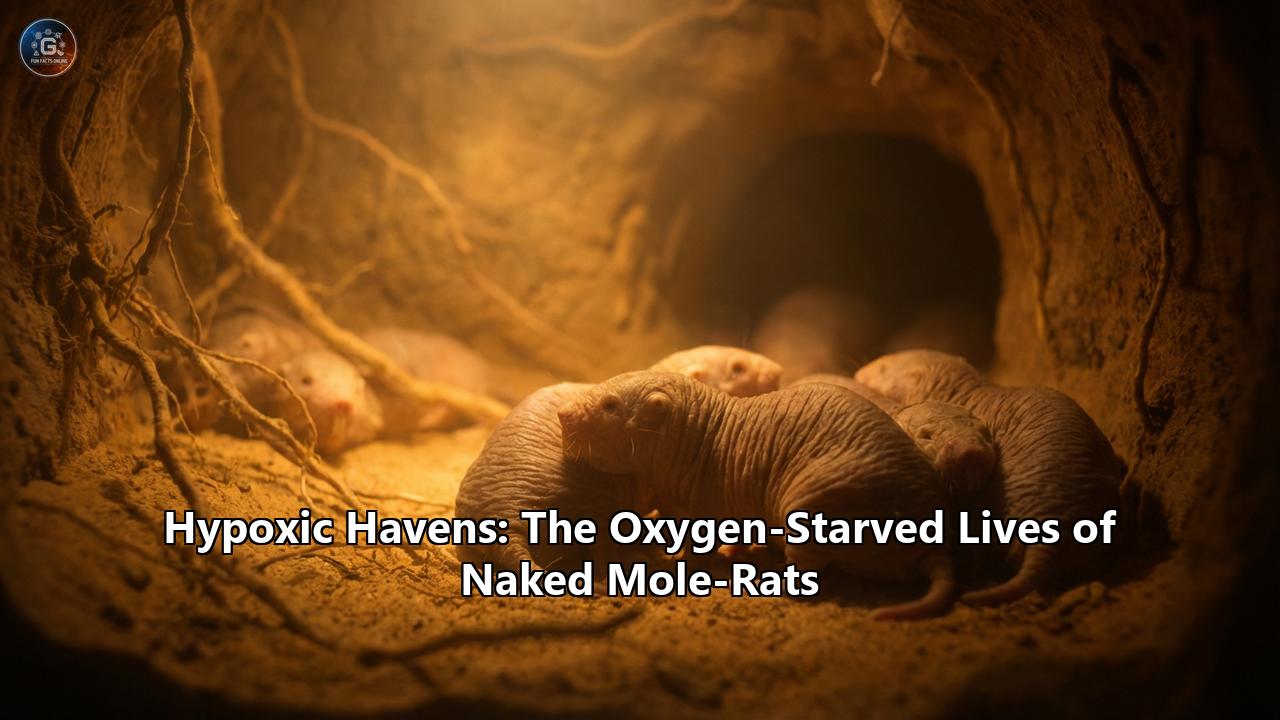
In the sun-baked, arid scrublands of East Africa, beneath the hardened soil that few other mammals could penetrate, lies a world as alien to our own as the surface of Mars. It is a world of pitch darkness, stifling heat, and an atmosphere so toxic it would leave a human gasping for air before collapsing into unconsciousness. Yet here, in these subterranean cities, thrives one of the most biological paradoxes on Earth: the naked mole-rat (Heterocephalus glaber).
To the uninitiated eye, they are undeniably grotesque—wrinkled, buck-toothed sausages of pink flesh, scurrying blindly through the dirt. But to the scientific community, they are nothing short of miraculous. These creatures have evolved to break almost every rule of mammalian biology. They feel no pain from acid; they defy the normal laws of aging; they are virtually immune to cancer; and, perhaps most astoundingly, they can survive in conditions of oxygen deprivation that should, by all accounts, be fatal.
This is the story of the naked mole-rat’s hypoxic haven—a deep dive into the evolutionary marvels that allow a mammal to live like a plant, rule like a medieval tyrant, and hold the potential secrets to saving human brains from the devastation of stroke and heart disease.
Part I: The Suffocating Underworld
To understand the naked mole-rat’s bizarre physiology, one must first understand the brutal environment that forged it. Naked mole-rats are not solitary diggers like their furry cousins; they are eusocial, meaning they live in vast, cooperative colonies that function more like a beehive or an ant mound than a typical mammalian family.
The Labyrinth
A single colony can house up to 300 individuals, all crammed into a burrow system that can stretch for kilometers. These tunnels are narrow—barely wide enough for one rat to pass another—and they are sealed off from the surface world to protect against predators and temperature fluctuations.
The result is an architectural marvel, but an atmospheric nightmare. With hundreds of animals breathing, eating, and excreting in a sealed underground space, the air quality deteriorates rapidly. In the deepest nest chambers, where the colony piles together for warmth in a writhing "mole-pile," the oxygen levels can plummet to frightening lows.
The air we breathe at sea level is approximately 21% oxygen and 0.04% carbon dioxide. In the crowded sleeping quarters of a naked mole-rat burrow, oxygen can drop to 10% or lower, while carbon dioxide levels can soar to 100 times that of surface air. For a human, this environment would induce panic, disorientation, and eventually death from CO2 poisoning or hypoxia. For the naked mole-rat, it is simply home.
The Social Heater
This crowding is not accidental; it is a survival necessity. Naked mole-rats are the only thermoconforming mammals. Unlike us, they do not internally regulate their body temperature to a constant 37°C (98.6°F). Instead, their body temperature fluctuates with their environment. To stay warm in the cool depths of the soil, they must rely on the collective body heat of the colony. They sleep in heaps, sharing warmth, which further depletes the local oxygen supply. They are effectively trapping themselves in a hypoxic oven of their own making, a lifestyle that has driven millions of years of extreme evolutionary adaptation.
Part II: The Fructose Switch
The most groundbreaking discovery regarding naked mole-rat physiology—and the one that has medical researchers scrambling for answers—is their ability to survive anoxia: the total absence of oxygen.
In 2017, a team led by neurobiologist Thomas Park at the University of Illinois at Chicago conducted an experiment that stunned the world. They placed naked mole-rats in a chamber with 0% oxygen.
A mouse placed in such conditions dies within 20 seconds. The naked mole-rat, however, did not die. It did not even panic. It simply slowed down. The animals curled up, ceased moving, and entered a state of suspended animation. Their heart rates dropped from a frenetic 200 beats per minute to a sluggish 50. They remained in this state for 18 minutes.
When fresh air was reintroduced, the mole-rats didn’t gasp or seize. They simply woke up, shook themselves off, and resumed their business as if nothing had happened. They suffered no brain damage and no lasting ill effects.
The Metabolic Magic Trick
How is this possible? The answer lies in a metabolic "magic trick" that was previously thought to exist only in plants.
All mammals run on glucose. We inhale oxygen to burn glucose and create energy (ATP) for our cells. Without oxygen, this process fails, and toxic byproducts (lactate) build up, quickly killing cells—especially in the brain, which is a voracious energy consumer.
When the oxygen runs out, the naked mole-rat performs a biochemical switch that is unique among mammals: it stops burning glucose and starts burning fructose.
- The GLUT5 Transporter: The researchers found that naked mole-rats have high levels of a specific transporter protein called GLUT5 in their brains and hearts. In other mammals, this transporter is found mostly in the intestine to digest fruit sugar. In the mole-rat, it acts as an emergency door, flooding the brain with fructose.
- The KHK Enzyme: Once the fructose is inside the cell, an enzyme called ketohexokinase (KHK) breaks it down. This pathway allows the creation of energy without the need for oxygen. It is less efficient than the standard oxygen-glucose engine, but it is enough to keep the pilot light of life burning during a crisis.
Essentially, when the lights go out, the naked mole-rat turns itself into a metabolic plant. It accesses a pathway that nature usually reserves for vegetation, allowing it to hunker down and wait out the bad air until it can move to a more ventilated tunnel.
Part III: The Blood of a Survivor
The fructose switch is the emergency backup generator, but the naked mole-rat also has a highly tuned "engine" for everyday hypoxic living. The secret flows in their veins.
Hemoglobin with a Grip of Steel
Hemoglobin is the molecule in red blood cells that grabs oxygen from the lungs and ferries it to the tissues. In most mammals, hemoglobin needs to be "loose" enough to let go of the oxygen once it reaches the muscles and brain.
Naked mole-rats possess a variation of hemoglobin with a super-high affinity for oxygen. In scientific terms, this is measured by the P50 value—the oxygen pressure at which hemoglobin is 50% saturated.
- Humans/Mice P50: ~26–36 mmHg (lower affinity, releases oxygen easily).
- Naked Mole-Rat P50: ~7–10 mmHg (extremely high affinity).
This "sticky" hemoglobin acts like a biological vacuum cleaner, scouring the blood for every last molecule of oxygen available in the oxygen-poor air of the burrow. It ensures that even when the air is stale and thin, the mole-rat’s vital organs receive the fuel they need.
The Acid Test
High levels of carbon dioxide (CO2) usually create carbonic acid in the blood, leading to a condition called acidosis. In humans, this causes a burning sensation (the feeling of holding your breath too long) and can lead to pulmonary edema (fluid in the lungs).
Naked mole-rats are virtually immune to this. They have a mutation in a gene called Nav1.7, which controls pain signaling. Specifically, the mutation blocks the transmission of acid-induced pain signals. They can swim in acid—literally and metabolically—without feeling the burn. furthermore, they show no signs of pulmonary edema even in CO2 concentrations that would turn a mouse’s lungs into waterlogged sponges.
Part IV: Neoteny and the Peter Pan Brain
One of the most fascinating theories explaining the naked mole-rat’s resilience is the concept of neoteny: the retention of juvenile traits into adulthood. In many ways, a naked mole-rat is a "Peter Pan" mammal—it never truly grows up.
The Stalled Brain
The brain of a naked mole-rat lacks many of the sophisticated, high-maintenance features of adult rodent brains. Its neurons resemble those of a newborn rat.
Newborn mammals are generally more tolerant of low oxygen than adults (think of human babies surviving complications during birth). By retaining this "infant-like" brain structure throughout their 30-year lifespan, naked mole-rats maintain that innate resistance to hypoxia. Their brain cells essentially wait in a state of arrested development, prioritizing survival over complex processing speed.
Eternal Youth of the Blood
Recent studies on their hematopoietic (blood-making) systems confirm this neoteny. In humans and mice, the stem cells that make blood age over time; they become less efficient and more prone to errors (cancer). A 20-year-old naked mole-rat, however, has blood stem cells that look almost identical to those of a pup. The ratio of their blood cells remains "youthful," supporting their immunity and oxygen-carrying capacity well into their geriatric years.
Part V: The Social Superorganism
The naked mole-rat’s ability to survive low oxygen is intimately tied to its social structure. They are one of only two eusocial mammal species (the other being the Damaraland mole-rat). This lifestyle mirrors that of bees or ants, creating a "superorganism" where the individual is less important than the colony.
The Tyranny of the Queen
Life in the colony is dictated by the Queen. She is the only breeding female, a tyrant who physically shoves and bullies her subordinates to assert dominance. Her urine contains hormones that suppress the reproductive capabilities of all other females, turning them into sterile workers.
This social structure creates the very crowding that necessitates their hypoxic adaptations. The Queen demands constant warmth for her pups, forcing the workers to pile into the nursery chambers, consuming the oxygen and spiking the CO2.
Game of Thrones: The Succession War
When a Queen dies, the colony descends into chaos. There is no peaceful transfer of power. The largest females—previously docile workers—suddenly undergo a biological transformation. Their reproductive systems turn on, and they begin a violent battle for the throne.
These "succession wars" can be brutal. Females will fight to the death, slashing each other with their massive incisors (which can move independently like chopsticks). The victor not only claims the crown but physically changes: her spine lengthens, her body expands to accommodate massive litters, and she becomes the new dictator of the oxygen-starved city.
The Dialect of the Burrow
In the pitch-black tunnels, vision is useless. Smell and sound are everything. Research from the Max Delbrück Center has revealed that naked mole-rats possess complex vocal dialects.
Every colony has a specific "accent" to their chirps. This dialect is determined by the Queen and learned by the pups. It serves as a critical shibboleth: a way to distinguish friend from foe. If a mole-rat from a rival colony digs into the burrow, the sentries will instantly recognize the "wrong" accent and attack. This xenophobia is extreme; intruders are usually killed immediately.
The Toilet Cleaner
The colony is divided into castes based on size and function.
- Volcanoers: These rats kick dirt out of the surface holes, creating the characteristic mounds.
- Soldiers: Large males who defend the tunnels from snakes and intruders.
- Workers: Smaller rats who dig tunnels and care for pups.
Perhaps the most humble role is that of the toilet cleaner. Naked mole-rats are fastidious; they have designated toilet chambers. Specific workers are tasked with managing this waste. Crucially, the colony engages in coprophagy (eating feces). While disgusting to us, this practice allows them to maximize nutrient absorption from their fibrous tuber diet and, importantly, transfers the colony's unique scent—and gut microbiome—to every member. It is the glue that holds the social immune system together.
Part VI: Implications for Human Medicine
Why should we care about a buck-toothed, hypoxic, poop-eating rodent? Because the naked mole-rat has solved biological problems that kill millions of humans every year.
Stroke and Heart Attack
A stroke occurs when blood flow to the brain is blocked, starving neurons of oxygen. In humans, these neurons die within minutes. The naked mole-rat’s "fructose switch" offers a tantalizing roadmap for treatment. If we could trigger a similar metabolic pathway in the human brain during a stroke—activating the GLUT5 transporters and KHK enzymes—we might be able to buy patients hours of time before permanent damage occurs.
Researchers are currently investigating drugs that could mimic this effect, essentially putting the human brain into a temporary "mole-rat mode" during cardiac arrest or stroke surgery.
Cancer and Aging
Naked mole-rats live up to 30 years, nearly ten times longer than a mouse. They almost never get cancer. Their cells have a mechanism called "early contact inhibition," where they stop dividing as soon as they touch another cell, preventing tumors from forming. Understanding the genetic basis of this arrest could lead to revolutionary cancer therapies.
Pain Management
Their inability to feel acid-induced pain (due to the Nav1.7 gene mutation) is also a major area of study for chronic pain relief. Developing painkillers that target this specific pathway could provide relief for burn victims or those suffering from inflammatory diseases without the addictive side effects of opioids.
Conclusion: The Beauty of the Beast
The naked mole-rat is a creature of extremes. It is an animal that has retreated from the light to conquer the dark. In doing so, it has shed the fur, the sight, and the metabolic fragilities of its surface-dwelling kin.
It has turned a suffocating, toxic dungeon into a thriving civilization. It has traded individual freedom for the safety of the collective. It has unlocked the secrets of eternal youth and metabolic flexibility.
In the end, "Hypoxic Havens" are not just holes in the ground; they are evolutionary laboratories. And as we peer closer at these ugly, incredible animals, we find that they are not just surviving where we would die—they are thriving, holding the keys to our own medical future in their tiny, wrinkled paws.
Reference:
- https://pmc.ncbi.nlm.nih.gov/articles/PMC12142806/
- https://www.researchgate.net/publication/38083864_Extreme_hypoxia_tolerance_of_naked_mole-rat_brain
- https://pubmed.ncbi.nlm.nih.gov/31545006/
- https://news.cornell.edu/stories/1996/07/naked-mole-rats-theyre-not-just-scientists-anymore
- https://www.researchgate.net/figure/Oxygen-binding-of-hemoglobin-in-humans-rats-and-mice-a-Hemoglobin-P50-values-are_fig3_398040194
- https://journals.biologists.com/jeb/article/220/21/3939/33740/O2-binding-and-CO2-sensitivity-in-haemoglobins-of
- https://www.smithsonianmag.com/smart-news/naked-mole-rats-speak-dialects-unique-their-colony-180976908/
- https://pmc.ncbi.nlm.nih.gov/articles/PMC7149588/
- https://nationalzoo.si.edu/animals/news/how-do-naked-mole-rats-choose-queen
- https://www.youtube.com/watch?v=sIj-w1OG0zY
- https://www.biorxiv.org/content/10.64898/2026.01.09.698689v1
- https://www.sci.news/biology/naked-mole-rats-colony-specific-dialects-09302.html
- https://news.mongabay.com/2021/02/the-queen-sets-the-tone-deciphering-the-dialects-of-naked-mole-rats/
- https://www.livescience.com/animals/land-mammals/some-naked-mole-rats-are-designated-toilet-cleaners-study-suggests