
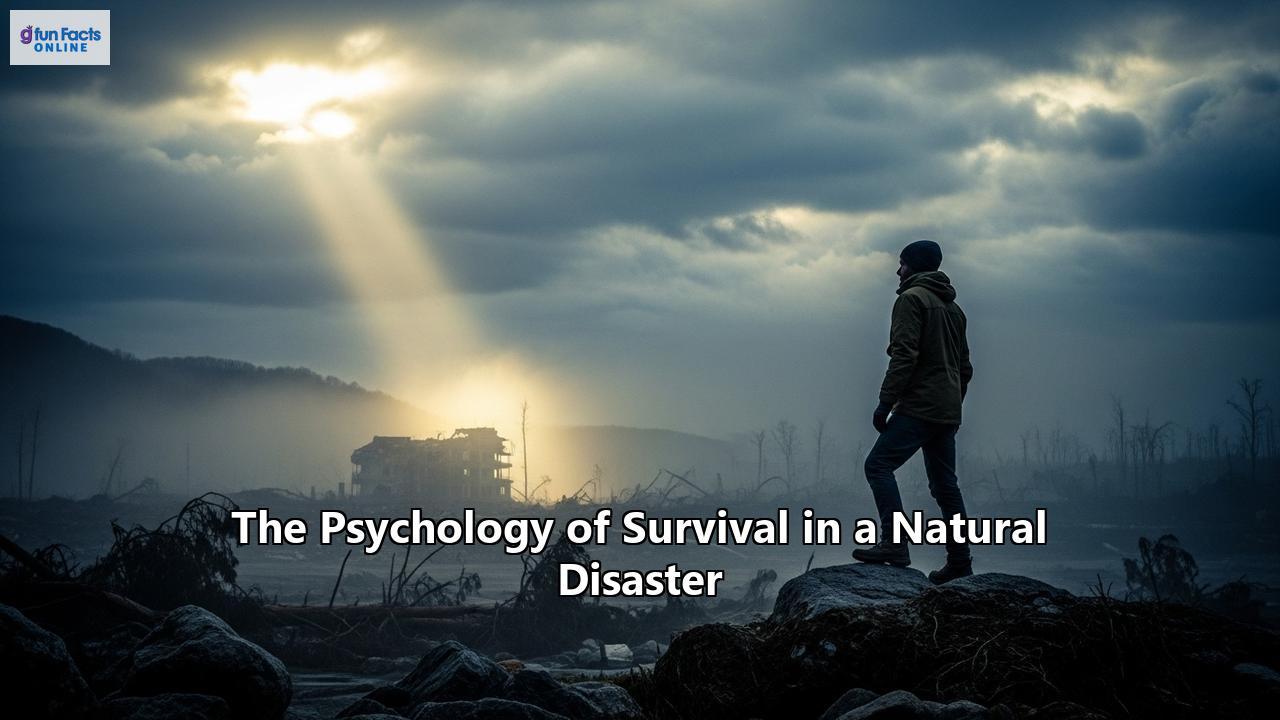
When the earth shakes, the winds howl, or the waters rise, the immediate focus is on physical survival. We board up windows, seek higher ground, and gather essential supplies. But what happens inside our minds is an equally powerful, and often more enduring, battle for survival. The psychology of navigating a natural disaster is a complex journey, a rollercoaster of emotions, and a testament to the resilience of the human spirit. This journey is not a simple, linear path from chaos to calm; rather, it unfolds in a series of distinct, albeit overlapping, psychological phases, each with its own challenges and opportunities for growth.
The Ominous Prelude: The Pre-Disaster Phase
For disasters that come with a warning, like a hurricane or an approaching wildfire, the pre-disaster phase is a period of heightened anxiety and dread. This is a time when the threat is known but not yet present, creating a palpable tension. Feelings of vulnerability and a loss of control are common, as individuals and communities grapple with the uncertainty of what is to come. For some, this warning period can lead to proactive, life-saving preparations. For others, it can result in denial or a paralyzing fear that hinders effective action.
Conversely, disasters that strike without warning, such as earthquakes or terrorist attacks, plunge individuals directly into the chaos, leaving them with a profound sense of vulnerability and a feeling that they had no power to protect themselves or their loved ones. Those who had warnings but failed to heed them may later struggle with feelings of guilt and self-blame.
The Moment of Impact: Shock and Survival
The impact phase is the point at which the disaster becomes a stark reality. This phase can last for mere minutes or extend for hours, depending on the nature of the event. The initial response is often one of shock, confusion, and disbelief. The mind struggles to process the overwhelming sensory input and the immediate threat to life. As one survivor of a wildfire described, "It was the moment I realized how close the fire actually was and that I might have to evacuate...I found myself paralyzed for a moment, unsure of what to do next."
During this phase, the body's primal "fight or flight" response takes over. The adrenal glands pump cortisol and epinephrine, increasing heart rate and blood pressure, and narrowing vision to focus on the immediate threat. This physiological reaction is a double-edged sword: it provides the energy needed for survival but can also impair rational decision-making. The primary focus during this time is on self-preservation and the safety of immediate family.
The Surge of Adrenaline: The Heroic Phase
In the immediate aftermath of a disaster, a remarkable transformation often occurs. The shock gives way to the heroic phase, a period characterized by a surge of adrenaline and a powerful sense of altruism. During this time, individuals may perform extraordinary acts of bravery, disregarding their own safety to rescue others and protect property. There is a strong sense of community and a collective desire to help, as people check on neighbors and volunteer with local organizations.
While this phase is marked by high activity, it's often low in productivity. The rush of energy can be exhausting, and the capacity to assess risk may be impaired, leading to potential injuries. This phase, driven by a sense of purpose and connection, is crucial for immediate survival but is ultimately unsustainable.
The Calm Before the Storm: The Honeymoon Phase
Following the heroic phase, a "honeymoon" period typically sets in, lasting from a few weeks to several months. During this time, there is a dramatic shift in emotion, with a sense of optimism and community bonding. Disaster assistance from governmental and volunteer organizations is often readily available, and survivors may feel a short-lived sense of hope that everything will return to normal quickly.
This phase is a critical window of opportunity for mental health workers and support organizations to build rapport with the affected population. However, the optimism of the honeymoon phase is often temporary, a fragile calm before the more arduous journey of long-term recovery begins.
The Long, Hard Road: The Disillusionment Phase
As the initial wave of support recedes and the reality of the long-term recovery process sets in, the honeymoon phase gives way to disillusionment. This can be the most challenging phase of all, as individuals and communities realize the limits of disaster assistance. Optimism turns to discouragement, and the emotional and physical exhaustion from the ongoing stress begins to take a heavy toll.
Negative reactions, such as substance abuse and physical exhaustion, may surface. The gap between the need for assistance and the resources available can lead to feelings of abandonment and resentment. This phase can last for months or even years, and trigger events, such as the anniversary of the disaster, can bring a resurgence of negative emotions.
Rebuilding and Redefining: The Reconstruction Phase
The final phase of the psychological journey is reconstruction, which can last for years. This is a period of gradual recovery, where individuals and communities begin to take responsibility for rebuilding their lives. It is a time of adjusting to a "new normal" while continuing to grieve losses. The construction of new homes and infrastructure serves as a physical manifestation of recovery, but it also brings a renewed recognition of what was lost.
This phase is not about returning to the way things were before the disaster, but about integrating the experience into a new reality. It is a time for finding positive lessons and meaning in the tragedy, a process known as post-traumatic growth.
The Survivor's Mindset: What Makes the Difference?
While the phases of a disaster provide a framework for understanding the collective psychological response, individual experiences can vary greatly. What is it that allows some people to not only survive but also thrive in the face of such adversity? The answer lies in the "survival mindset."
This mindset is not about being fearless, but about effectively managing fear. It encompasses several key psychological attributes:
- Mental Resilience: The ability to maintain a positive outlook, persevere through obstacles, and adapt to changing circumstances is crucial. Resilient individuals tend to be optimistic and find meaning even in the most challenging situations.
- Adaptability: Survival often requires flexible thinking and creative problem-solving under extreme pressure. Those who can assess a situation, identify available resources, and find innovative solutions are more likely to succeed.
- Emotional Regulation: The ability to manage intense emotions is vital for making rational decisions. This involves acknowledging and processing feelings without letting them become overwhelming.
- The Will to Live: At its core, survival is driven by a primal instinct to live. This innate drive is a powerful motivator that propels individuals forward. Research has shown that having something or someone to live for, such as a child or a loved one, can significantly increase the chances of survival.
- Knowledge and Conditioning: Understanding potential disasters and how to prepare for them is a cornerstone of survival. A healthy and well-conditioned body is also better equipped to handle the physical and mental stress of a crisis.
The Long-Term Scars and Surprising Strengths
The emotional and psychological impact of a natural disaster can linger long after the physical debris has been cleared. For some, the trauma can lead to long-term mental health challenges such as Post-Traumatic Stress Disorder (PTSD), anxiety, and depression. Survivor's guilt, the profound feeling of having survived when others did not, is another common and debilitating struggle.
However, the aftermath of a disaster can also be a catalyst for profound personal growth. Many survivors report a greater appreciation for life, stronger relationships, and a newfound sense of personal strength. This phenomenon, known as post-traumatic growth, is a testament to the human capacity to find meaning and purpose in the face of immense suffering.
The Power of Connection: The Social Dimension of Survival
In the midst of chaos and destruction, the power of human connection becomes a vital lifeline. Social support is a key component of disaster recovery. Sharing experiences with others who have been through the same event can provide a sense of validation and belonging.
Furthermore, acts of altruism are not only beneficial to those who receive help but also to those who give it. Helping others can provide a sense of purpose and control in a situation where one might otherwise feel helpless. Research has even suggested that individuals with professions focused on helping others, such as doctors and nurses, have better survival rates in disasters.
Navigating the Aftermath: Strategies for Coping and Healing
Recovering from the psychological trauma of a natural disaster is a marathon, not a sprint. There are several strategies that can help individuals navigate this challenging journey:
- Acknowledge Your Feelings: It is normal to experience a wide range of intense and unpredictable emotions. Allowing yourself to feel these emotions without judgment is a necessary part of the grieving and coping process.
- Seek Support: Do not isolate yourself. Connecting with family, friends, support groups, or mental health professionals can make a significant difference in your recovery.
- Establish a Routine: In the midst of chaos, re-establishing a normal schedule can provide a sense of stability and control.
- Take Care of Your Physical Health: The mind and body are intricately linked. Eating well, staying hydrated, getting regular exercise, and prioritizing sleep can reduce the negative effects of stress.
- Limit Media Exposure: Constant exposure to news and social media coverage of the disaster can increase distress.
- Engage in Healthy Coping Mechanisms: Mindfulness, deep breathing exercises, journaling, and engaging in hobbies can provide respite from overwhelming emotions. Avoid unhealthy coping mechanisms like substance abuse, which can hinder recovery.
- Be Patient with Yourself: Recovery takes time. Be patient with the process and give yourself grace to navigate the good days and the bad days.
The journey through the psychological landscape of a natural disaster is a profound and transformative experience. It is a testament to the fragility of life and the incredible strength of the human spirit. By understanding the phases of psychological response, cultivating a survival mindset, and embracing the power of human connection, we can not only endure the unimaginable but also emerge from it with a deeper understanding of ourselves and the world around us.
Reference:
- https://www.psychologytoday.com/us/blog/lgbtq-affirmative-psychology/202501/the-six-psychological-stages-of-a-disaster
- https://www.childrenshospitals.org/news/childrens-hospitals-today/2021/02/6-emotional-phases-of-a-disaster
- https://www.orau.gov/rsb/pfaird/03-psychosocial-reactions-01-phases-of-disaster.html
- http://macog.org/wp-content/uploads/2019/12/Emotional-Phases-of-a-Disaster.pdf
- https://www.frostburg.edu/faculty/rkauffman/_files/images_preppers_chapters/Ch02-Psychology_v2.pdf
- https://meaningfulworld.com/our-work/psychological-phases-of-disasters-resources-preparedness-dr-ani-kalayjian
- https://surviveandrevive.org/the-psychology-of-survival/
- https://www.ldsliving.com/the-psychology-of-survival-6-tips-for-mentally-and-emotionally-preparing-your-family-for-a-disaster/s/83403
- https://southeastpsychnashville.com/navigating-the-psychological-aftermath-of-natural-disasters/
- https://www.massgeneralbrigham.org/en/about/newsroom/articles/mental-health-effects-natural-disasters
- https://www.apa.org/topics/disasters-response/recovering
- https://www.everydayhealth.com/emotional-health/tips-for-coping-during-natural-disasters/
- https://www.verywellmind.com/coping-with-natural-disasters-2797570
- https://www.psychiatry.org/patients-families/coping-after-disaster-trauma