
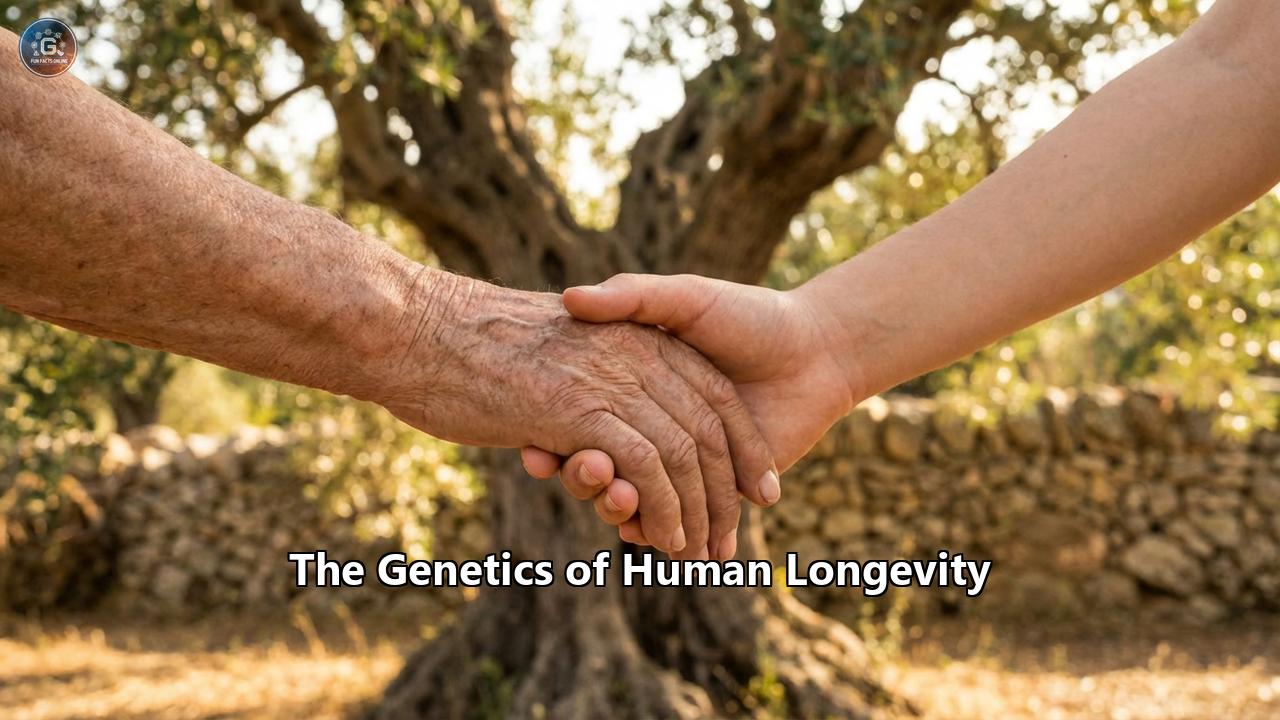
The quest for longevity is perhaps as old as human consciousness itself, a timeless narrative woven into our myths, our medicines, and now, our molecular biology. For centuries, the secret to a long life was thought to be a simple lottery of fate or the reward for a virtuous existence. Today, however, we stand on the precipice of a new understanding: longevity is not merely a roll of the dice, but a complex interplay of genetic architecture and environmental signaling—a code that science is beginning to decipher.
This article explores the intricate genetics of human longevity, dissecting the heritability of lifespan, the specific genes that act as guardians of our youth, the biological clocks ticking within our cells, and the futuristic interventions that may one day allow us to rewrite the boundaries of human existence.
Part I: The Heritability Puzzle
Nature vs. Nurture: The 50% Shift
For decades, the scientific consensus held that the genetic contribution to human lifespan was relatively modest—somewhere between 15% and 30%. This estimate was derived largely from traditional twin studies and family genealogies, which suggested that while your genes mattered, your lifestyle (diet, exercise, smoking habits) mattered much more. The adage "genetics loads the gun, but lifestyle pulls the trigger" became the dogma of the longevity field.
However, recent research has dramatically upended this view. A landmark study analyzing thousands of twin pairs in Scandinavia, published in Science and other major journals, revealed a startling nuance: when you strip away "extrinsic" causes of death—accidents, infectious diseases, and random environmental hazards—the heritability of "intrinsic" human lifespan may be as high as 50% or more.
This distinction is crucial. In the 19th and early 20th centuries, a person with "good longevity genes" might still die at 40 from tuberculosis or a factory accident. Their genetic potential was masked by a harsh environment. In the modern era, where antibiotics, sanitation, and safety standards have removed many of these extrinsic threats, our genetic baseline is becoming the primary determinant of how long we live. We are essentially clearing the noise to hear the signal of our own DNA.
The Missing Heritability
Despite this high estimate, Genome-Wide Association Studies (GWAS)—which scan the genomes of thousands of people to find common variations linked to traits—have historically struggled to find the "smoking gun" genes for longevity. This phenomenon is known as "missing heritability."
The answer likely lies in the distinction between common variants and rare variants. Most GWAS focus on common genetic changes that appear in at least 1% or 5% of the population. These variants usually have tiny effects; one might increase your lifespan by a few weeks, another might decrease it by a month.
In contrast, the New England Centenarian Study (NECS) and similar projects have found that exceptional longevity (living to 100, 105, or 110+) is often driven by rare, potent genetic variants. These are not the small nudges of common genes, but powerful shields that offer robust protection against the diseases of aging. The study found that while centenarians have just as many "bad" genes (disease risk alleles) as the average person, they possess a unique arsenal of "protective" genes that buffer them against the damage. This buffering effect becomes stronger the longer you live; the genetic profile of a semi-supercentenarian (105-109) is significantly more distinct and protective than that of a mere centenarian (100-104).
Part II: The Usual Suspects – Key Longevity Genes
While hundreds of genes play a role in aging, a select few have emerged as the "titans" of longevity research. These genes appear repeatedly in studies of the world's oldest people, from the rugged coasts of Sardinia to the subtropical islands of Okinawa.
FOXO3: The Master Regulator
If there is a "longevity gene," FOXO3 is the strongest candidate. Found on chromosome 6, this gene encodes a transcription factor—a protein that acts like a switch, turning other genes on or off.
FOXO3 is the cellular equivalent of a crisis manager. When a cell is under stress—whether from lack of food, heat shock, or oxidative damage—FOXO3 activates a suite of repair programs. It triggers autophagy (the cell's recycling system), boosts antioxidant defenses, and repairs damaged DNA.A specific variant of this gene, the "G-allele" (rs2802292), has been consistently found in centenarians across diverse ethnic groups, including Japanese, German, American, and Han Chinese populations. Having one copy of this protective allele significantly increases the odds of reaching 100; having two copies triples the odds. It effectively keeps the body's repair systems on high alert, ensuring that minor cellular damage is fixed before it can accumulate into catastrophic failure.
APOE: The Double-Edged Sword
The APOE gene is best known for its role in lipid metabolism and Alzheimer's disease. It comes in three common flavors (alleles): ε2, ε3, and ε4.
- APOE ε4 is the risk variant. Carrying one copy increases the risk of Alzheimer's by 3-4 times; two copies can increase it by up to 15 times. It is also linked to higher cardiovascular risk. In centenarian studies, the ε4 allele is conspicuously absent. It is the "anti-longevity" gene; its presence acts as a barrier that few cross to reach extreme old age.
- APOE ε2, on the other hand, is the "longevity" variant. It is relatively rare in the general population but highly enriched in centenarians. It seems to protect against both Alzheimer's and heart disease, acting as a metabolic shield that preserves cognitive and cardiovascular health well into the 10th decade of life.
CETP: The Cholesterol Connection
The CETP gene regulates the transfer of cholesterol esters between lipoproteins. A specific mutation in this gene, which results in lower levels of CETP protein and larger, "fluffier" HDL (good cholesterol) particles, was famously identified in a population of Ashkenazi Jewish centenarians by researchers at the Albert Einstein College of Medicine. These individuals had remarkably healthy lipid profiles and a significantly reduced risk of heart disease and stroke, despite not always having the healthiest diets. This gene highlights the importance of cardiovascular health as a gatekeeper to longevity.
SIRT1: The Repairman
SIRT1 belongs to a family of proteins called sirtuins, often dubbed the "genes of wisdom" or "guardian genes." Sirtuins are NAD+-dependent deacetylases that regulate cellular health. SIRT1 is critical for DNA repair and genomic stability. It is the gene that is famously activated by resveratrol (found in red wine) and calorie restriction. While the "red wine" hype has faded, the biology of SIRT1 remains solid: it helps maintain the integrity of the genome, preventing the accumulation of errors that define aging.Part III: The Cellular Machinery of Aging
To understand how these genes work, we must look at the machinery they control. Aging is not a single process but a cascade of failures across multiple systems.
Telomeres: The Cellular Fuse
Telomeres are the protective caps at the ends of our chromosomes, often compared to the plastic aglets on shoelaces. Every time a cell divides, its telomeres get a little shorter. When they become too short, the cell enters a state of senescence (a "zombie" state where it stops dividing) or dies.
For years, telomere length was touted as the ultimate biomarker of aging. While it is true that short telomeres are associated with mortality, the picture is complex. Recent consensus suggests that telomere length is less of a driver of aging and more of a limit on cellular replication.
Interestingly, lifestyle factors can influence this "fuse." A 2024 study on US adults found that regular strength training was significantly associated with longer telomeres, suggesting that muscle tissue acts as a reservoir of systemic youth signals. However, telomere length has been surpassed in predictive power by a new generation of biomarkers: epigenetic clocks.
Epigenetics: The Clock on the Wall
While our DNA sequence (the hardware) remains fixed throughout our lives, the chemical tags that attach to it (the software) change as we age. This is epigenetics, specifically DNA methylation.
Dr. Steve Horvath developed the first "epigenetic clock," showing that by measuring methylation levels at specific sites on the genome, you could predict a person's chronological age with frightening accuracy.
Newer clocks, like GrimAge, go a step further. They don't just tell you how old you are; they tell you how fast you are aging. GrimAge is currently the gold standard for mortality prediction, outperforming telomere length and traditional risk factors. It can predict lifespan and healthspan by integrating data on smoking history, inflammation proteins, and methylation patterns. Crucially, these clocks have shown that biological aging is reversible. Interventions like diet, exercise, and emerging drug therapies have been shown to "turn back" the GrimAge clock in small clinical trials.
Mitochondria: The Power Plant Problem
Mitochondria are the energy factories of our cells, and they have their own DNA (mtDNA), inherited exclusively from the mother. Over time, mitochondria accumulate damage and become less efficient, leaking toxic "exhaust" in the form of reactive oxygen species (ROS). This is the Free Radical Theory of Aging (now refined into the Mitochondrial Free Radical Theory).
Genetic haplogroups (ancestral lineages of mitochondria) play a role here.
- Haplogroup J, common in Northern Europeans and Finns, is overrepresented in centenarians. It is hypothesized that this haplogroup produces slightly less energy (and heat) but also fewer damaging free radicals, essentially running the engine cooler and longer.
- Haplogroup D4a is the Asian equivalent, strongly linked to longevity in Japanese centenarians, particularly in Okinawa.
These findings suggest that a "thrifty" metabolism—one that prioritizes efficiency and low damage over maximum power output—may be a key to extreme endurance.
Part IV: Pathways and Paradoxes
The Insulin/IGF-1 Paradox
One of the most conserved longevity pathways in nature involves Insulin and Insulin-like Growth Factor 1 (IGF-1). In simple organisms like worms (C. elegans) and fruit flies, reducing insulin signaling can double lifespan. The logic is evolutionary: when food is scarce (low insulin signaling), the organism shifts from "growth mode" to "maintenance mode," prioritizing repair over reproduction.
In humans, the story is more complex. High levels of IGF-1 are necessary for growth and muscle maintenance in youth, but in late life, high IGF-1 is linked to cancer and shorter lifespan. Conversely, centenarians often have naturally lower levels of IGF-1 signaling or mutations in the IGF-1R receptor gene. This creates a trade-off: the growth that makes us strong in our 20s may be the same force that ages us in our 80s. This is an example of antagonistic pleiotropy—genes that are good for us early in life but bad for us later.
mTOR: The Growth Switch
Closely related is the mTOR (mechanistic target of rapamycin) pathway. mTOR is a nutrient sensor. When you eat protein, mTOR turns on, telling the cell to grow and divide. When you fast, mTOR turns off, triggering autophagy (cellular cleanup).
Chronic overactivation of mTOR (due to constant overeating, typical in modern Western diets) inhibits this cleanup process, leading to the accumulation of cellular "junk" (misfolded proteins, damaged organelles) that clogs up the cell and leads to aging. Many longevity interventions, including the drug Rapamycin, work by inhibiting mTOR, artificially tricking the body into a state of fasting and repair.
Part V: Lessons from the Blue Zones
The genetics of longevity are not just abstract data points; they are lived realities in specific enclaves known as Blue Zones.
- Okinawa, Japan: The Okinawan Centenarian Study has documented a population with remarkably low rates of heart disease and cancer. Genetic analysis shows a clustering of favorable FOXO3 variants and the mitochondrial Haplogroup D4a. But their genetics also interact with a unique environment: a calorie-restricted, nutrient-dense diet (rich in purple sweet potatoes) and a strong social network ("moai").
- Sardinia, Italy: In the mountainous Ogliastra region, there is a near 1:1 ratio of male to female centenarians (elsewhere, women outlive men 4:1). This population has been genetically isolated for thousands of years, enriching specific variants. Interestingly, they carry genetic markers often associated with inflammation—but in their specific environmental context (high physical activity, Mediterranean diet), these genes may boost immune response rather than causing chronic disease.
Part VI: The Future of Longevity – From Reading to Writing
We have moved from merely reading the code of life to having the tools to edit it. The future of longevity genetics is active intervention.
Senolytics: Killing the Zombies
One of the most promising frontiers is senolytics—drugs that selectively kill senescent cells. These "zombie cells" accumulate with age and secrete inflammatory chemicals (SASP) that poison their neighbors. Early human trials with the leukemia drug Dasatinib and the plant pigment Quercetin (D+Q) have shown promise in clearing these cells and improving physical function in patients with pulmonary fibrosis. The goal is to periodically "flush" the body of these aged cells, reducing the inflammatory burden and allowing healthy tissues to regenerate.
CRISPR and Gene Therapy
CRISPR-Cas9 technology allows us to edit genes with precision. In mice, researchers have already used CRISPR to silence the KAT7 gene, a driver of cellular senescence, resulting in extended lifespan.
While editing the human germline (sperm/eggs) to create "designer babies" remains ethically fraught and illegal in most places, somatic gene therapy in adults is on the horizon. Imagine a therapy that delivers an extra copy of FOXO3 or SIRT1 to your liver or heart cells via a viral vector, boosting your body's resilience as you age. Another target is PCSK9, a gene that regulates cholesterol; editing it could permanently lower heart disease risk, mimicking the natural protection seen in some centenarians.
Repurposing Drugs: The SGLT2 Surprise
Sometimes the best anti-aging drugs are ones we already have. SGLT2 inhibitors (like Jardiance), originally designed for diabetes, are showing remarkable "off-target" benefits. They reduce heart failure, protect kidneys, and in animal models, extend lifespan by mimicking some of the metabolic shifts of calorie restriction. In 2025, research began to solidify the link between these drugs and reduced markers of senescence in humans, suggesting they may be true geroprotectors.
Part VII: Ethical and Societal Horizons
As we unlock the genetic keys to extending life, we face profound ethical questions.
If longevity therapies become available, will they be the preserve of the wealthy, creating a "biological caste system" where the rich live to 150 and the poor die at 75?
Furthermore, what happens to the human species if we slow down the generational turnover? Death and replacement are the engines of evolution. By extending individual lives, we might inadvertently stagnate our cultural and biological evolution.
Yet, the ethical imperative to reduce suffering is powerful. Aging is the primary risk factor for every major killer: cancer, heart disease, dementia. To treat aging is to treat the root cause of human suffering.
Conclusion
The genetics of human longevity is a story of resilience. It is written in the rare variants of the supercentenarian, the methylation marks of the epigenetic clock, and the signaling pathways that balance growth with repair. We are learning that while we cannot change the hand of cards we were dealt at birth, we can change how we play them. Through lifestyle, pharmacological intervention, and potentially gene editing, we are moving toward a future where "intrinsic" aging is not an immutable decline, but a manageable condition. The 50% of our longevity that is genetic is no longer a fixed fate—it is a map, and we are just beginning to explore the territory.
Reference:
- https://www.mdpi.com/2227-9059/14/2/316
- https://pmc.ncbi.nlm.nih.gov/articles/PMC12035601/
- https://bioengineer.org/advancing-human-longevity-opportunities-and-challenges/
- https://www.lifeextension.com/magazine/2016/7/age-reversal-research-at-harvard-medical-school
- https://longevity.technology/news/cut-and-paste-for-longevity-new-crispr-tool-enables-drag-and-drop-gene-insertion/
- https://www.nad.com/news/scientists-develop-new-anti-aging-crispr-based-gene-therapy
- https://www.quora.com/Would-it-be-ethical-to-genetically-engineer-human-beings-to-increase-the-lifespan
- https://www.researchgate.net/publication/282761202_The_Ethics_of_Human_Life_Extension_The_Second_Argument_from_Evolution