
Introduction: The Living Glitch
In the dense, humid undergrowth of Kanchanaburi’s forests, close to the misty border between Thailand and Myanmar, nature recently revealed one of its most startling paradoxes. It was not a creature of mythology, stitched together by gods or monsters, but a small, eight-legged architect hidden in the soil. To the untrained eye, it might have looked like a trick of the light or a painter’s error. To the scientists who unearthed it in late 2025, it was a biological miracle: a spider that was literally half-male and half-female, split perfectly down the middle.
This is the story of Damarchus inazuma, a newly discovered species of wishbone spider that has captivated the scientific community not just for its existence, but for the singular, aberrant individual that gave the species its name. Named after a gender-fluid character from the legendary manga One Piece, the "Inazuma spider" has become the poster child for one of biology’s rarest phenomena: bilateral gynandromorphism.
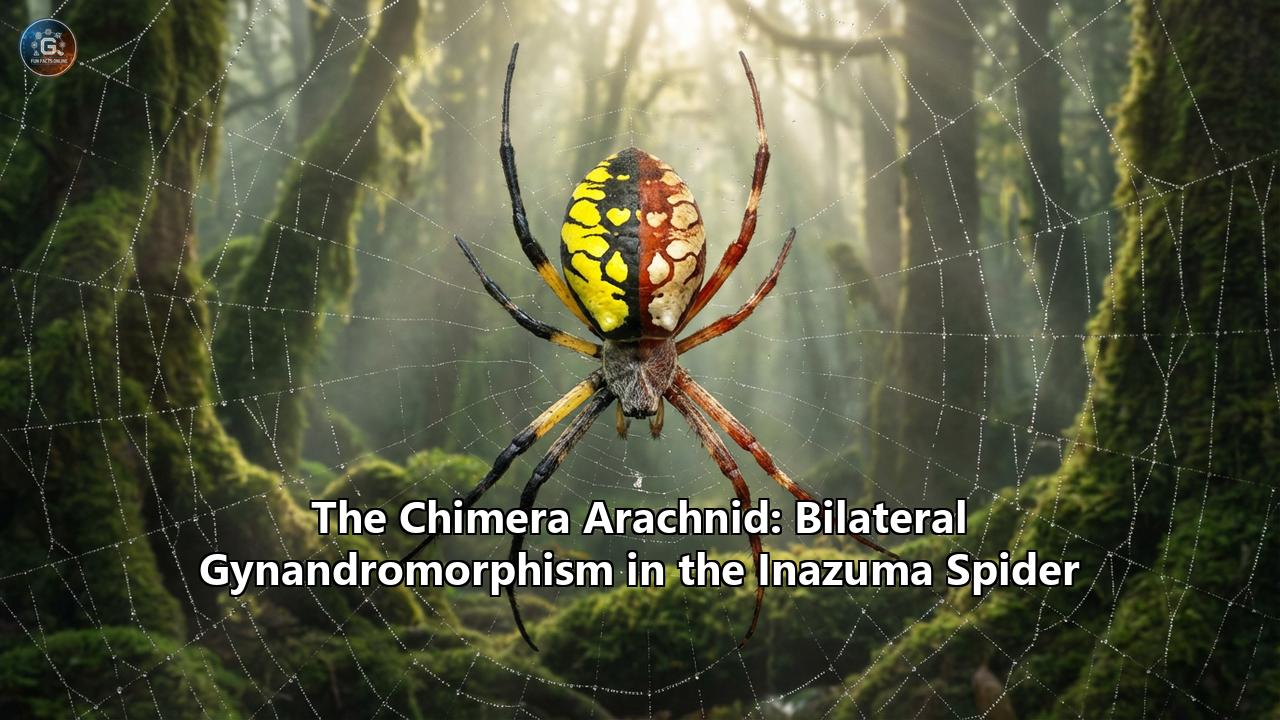
Imagine a creature where the left side is a vibrant, earthen orange—robust and formidable—while the right side is a ghostly, salt-and-pepper grey, slender and delicate. This is not camouflage. This is not a seasonal molt. This is a living chimera, an organism whose very cells are at war with one another, carrying two distinct genetic blueprints in a single body.
As we delve into the world of the Inazuma spider, we uncover more than just a biological oddity. We find a window into the chaotic machinery of life itself, a story that bridges the gap between rigid scientific taxonomy and the fluid creativity of pop culture, and a reminder that even in the 21st century, the Earth still hides monsters in the mud.
Part I: The Discovery in the Golden Land
The discovery of Damarchus inazuma was not the result of a high-tech expedition or a satellite scan, but rather the fruit of patience, curiosity, and the increasingly vital practice of citizen science.
The Kanchanaburi Expedition
Kanchanaburi Province, west of Bangkok, is a region defined by its rugged limestone hills, cascading waterfalls, and the historic River Kwai. It is a biodiversity hotspot, a transitional zone where the flora and fauna of the Indochinese and Sundaic regions overlap. For arachnologists, it is a treasure trove of mygalomorphs—the ancient, heavy-bodied group of spiders that includes tarantulas and trapdoor spiders.
In October 2025, a team of researchers from Chulalongkorn University, led by doctoral student Chawakorn Kunsete and entomologist Natapot Warrit, embarked on a survey of the region. They were following a lead provided by a local enthusiast, Surin Limrudee, who had posted a photograph of a strange spider on Facebook. The image showed a spider that didn't make sense: it had the heavy build of a burrower but a coloration that defied the known patterns of local species.
The "Wishbone" Architects
The team was hunting for members of the genus Damarchus, commonly known as "wishbone spiders." These are not the wandering hunters that startle homeowners in their bathrooms. They are secretive, fossorial creatures that spend nearly their entire lives underground. They construct distinctive Y-shaped burrows—hence the name "wishbone"—lined with silk. One arm of the "Y" serves as the main entrance, often covered with a thin, camouflaged trapdoor, while the other serves as an escape tunnel or a dead-end decoy for predators.
Excavating these spiders is a delicate art. It requires carefully digging around the silk-lined tube, sometimes extending 30 centimeters into the hard-packed soil, to extract the spider without collapsing its home or harming it. It was during one of these excavations that the team found the specimen.
The Moment of Realization
When the spider was finally brushed clean of the Kanchanaburi red clay, the silence in the field station was palpable. Mygalomorph spiders often exhibit sexual dimorphism—where males and females look different. In many species, females are large, drab, and long-lived, while males are smaller, leggy, and often more colorful or differently patterned.
The specimen in the container was both.
"It was like looking at two different photos spliced together," recalled one of the field assistants. The left side of the spider displayed the characteristics of a mature female: a robust cephalothorax and legs covered in the rich, rust-orange setae (hairs) typical of the females in this genus. The right side was starkly different: smaller, with the contrasting white and grey coloration of a male.
Genetic testing and morphological analysis later confirmed what their eyes were telling them. They had found a new species, eventually designated Damarchus inazuma, but they had also found something statistically impossible: a bilateral gynandromorph, the first ever recorded in the family Bemmeridae.
Part II: The Chimera in the Code
To understand why the Inazuma spider is so special, we must first understand the biological mechanism that created it. Gynandromorphism is often confused with hermaphroditism, but the two are fundamentally different.
Hermaphrodite vs. Gynandromorph
A hermaphrodite is an organism that naturally possesses both male and female reproductive organs. This is common in many invertebrates, such as earthworms and snails, and some fish. In these species, being "both" is the standard operating procedure, a feature of their evolutionary design to maximize reproduction.
A gynandromorph, however, is a genetic accident. It is an organism that contains both male and female cells. It is not a blended mix, but a mosaic. When the division of sexes is perfectly split down the center of the body, it is called bilateral gynandromorphism.
The Spider’s Chromosomes
In humans, sex is determined by the XY system: XX for females, XY for males. Spiders, however, operate on a different system, often the X0 (X-zero) system.
- Females typically have two sets of sex chromosomes (XX or X1X1X2X2).
- Males have only one set (X0 or X1X20).
The "Inazuma" anomaly likely occurred during the very first division of the fertilized egg (the zygote).
- Conception: A sperm fertilized an egg, creating a female embryo with a full set of chromosomes (let’s simplify to XX).
- Mitosis: The single cell began to divide into two.
- The Glitch: During this division, one of the X chromosomes failed to segregate properly. This is known as "nondisjunction" or "chromosome lagging."
- The Result: One of the two resulting cells kept the full XX set (destined to become female). The other cell lost an X chromosome, becoming X0 (destined to become male).
Because this happened at the first division, every subsequent cell derived from the "female" cell formed the left side of the spider, and every cell from the "male" cell formed the right. The spider literally grew as two separate fraternal twins fused along the midline.
A Visual Asymmetry
The result is a striking asymmetry that goes beyond color.
- Size: Female spiders in the Damarchus genus are significantly larger than males. In the gynandromorph specimen, the female left side is bulkier, with thicker legs and a larger chelicera (fang). The male right side is stunted in comparison, creating a lopsided gait.
- Reproductive Organs: On the underside of the spider, the difference is even more profound. The left side possesses the external structures of the female epigyne (the reproductive plate), while the right side lacks this, instead showing the male gonopore arrangement.
- Palps: The pedipalps (the small, leg-like appendages near the mouth) are the most definitive sexing tool for spiders. Males have "boxing glove" tips—bulbs used to store sperm. The Inazuma spider has a normal, leg-like palp on the left (female) and a swollen, bulbous palp on the right (male).
*Part III: Profile of Damarchus inazuma---
While the gynandromorph individual stole the headlines, the species itself, Damarchus inazuma, is a fascinating addition to the arachnid tree of life.
Taxonomy: The Family Bemmeridae
For decades, the genus Damarchus was bounced around the taxonomic map, residing in the families Nemesiidae and Ctenizidae. It wasn't until the 2020s, with the advent of advanced genomic sequencing, that arachnologists elevated the subfamily Bemmerinae to the full family status of Bemmeridae.
The discovery of D. inazuma solidified the importance of this small family. Bemmerids are old-world spiders, remnants of a lineage that drifted apart when the supercontinents broke. They are defined by their unique scopulae (dense pads of hair) on their legs and specific arrangements of trichobothria (sensing hairs).
Morphology and Behavior
Damarchus inazuma is a medium-sized mygalomorph.- Females: Reach body lengths of about 2.5 cm (1 inch). They are colored in earthy tones—deep oranges and rust browns—to blend in with the laterite soil of the Thai forests. Their primary goal is stability; they rarely leave their burrows.
- Males: Smaller, around 1.5 cm. They are the wanderers. Their coloration is a stark contrast—silvery-whites and greys. This "salt-and-pepper" look might serve as a form of disruptive camouflage against the lichen-covered rocks and dry leaf litter they traverse while hunting for mates.
The "wishbone" burrow is an evolutionary masterpiece. The Y-shape allows the spider to have a back door. If a predator (like a centipede or a parasitic wasp) enters the main shaft, the spider can retreat into the secondary arm and collapse the silk tunnel behind it, effectively sealing the intruder in an empty tube.
Venom and Diet
Like most mygalomorphs, Damarchus inazuma is an ambush predator. It sits at the mouth of its burrow, sensing the vibrations of passing insects—crickets, beetles, and even other smaller spiders. When a victim wanders too close, the spider bursts from the trapdoor with explosive speed, impaling the prey with its downward-striking fangs.
The venom of Damarchus is not considered dangerous to humans, though a bite would be painful due to the sheer size of the fangs (mechanical damage). To a cricket, however, it is a rapid-acting neurotoxin that liquefies insides for easy consumption.
Part IV: The "Inazuma" Connection
Scientific names are often dry, Latinized descriptions of body parts (maculata for spotted, robustus for strong). But occasionally, taxonomists have fun. The naming of Damarchus inazuma is a perfect example of how pop culture permeates high science.
The Character
In Eiichiro Oda’s global phenomenon One Piece, Inazuma is a revolutionary from the Empire of Ivan. Inazuma is a user of the "Choki Choki no Mi" (Snip-Snip Fruit), allowing them to cut the world as if it were paper. But more relevantly, Inazuma is portrayed as gender-fluid, often appearing as a male in some scenes and a female in others, or switching between them.
The character's design reflects this duality: they wear a split-colored coat, orange on one side and white on the other.
The Homage
When Chawakorn Kunsete and his team analyzed the gynandromorph spider, the resemblance was undeniable. The spider was literally orange on the female side and white on the male side. It was a rigorous case of life imitating art.
"The name Inazuma was chosen not just for the character," Kunsete explained in the Zootaxa publication, "but to honor the concept of fluidity and the binary-breaking nature of this specimen. It makes a complex biological concept immediately understandable to the public."
This naming strategy is brilliant science communication. It took a dense paper on arachnid morphology and turned it into a viral story, drawing attention to biodiversity conservation from millions of manga fans who might otherwise never care about a trapdoor spider.
Part V: The Lonely Life of a Chimera
While the Inazuma spider is a scientific marvel, its life as an individual organism is likely one of confusion and biological frustration.
The Mating Paradox
The primary drive of a spider is to reproduce. For a bilateral gynandromorph, this is a logistical nightmare.
- Chemical Signals: Female spiders release pheromones to attract males. Male spiders have sensors to detect these pheromones. The Inazuma spider likely produces female pheromones from its left side while simultaneously sensing them with its right side. It is, in a sense, attracting itself.
- Courtship: Mygalomorph courtship involves a specific "dance" where the male taps his legs on the ground to signal he is not prey. If a normal male approached the Inazuma spider, the female half might respond with aggression or receptiveness, but the male half might view the suitor as a territorial rival.
- Physical Mechanics: Even if mating were attempted, the mechanics would fail. The male organ (palpal bulb) is on the right, but the female receptor (epigyne) is on the left. A male spider needs to insert his palp into the female's epigyne. A gynandromorph cannot mate with itself because the geometry is wrong—it cannot reach its own underside effectively, and even if it could, the organs are on opposite sides of the necessary lock-and-key alignment.
Therefore, this magnificent creature is almost certainly sterile—a genetic dead end. It is a "monster" in the classical sense: a warning or a sign, unique and unable to replicate.
Developmental Hurdles
The fact that the spider reached adulthood is a miracle in itself.
- Molting: Spiders must shed their exoskeletons to grow. This is a perilous process. The female side of the Inazuma spider is genetically programmed to grow larger and faster than the male side. This creates structural stress. As the spider molts, the left side tries to expand more than the right, leading to warping of the carapace. Many gynandromorphs die during molting because they get stuck in their own skins or emerge too deformed to survive.
- Locomotion: With longer legs on the left and shorter legs on the right, the Inazuma spider walks with a permanent limp. It must compensate constantly to move in a straight line.
Part VI: Why Does This Happen?
The discovery of the Inazuma spider has reignited the debate over the causes of gynandromorphism. Why is it so rare in spiders compared to, say, butterflies or moths?
The Fragility of the Early Embryo
The prevailing theory, supported by the Thai research team, is chromosomal loss. Spiders have a high number of chromosomes compared to fruit flies (the classic genetic model). The complexity of their genome might make them more susceptible to "mitotic errors" under stress.
Environmental Stressors
The researchers proposed a darker theory for the anomaly: parasitic interference. The paper in Zootaxa suggests that the mother of the Inazuma spider might have been infected by Wolbachia or a similar endosymbiotic bacteria.
- Wolbachia is known to manipulate the sex of its hosts (mostly insects) to ensure its own survival. It can feminize genetic males or kill male embryos.
- It is possible that a bacterial infection destabilized the sex chromosomes of the developing egg, causing the critical loss of the X chromosome in one half of the dividing cells.
Temperature and Climate Change
Another hypothesis links the error to temperature fluctuations. Kanchanaburi has experienced record-breaking heatwaves in the years leading up to the discovery (2023-2025). Studies in butterflies have shown that extreme temperature shocks during the first few hours of egg development can increase the rate of gynandromorphism. The Inazuma spider might be a living symbol of a climate in chaos.
Part VII: A World of Halves
To truly appreciate the Inazuma spider, we must place it in the gallery of other famous biological "halflings."
- The "Halloween" Lobster: Every few years, a fisherman catches a lobster that is split red and black (or blue and brown). Crustaceans and arachnids are distant cousins (both arthropods), and they share similar vulnerabilities in early cell division.
- The Heteropoda Giant Huntsman: A famous gynandromorph huntsman spider was found in Australia in the early 2000s. It had one long, hairy leggy side and one shorter side, but it lacked the dramatic color split of the Inazuma spider.
- The Cardinal: In ornithology, gynandromorph cardinals are iconic—bright red on one side, taupe/grey on the other. Unlike spiders, birds use a ZW sex chromosome system, but the visual result is the same striking asymmetry.
The Inazuma spider stands out in this crowd because of the family it belongs to. Mygalomorphs are ancient. They have changed very little in millions of years. Finding such a glitch in a lineage this old suggests that the mechanism for sex determination is deeply conserved yet still fragile.
Part VIII: Conservation and the Future
The discovery of Damarchus inazuma highlights the urgent need to protect the forests of Southeast Asia.
The Micro-Endemic Problem
Trapdoor spiders are notoriously poor travelers. They don't fly, and they don't balloon on silk threads like wolf spiders. A population might be restricted to a single hill or a specific patch of forest. If a road is built through that hill, the entire species could be wiped out.
The forest in Kanchanaburi where D. inazuma was found is currently under pressure from agricultural expansion and tourism development. The fame of the "One Piece Spider" provides a unique weapon for conservationists.
- Flagship Species: Usually, tigers or elephants are used to campaign for forest protection. But a bright orange-and-white spider with a cool name can capture the imagination of a different demographic. The "Inazuma" spider argues that these forests are full of secrets we haven't even found yet.
Future Research
The Chulalongkorn University team is now conducting DNA sequencing on the other "normal" specimens of D. inazuma to map the genetic diversity of the population. They are also returning to the site to test soil temperature and screen for Wolbachia bacteria, hoping to confirm the cause of the gynandromorphism.
There is also the question of venom. New species often possess unique peptide cocktails in their venom. Pharmaceutical companies are increasingly interested in spider venoms for potential painkillers or insecticides. Who knows what chemical secrets the Inazuma spider holds?
Conclusion: The Beauty of the Glitch
In a world that increasingly strives for uniformity and predictability, the Chimera Arachnid stands as a defiant exception. The Inazuma spider is a creature that refuses to be categorized. It is male and female, weak and strong, drab and colorful, all at once.
For the scientist, it is a data point—a rare error in the transcription of life.
For the One Piece fan, it is a delightful Easter egg hidden in the natural world.
For the philosopher, it is a reminder of duality.
The orange and white spider of Kanchanaburi tells us that nature is not a factory producing identical copies. It is an artist, constantly experimenting, occasionally failing, and sometimes producing a mistake so beautiful that it demands to be named.
As we look at the photos of Damarchus inazuma, split down the middle like a page in a book, we are looking at the edge of what is biologically possible. We are looking at a Chimera. And it is looking back.