
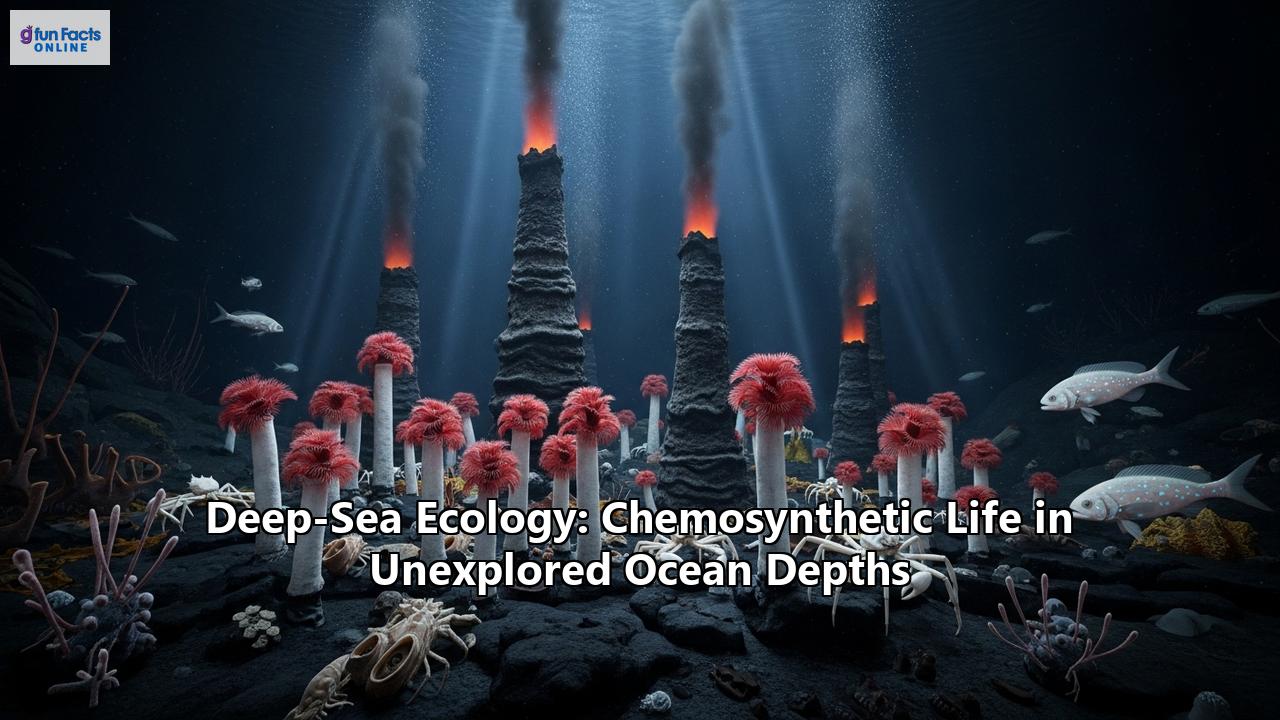
Deep-Sea Ecology: Chemosynthetic Life in Unexplored Ocean Depths
The deep sea, a realm of perpetual darkness, crushing pressures, and frigid temperatures, was long considered a desolate wasteland. This vast expanse, which constitutes over 60% of our planet's surface, remained largely unexplored, its secrets shrouded in the abyss. However, a groundbreaking discovery in 1977 forever shattered this perception, revealing vibrant oases of life thriving in the most unlikely of places. These remarkable ecosystems, clustered around hydrothermal vents and cold seeps, are not powered by sunlight, the energy source for almost all life on Earth, but by a process called chemosynthesis. This discovery not only redefined our understanding of the limits of life but also opened up a new frontier in the exploration of our own planet.
A World Without Sun: The Dawn of Chemosynthesis
For centuries, it was believed that all life on Earth ultimately depended on photosynthesis, the process by which plants and algae convert sunlight into energy. The deep ocean, far beyond the reach of the sun's rays, was therefore thought to be a biological desert, sparsely populated by scavengers and detritivores feeding on the "marine snow" – a slow drizzle of organic matter from the sunlit waters above.
This paradigm was dramatically overturned in 1977 during an expedition to the Galápagos Rift. Scientists aboard the research submersible Alvin were astonished to find bustling communities of bizarre creatures clustered around hydrothermal vents, spewing hot, mineral-rich fluids from the seafloor. Towering tube worms with blood-red plumes, giant white clams, and dense mussel beds thrived in this seemingly toxic environment, devoid of sunlight. The question was: what was fueling this explosion of life?
The answer lay in the chemical-rich fluids gushing from the vents. Instead of sunlight, the primary energy source in these ecosystems is chemical energy, harnessed by specialized bacteria and other microbes in a process called chemosynthesis. These microorganisms are the primary producers of the deep sea, forming the base of a complex food web that supports a diverse array of life.
The Engine of Life: How Chemosynthesis Works
Chemosynthesis is the biological conversion of one or more carbon-containing molecules (usually carbon dioxide or methane) and nutrients into organic matter using the oxidation of inorganic compounds (like hydrogen sulfide, hydrogen, or methane) as a source of energy, rather than sunlight. In essence, chemosynthetic microbes perform a role analogous to that of plants in terrestrial ecosystems, but instead of using light energy, they use chemical energy.
The process can be broadly broken down into two steps:
- Energy Production: The microbes oxidize inorganic compounds, such as hydrogen sulfide (H₂S), which is abundant in the fluids erupting from hydrothermal vents. This chemical reaction releases energy.
- Carbon Fixation: The energy captured in the first step is then used to convert inorganic carbon (like carbon dioxide) into organic molecules, such as sugars. These organic molecules then form the base of the food web.
Different chemosynthetic microbes have evolved to utilize different chemical pathways, depending on the specific chemicals available in their environment. At hydrothermal vents, for example, sulfur-oxidizing bacteria are common, while at cold seeps, where methane is abundant, methane-oxidizing microbes play a key role.
Oases in the Abyss: Types of Chemosynthetic Ecosystems
Chemosynthetic communities are not monolithic. They are found in a variety of deep-sea environments, each with its own unique geological and chemical characteristics. The three main types of chemosynthetic ecosystems are:
- Hydrothermal Vents: These are the most well-known chemosynthetic ecosystems, often referred to as "black smokers" or "white smokers" depending on the minerals in the fluids they emit. They form along mid-ocean ridges, where tectonic plates are spreading apart, allowing seawater to seep into the Earth's crust. The water is heated by magma and becomes enriched with minerals and chemicals like hydrogen sulfide. This superheated, toxic brew is then expelled back into the ocean, creating the characteristic vent structures. The water emerging from these vents can reach temperatures of up to 400°C (750°F).
- Cold Seeps: As their name suggests, cold seeps are areas where fluids seep out of the seafloor at temperatures similar to the surrounding seawater. These seeps are not driven by volcanic heat but by tectonic activity that squeezes mineral-rich fluids, including methane and hydrogen sulfide, from underlying sediments. Cold seeps are now known to be geologically diverse and widely distributed, with new sites being discovered every year. They can manifest as pockmarks, brine pools, mud volcanoes, and gas vents.
- Whale Falls: When a whale dies and its carcass sinks to the seafloor, it creates a massive, albeit temporary, chemosynthetic ecosystem. The decomposition of the whale's body goes through several stages. Initially, scavengers like hagfish and sleeper sharks consume the soft tissues. Then, a diverse community of smaller organisms colonizes the bones, feeding on the remaining organic matter. Finally, chemosynthetic bacteria break down the lipids in the whale's bones, producing hydrogen sulfide. This, in turn, supports a community of chemosynthetic organisms similar to those found at hydrothermal vents and cold seeps. Whale falls act as important stepping stones for the dispersal of chemosynthetic species across the vast expanse of the deep seafloor.
A Cast of Strange and Wonderful Creatures
The fauna of chemosynthetic ecosystems is as bizarre as it is fascinating. Many of the species found in these environments are endemic, meaning they are found nowhere else on Earth. These organisms have evolved remarkable adaptations to survive in the extreme conditions of the deep sea, including high pressure, low temperatures (away from the vents), and the toxic chemical brews that define their habitats.
Some of the most iconic inhabitants of these deep-sea oases include:
- Giant Tube Worms (Riftia pachyptila): These striking creatures, which can grow up to 2.4 meters (8 feet) in length, are a hallmark of hydrothermal vent communities. They have no mouth, gut, or anus. Instead, they have a large, red plume that acts as a gill, absorbing hydrogen sulfide, carbon dioxide, and oxygen from the water. They host symbiotic chemosynthetic bacteria within their bodies in a specialized organ called the trophosome. The bacteria produce food for the tube worm, which in turn provides the bacteria with a safe and stable environment.
- Deep-Sea Mussels (Bathymodiolus species): These mussels are often found in dense beds around hydrothermal vents and cold seeps. Like the giant tube worms, they have symbiotic chemosynthetic bacteria living in their gills. Some species of mussels are even capable of hosting more than one type of symbiont, allowing them to utilize different energy sources, such as methane and hydrogen sulfide.
- Vent Clams (Calyptogena magnifica): These large white clams are another common sight at hydrothermal vents. They also rely on symbiotic bacteria for their nutrition.
- Vent Shrimp and Crabs: A variety of shrimp and crabs are found in chemosynthetic ecosystems. Some are grazers, feeding on the mats of bacteria that coat the rocks, while others are predators or scavengers.
- Yeti Crabs (Kiwaidae family): These unusual crabs are famous for their hairy claws, which are covered in filamentous bacteria. It is believed that the crabs "farm" these bacteria, which they then consume.
Food Webs in the Dark
The food webs of chemosynthetic ecosystems are fundamentally different from those in the sunlit world. At the base of the food web are the chemosynthetic microbes, the primary producers. The next trophic level consists of organisms that either graze on these microbial mats or have symbiotic relationships with the microbes.
The food web then branches out to include a variety of consumers:
- Primary Consumers: These are the herbivores of the deep sea, grazing on the bacterial mats. Snails and some species of shrimp fall into this category.
- Symbiont Hosts: Organisms like tube worms and mussels that host chemosynthetic bacteria are also considered primary consumers.
- Secondary Consumers: These are the carnivores that prey on the primary consumers. Crabs, fish, and octopuses are examples of secondary consumers.
- Top Predators: Larger crabs and fish often occupy the top of the food web.
- Scavengers: Many deep-sea creatures are scavengers, feeding on the dead organic matter that rains down from above or the remains of other organisms within the ecosystem.
Life in the Extreme: Adaptations to the Deep Sea
Life in the deep sea is a constant struggle against a suite of extreme environmental conditions. The organisms that thrive in these environments have evolved a remarkable array of adaptations to cope with:
- High Pressure: The pressure in the deep sea is immense, reaching over 1,000 times that at the surface in the deepest trenches. Deep-sea creatures have evolved specialized proteins and cell membranes that are resistant to the crushing effects of pressure.
- Extreme Temperatures: While the ambient temperature of the deep sea is near-freezing, the water erupting from hydrothermal vents can be incredibly hot. Organisms living near the vents must be able to tolerate these extreme temperature gradients.
- Darkness: The absence of sunlight means that vision is not always the most important sense. Many deep-sea creatures have large eyes to capture what little light there is, often from bioluminescent organisms, while others have small or no eyes at all. Bioluminescence, the production of light by living organisms, is common in the deep sea and is used for a variety of purposes, including attracting prey, deterring predators, and finding mates.
- Low Food Availability: Away from the concentrated oases of chemosynthetic life, food is scarce. Many deep-sea animals have slow metabolisms and are opportunistic feeders, with large mouths and expandable stomachs to take advantage of any meal that comes their way.
Reproduction and Dispersal in a Fragmented World
For organisms living in the patchy and ephemeral habitats of hydrothermal vents and cold seeps, reproduction and dispersal are critical for the survival of their species. Many vent and seep animals produce a large number of larvae that are released into the water column. These larvae can be carried by ocean currents for long distances, with the hope that some will eventually settle in a new, suitable habitat.
The discovery of whale falls as stepping stones has provided a crucial piece of the puzzle in understanding how these species disperse. These ephemeral habitats can act as oases for chemosynthetic organisms, allowing them to colonize new areas and maintain genetic connectivity between distant populations.
The Importance of Chemosynthetic Ecosystems
Chemosynthetic ecosystems are not just biological curiosities; they play a vital role in the health of our planet. They are hotspots of biodiversity, harboring a wealth of unique species that are still being discovered and described. These ecosystems are also important for global biogeochemical cycles, particularly the carbon cycle.
The microbes at the base of these food webs are incredibly efficient at converting carbon into biomass, effectively sequestering it in the deep ocean. Understanding the role of these ecosystems in carbon cycling is becoming increasingly important as we grapple with the impacts of climate change.
Furthermore, chemosynthetic ecosystems are a potential source of novel biochemical compounds and enzymes that could have valuable applications in medicine, biotechnology, and industry. The unique adaptations of the organisms that live in these extreme environments have led to the evolution of molecules with remarkable properties.
Threats to a Fragile World
Despite their remoteness, deep-sea chemosynthetic ecosystems are not immune to the impacts of human activities. These fragile habitats face a growing number of threats, including:
- Deep-Sea Mining: The increasing demand for minerals and metals has led to a growing interest in deep-sea mining. The polymetallic nodules, seafloor massive sulfides, and cobalt-rich crusts found in the deep sea are rich in valuable resources. However, mining these resources could cause irreversible damage to deep-sea ecosystems, destroying habitats, creating sediment plumes, and releasing toxic substances.
- Climate Change: The oceans are absorbing a significant amount of the excess heat and carbon dioxide from the atmosphere, leading to changes in ocean temperature, chemistry, and circulation. These changes could have a profound impact on deep-sea ecosystems, which are adapted to stable conditions.
- Pollution: Plastic pollution, oil spills, and other forms of pollution are finding their way into the deep ocean, where they can harm marine life and disrupt ecosystems.
The Future of Deep-Sea Exploration and Conservation
The deep sea remains the last great frontier of exploration on Earth. With each new expedition, we are learning more about the incredible diversity of life that exists in the abyss and the vital role that these ecosystems play in the health of our planet. However, as our ability to access the deep sea increases, so too does our responsibility to protect it.
Effective conservation strategies for deep-sea chemosynthetic ecosystems will require a combination of scientific research, international cooperation, and public awareness. We need to better understand the distribution, diversity, and connectivity of these ecosystems in order to develop effective management plans. We also need to work together to minimize the impacts of human activities on the deep sea and to establish marine protected areas to safeguard these unique and fragile habitats.
The discovery of chemosynthetic life in the deep sea was a reminder of how much we still have to learn about our own planet. It is a testament to the resilience and adaptability of life, and a call to action to protect this hidden world before it is lost forever. The future of the deep sea is in our hands, and it is a future that we must approach with a sense of wonder, respect, and responsibility.
Reference:
- https://kids.britannica.com/students/article/deep-sea-life/273947
- https://www.frontiersin.org/journals/marine-science/articles/10.3389/fmars.2021.667048/full
- https://www.marinebio.org/oceans/deep-sea/
- https://deepoceaneducation.org/resources/chemosynthesis/
- https://oceanexplorer.noaa.gov/edu/materials/chemosynthesis-fact-sheet.pdf
- http://noaacontent.nroc.org/lesson05/l5text.htm
- https://ocean.si.edu/ecosystems/deep-sea/deep-sea
- https://oceanexplorer.noaa.gov/edu/materials/vent-food-web.pdf
- https://marinelab.fsu.edu/labs/brooke/research/chemosynthetic-ecosystems/
- https://www.mpi-bremen.de/European-scientists-at-sea-A-scientific-weblog/Background-Chemosynthetic-Ecosystems.html
- https://deep-sea-conservation.org/explore/deep-sea-life-and-habitats/
- https://kids.britannica.com/kids/article/deep-sea-life/353043
- https://www.dosi-project.org/wp-content/uploads/Chemosynthetic-Ecosystems-Policy-Brief.pdf
- https://sustainability-directory.com/term/deep-sea-ecology/
- https://www.studysmarter.co.uk/explanations/environmental-science/ecological-conservation/deep-sea-ecology/