
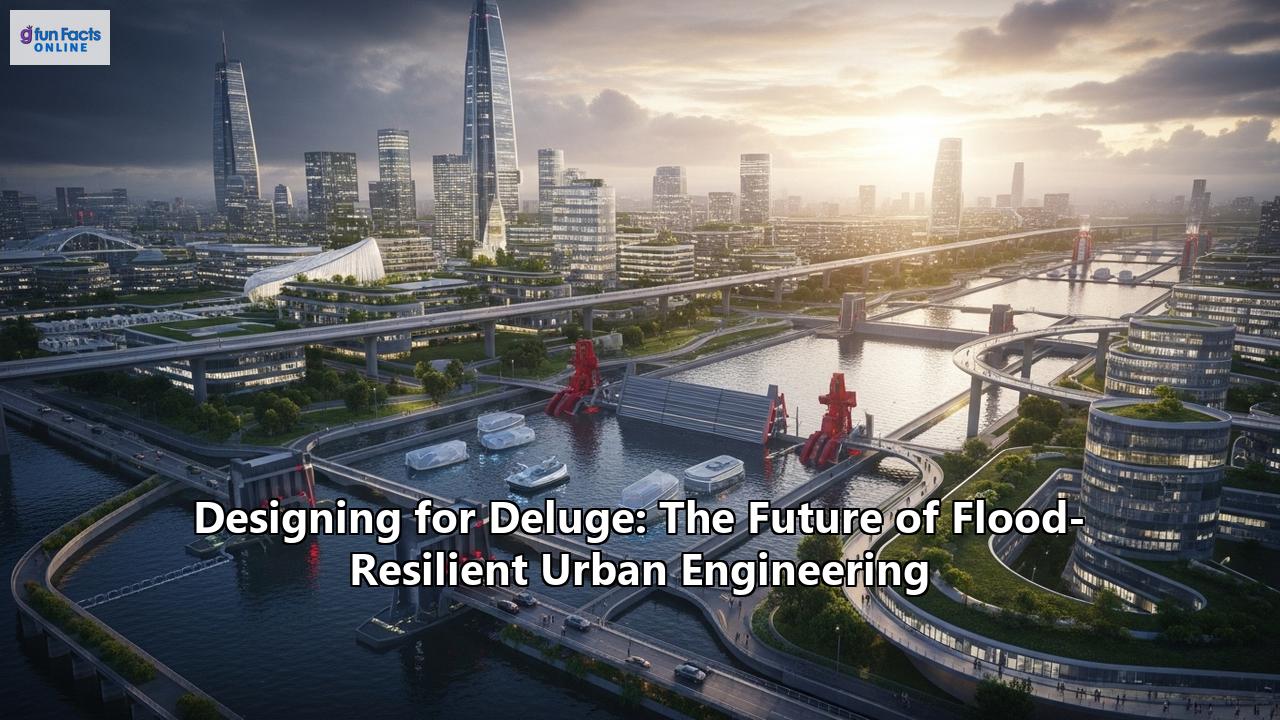
Designing for Deluge: The Future of Flood-Resilient Urban Engineering
The relentless rise of global temperatures and the increasing frequency of extreme weather events have thrust urban centers worldwide onto the front lines of a new climate reality. Once-in-a-century floods are becoming once-in-a-decade occurrences, exposing the vulnerabilities of our concrete jungles and forcing a radical reimagining of how we design, build, and live in our cities. The traditional approach of simply channeling water away as quickly as possible is proving to be a fragile defense against the overwhelming force of nature. In its place, a new paradigm is emerging: flood-resilient urban engineering, a holistic and forward-thinking discipline that seeks not to conquer water, but to coexist with it.This paradigm shift moves beyond the hard, grey infrastructure of the past—sea walls, levees, and concrete channels—towards a more integrated, nature-based, and technologically advanced approach. It embraces the concept of the "sponge city," where urban landscapes are designed to absorb, store, and purify rainwater. It champions "blue-green infrastructure," weaving a network of parks, wetlands, and green roofs into the urban fabric to mimic natural hydrological cycles. It explores the frontiers of "amphibious architecture," creating buildings that can rise and fall with the floodwaters. And it harnesses the power of artificial intelligence, big data, and the Internet of Things to create smarter, more predictive, and more responsive urban environments. This is the future of urban engineering, a future where cities are not just defended from the deluge, but are designed for it.
The Rise of the Sponge City and Blue-Green Infrastructure
At the heart of this new approach is the concept of the "sponge city," a term first popularized in China in response to the country's rapid urbanization and increasing vulnerability to flooding. The core principle of a sponge city is to treat rainwater as a resource to be managed, rather than a waste product to be disposed of. By creating a network of natural and semi-natural spaces, sponge cities can absorb, clean, and store stormwater, reducing the burden on traditional drainage systems and replenishing groundwater reserves.
This is achieved through the implementation of "blue-green infrastructure" (BGI), a strategic network of natural and semi-natural areas that work in concert with traditional "grey" infrastructure. Blue infrastructure refers to water bodies like rivers, lakes, and wetlands, while green infrastructure encompasses parks, green roofs, rain gardens, and permeable pavements. Together, they create a multi-functional landscape that provides a wide range of benefits beyond just flood control.
Key Elements of Sponge Cities and Blue-Green Infrastructure:- Permeable Pavements: Replacing impermeable surfaces like concrete and asphalt with porous materials that allow rainwater to seep into the ground is a cornerstone of sponge city design. These pavements can be made from a variety of materials, including porous concrete, permeable asphalt, and interlocking pavers. Studies have shown that permeable pavements can significantly reduce surface runoff, with some demonstrating a reduction of 50-93% on average. In Taiwan, a demonstration project found that permeable pavements could reduce peak discharge by 60-75%.
- Green Roofs: Covering rooftops with vegetation offers a multitude of benefits. Green roofs absorb rainwater, reducing runoff and delaying its entry into the drainage system. They also provide natural insulation, improve air quality, and create habitats for wildlife.
- Rain Gardens and Bioswales: These are shallow, vegetated depressions designed to capture and filter stormwater runoff from roofs, streets, and parking lots. The plants and soil in rain gardens and bioswales help to remove pollutants from the water before it infiltrates the ground or is slowly released into the drainage system.
- Urban Wetlands and Ponds: Creating or restoring wetlands and ponds within urban areas provides significant water storage capacity. These features act as natural sponges, absorbing large volumes of rainwater during heavy downpours and releasing it slowly over time. They also offer valuable recreational amenities and support biodiversity.
The benefits of blue-green infrastructure extend far beyond flood mitigation. By integrating nature into the urban environment, BGI can improve air and water quality, reduce the urban heat island effect, enhance biodiversity, and create more attractive and livable communities. It represents a shift from a single-function approach to infrastructure to a multi-functional one that delivers a wide range of environmental, social, and economic co-benefits.
Case Studies in Sponge City and BGI Implementation:- Shanghai, China: As one of China's pilot sponge cities, Shanghai has set a target of having 80% of the city equipped with sponge city functions by 2030. The city has implemented numerous projects, including the 54-hectare "Starry Sky" sponge park in Pudong, which features permeable pavements, rain gardens, wetlands, and underground water purification systems. Shanghai is also prioritizing the installation of green roofs on new buildings and retrofitting older ones.
- Berlin, Germany: Facing challenges with heavy rainfall and an aging sewer system, Berlin has embraced the sponge city concept. The city has implemented a range of projects, including the creation of green roofs, the disconnection of downspouts from the sewer system, and the construction of decentralized rainwater management systems.
- Singapore: Through its "Active, Beautiful, Clean Waters" (ABC Waters) program, Singapore has transformed its utilitarian canals and reservoirs into beautiful, integrated blue-green spaces. A prime example is the Kallang River at Bishan-Ang Mo Kio Park, where a concrete canal was de-channelized and transformed into a meandering river with lush banks, creating a vibrant public space that also serves as a flood plain during heavy rain.
- Copenhagen, Denmark: In response to a devastating cloudburst in 2011, Copenhagen developed a comprehensive Cloudburst Management Plan. The plan integrates blue-green surface solutions with traditional grey infrastructure to manage extreme rainfall events. It includes the creation of "stormwater roads" that can channel water during heavy downpours, the development of detention areas in parks that can temporarily store large volumes of water, and the widespread implementation of green roofs and permeable pavements.
Living with Water: The Rise of Amphibious and Floating Architecture
While sponge cities and blue-green infrastructure aim to manage water at a landscape scale, another crucial aspect of flood-resilient design focuses on adapting individual buildings to the presence of water. This has led to the development of innovative architectural approaches like amphibious and floating construction, which allow structures to coexist with, rather than resist, rising water levels.
Amphibious Architecture: Riding the Waves of a FloodAmphibious architecture refers to buildings that are designed to rest on the ground under normal conditions but can float on the surface of rising floodwater. This is typically achieved through a buoyant foundation system, which consists of three key elements:
- Buoyancy Elements: These are typically blocks of expanded polystyrene or other buoyant materials installed beneath the house to provide flotation.
- Vertical Guidance Posts: These are steel posts installed near the corners of the house that guide the building's vertical movement, preventing it from drifting away during a flood.
- Structural Sub-frame: A steel frame is attached to the underside of the house, tying the buoyancy blocks and vertical guidance posts together and ensuring the structural integrity of the building as it floats.
Utility lines, such as water, sewage, and electricity, are connected to the house using flexible, "umbilical" cords or self-sealing "breakaway" connections that can accommodate the building's movement.
The primary advantage of amphibious architecture is that it provides a passive flood protection system that automatically adapts to varying water levels. Unlike permanent static elevation, which can be costly and aesthetically unpleasing, amphibious houses retain their connection to the ground and their neighborhood character. They are also less vulnerable to wind damage than elevated homes.
Case Studies in Amphibious Architecture:- Maasbommel, Netherlands: In 2005, the Netherlands pioneered the construction of 32 amphibious houses and 14 floating homes in the flood-prone area of Maasbommel. These houses are built on hollow concrete foundations and are connected to mooring posts that allow them to rise with the floodwaters. The project was a key component of the country's "Room for the River" program and has served as a successful demonstration of the viability of amphibious construction.
- The Buoyant Foundation Project: Led by Dr. Elizabeth English, the Buoyant Foundation Project has been instrumental in developing and promoting retrofittable amphibious foundations for existing homes. The project has successfully retrofitted houses in flood-prone communities in Vietnam's Mekong Delta, providing a low-cost, culturally sensitive solution to recurrent flooding. The BFP has also developed proposals for retrofitting heritage buildings in the United States, such as the Farnsworth House in Illinois and historic structures in Princeville, North Carolina.
- The LIFT House, Dhaka: Designed by Prithula Prosun, the LIFT (Low Income Flood-proof Technology) House is an innovative and affordable amphibious housing solution for the urban poor in Dhaka, Bangladesh. The design uses a buoyant foundation made of a hollow ferro-cement base and a bamboo frame filled with recycled plastic bottles.
- The Float House, New Orleans: In the aftermath of Hurricane Katrina, Morphosis Architects designed the Float House, a prefabricated, self-sufficient amphibious home for low-income residents of New Orleans. The house sits on a chassis that can float, guided by steel masts, during a flood.
Distinct from amphibious architecture, floating houses are permanently situated in the water. They are built on floating platforms and are moored to the seabed or riverbed. This approach is gaining traction in densely populated coastal cities where land is scarce and sea-level rise is a growing threat.
Floating neighborhoods, like the Waterbuurt in Amsterdam, are becoming increasingly common. These developments often incorporate sustainable features like green roofs, rainwater harvesting, and community-owned renewable energy systems. Architect Koen Olthuis of Waterstudio.NL is a leading proponent of floating architecture, designing everything from floating social housing to entire floating islands. He believes that floating buildings could revolutionize urban living in the 21st century, much like skyscrapers did in the 20th.
The Material Revolution: Building for a Wetter World
The shift towards flood-resilient design is also driving innovation in the development of new building materials. Traditional materials like wood and drywall are highly susceptible to water damage, leading to costly repairs and the growth of mold and mildew. In response, scientists and engineers are creating a new generation of materials that can withstand prolonged exposure to water and even self-repair.
Innovative Materials for Flood-Resistant Construction:- Self-Healing Concrete: This revolutionary material contains dormant bacteria or microcapsules of polymer resin that are activated when a crack forms and water enters. The bacteria produce limestone, which seals the crack, while the polymer resin fills the gap, preventing further water ingress and protecting the steel reinforcement within the concrete. Self-healing concrete can significantly extend the lifespan of structures in flood-prone areas and reduce maintenance costs.
- Permeable Pavement Systems: As mentioned earlier, permeable pavements are a key component of sponge cities. They are made from a variety of materials, including porous concrete, porous asphalt, and interlocking concrete pavers. These systems are designed to have a high infiltration rate, allowing rainwater to pass through to an underlying stone reservoir, where it can be stored and slowly released into the subsoil.
- Waterproof Concrete and Coatings: High-performance concrete (HPC) is engineered to have low permeability, preventing water from seeping into structures. Additionally, a range of waterproof coatings and sealants made from advanced polymers can be applied to walls, floors, and other surfaces to create a watertight barrier. These materials are highly resistant to hydrostatic pressure and can prevent water infiltration even in deep floods.
- Flood-Resistant Doors and Windows: These are specially designed to withstand the force of floodwaters and prevent leakage. They are typically made from durable materials like fiberglass-reinforced polymers (FRP) or aluminum and steel, and they feature waterproof seals and gaskets.
- Engineered Wood and Composite Materials: Engineered wood products, such as cross-laminated timber (CLT) and laminated veneer lumber (LVL), are more resistant to warping and cracking than traditional wood. Composite materials, which combine natural fibers with polymers, offer a lightweight, strong, and water-resistant alternative for building components.
- Biomimicry in Materials Science: Nature is a rich source of inspiration for flood-resilient design. Researchers are studying organisms like the Venus flower basket, giant kelp, and red mangrove to understand how they adapt to their environments and transfer these principles into the design of new materials and structures. For example, the design of a flood-resistant shelter might mimic the hydrodynamic shape of a swordfish to resist flood surges, while using coatings inspired by the waterproof skin of a gecko.
The Digital Deluge: Harnessing Technology for Flood Resilience
The future of flood-resilient urban engineering is not just about physical infrastructure; it's also about data-driven intelligence. The rise of artificial intelligence (AI), the Internet of Things (IoT), big data, and digital twins is revolutionizing our ability to predict, monitor, and manage floods.
AI and Big Data in Flood Forecasting:AI-powered models are significantly improving the accuracy and lead time of flood forecasts. By analyzing vast datasets—including historical weather patterns, real-time satellite imagery, river gauge readings, and topographical information—machine learning algorithms can identify complex patterns and predict the likelihood, severity, and location of floods with unprecedented precision.
Google's AI-powered flood forecasting initiative, for example, provides flood alerts up to seven days in advance in over 80 countries, including many in data-scarce regions. These models can overcome the limitations of traditional hydrological models by learning from new data and continuously improving their predictions.
IoT and Real-Time Monitoring:The Internet of Things (IoT) is creating a network of interconnected sensors that can provide real-time data on a wide range of environmental conditions. In the context of flood management, IoT sensors can be deployed to monitor water levels in rivers, canals, and drainage systems; measure rainfall intensity and soil moisture; and even detect blockages in pipes.
This real-time data can be fed into flood forecasting models to improve their accuracy and can also be used to trigger early warning systems, alerting authorities and residents to impending floods. The SentryLeaf project in Bangladesh, for example, uses an IoT-based network of water-level sensors to provide real-time flood monitoring and disaster response in a flood-prone region.
Digital Twins: Simulating the Future to Protect the PresentA digital twin is a virtual representation of a physical asset, process, or system that is continuously updated with real-time data. In the context of urban flood resilience, a digital twin can be a virtual model of an entire city, including its buildings, infrastructure, and natural systems.
By integrating data from a wide range of sources—including IoT sensors, weather forecasts, and 3D mapping—a digital twin can be used to:
- Simulate flood scenarios: Urban planners and emergency managers can use digital twins to simulate the impact of different flood events, such as a 100-year storm or a cloudburst. This allows them to identify vulnerable areas, test the effectiveness of different flood mitigation strategies, and develop more robust emergency response plans.
- Optimize infrastructure performance: Digital twins can be used to optimize the performance of drainage systems, flood barriers, and other infrastructure. By simulating different operational scenarios, engineers can identify the most effective ways to manage water flow and prevent flooding.
- Provide real-time situational awareness: During a flood event, a digital twin can provide a real-time, comprehensive view of the situation, showing which areas are flooded, which roads are impassable, and where emergency services are needed most.
The cities of Lisbon and Massa have both implemented digital twin systems to improve their flood resilience. These systems are used for flood risk assessment, early warning, and the development of long-term drainage master plans.
Policy, Governance, and the Path Forward
The successful implementation of flood-resilient urban engineering requires more than just innovative technologies and design strategies; it also requires a supportive policy and governance framework. This includes:
- Integrated Urban Planning: Flood resilience must be integrated into all aspects of urban planning, from land-use zoning to transportation and infrastructure development. This requires a shift from a siloed approach to a more collaborative and holistic one, where different city departments and agencies work together to achieve common goals.
- Supportive Regulations and Building Codes: Building codes and regulations need to be updated to encourage or even mandate the use of flood-resilient design strategies, such as elevating buildings, using flood-resistant materials, and incorporating blue-green infrastructure.
- Innovative Financing Mechanisms: The implementation of large-scale flood resilience projects can be expensive. Cities need to explore innovative financing mechanisms, such as public-private partnerships, green bonds, and fees for stormwater management, to fund these investments.
- Community Engagement and Education: Public awareness and support are crucial for the success of any flood resilience strategy. Cities need to engage with communities to understand their needs and concerns, and to educate them about the risks of flooding and the benefits of resilient design.
- Rotterdam, Netherlands: The city of Rotterdam has a long history of living with water and has developed a comprehensive flood management strategy that combines robust flood defenses with innovative, adaptive measures. The city has a "inner-dyke/outer-dyke" approach, with different levels of protection for different areas. In the outer-dyke areas, the city is promoting the use of floating and amphibious buildings, green roofs, and water plazas that can store water during heavy rainfall.
- Copenhagen, Denmark: Copenhagen's Cloudburst Management Plan is a prime example of a successful, integrated approach to flood resilience. The plan was developed in response to a major flood event and was driven by strong political will and a creative financing model that combines public and private funding.
- New Orleans, USA: The Greater New Orleans Urban Water Plan is a visionary plan to transform the city's relationship with water. Developed after Hurricane Katrina, the plan proposes a shift from a "fight the water" to a "live with the water" approach, using a network of green infrastructure, canals, and water storage areas to manage stormwater and reduce subsidence.
- Hamburg, Germany: The HafenCity project in Hamburg is a large-scale urban redevelopment project that has integrated flood resilience into its design from the outset. The project features "terps," or artificial mounds, that elevate buildings above flood level, as well as floodable quays and public spaces that can accommodate rising water levels.
The Future of Urban Engineering: A Call for Vision and Action
The challenge of designing for the deluge is one of the defining issues of our time. As our cities continue to grow and the impacts of climate change intensify, the need for a new approach to urban engineering has never been more urgent. The path forward lies in a holistic, integrated, and forward-thinking approach that embraces the principles of the sponge city, the power of blue-green infrastructure, the innovation of amphibious architecture, and the intelligence of digital technologies.
This is not just an engineering challenge; it is a societal one. It requires a fundamental shift in our mindset, from seeing water as a threat to be conquered to viewing it as a resource to be managed and a force to be respected. It requires a commitment to long-term planning, a willingness to invest in innovative solutions, and a collaborative spirit that brings together governments, businesses, and communities.
The cities of the future will not be fortresses against the water; they will be dynamic, adaptive, and resilient ecosystems that can thrive in a world of increasing hydrological uncertainty. They will be cities that are not just designed for people, but for the planet. The future of flood-resilient urban engineering is not just about building better cities; it's about building a better future.
Reference:
- https://westminsterresearch.westminster.ac.uk/download/ec063fb1eee87008b09b6fae2e17ccffdcbc624fe251561d7f231af155bbf3ce/179015/Manuscript%20Strategy%20flood.pdf
- https://gnoinc.org/wp-content/uploads/sites/2/2021/01/GNOH2O_Pamphlet_Trimmed_FINAL.pdf
- https://use.metropolis.org/case-studies/cloudburst-initiative-copenhagen
- https://www.c40knowledgehub.org/s/article/Urban-Flooding-Network-Building-Resilience-in-Cities?language=en_US
- https://www.aivp.org/en/good-practices/hamburg-germany-the-floodable-city/
- https://www.c40.org/case-studies/c40-good-practice-guides-copenhagen-cloudburst-management-plan/
- https://interlace-hub.com/cloudburst-management-plan-copenhagen
- https://www.google.com/search?q=time+in+Loiret,+FR
- https://www.google.com/search?q=time+in+Hamburg,+DE
- https://www.c40.org/case-studies/c40-good-practice-guides-rotterdam-climate-change-adaptation-strategy/
- https://www.planning.org/awards/2015/greaterneworleans.htm
- https://www.climate-x.com/articles/industry/hamburg-flood-risk-management-hafencity-climate-resilience
- https://constructionnews.ie/copenhagen-cloudburst-plan/
- https://www.fathom.global/case-study/arup-world-bank-dar-es-salaam/
- https://hnsland.nl/en/projects/urban-water-plan-new-orleans/
- https://www.google.com/search?q=time+in+Rotterdam-The+Hague,+NL
- https://scholarworks.uno.edu/cgi/viewcontent.cgi?article=2958&context=td
- https://wbae.com/wp-content/uploads/2021/11/GNO-Urban-Water-Plan_Urban-Design_23Oct2013_compressed.pdf
- https://www.hkv.nl/wp-content/uploads/2020/08/Flood_risk_management_Port_of_Rotterdam_hfd-10_RN_SvV.pdf
- https://pdfs.semanticscholar.org/97b1/fc0cdbffaf9d56f572d1d3da063ae75915bb.pdf
- https://www.researchgate.net/publication/315576818_Urban_Flood_Resilience_in_New_York_City_London_Randstad_Tokyo_Shanghai_and_Taipei
- https://www.aivp.org/en/newsroom/flood-risk-management-in-the-port-of-rotterdam/
- https://cordis.europa.eu/project/id/244047/reporting/es
- https://www.worldbank.org/en/programs/tokyo-development-learning-center/tdd/urban_flood_management_in_a_changing_climate_March2025
- https://www.researchgate.net/publication/273960526_A_strategy-based_framework_for_assessing_the_flood_resilience_of_cities_-_A_Hamburg_case_study
- https://www.researchgate.net/publication/260035219_Adaptation_to_climate_change_in_urban_water_management_-_flood_management_in_the_Rotterdam_Rijnmond_Area
- https://gfzpublic.gfz-potsdam.de/rest/items/item_6080_9/component/file_6081/content?download=true