
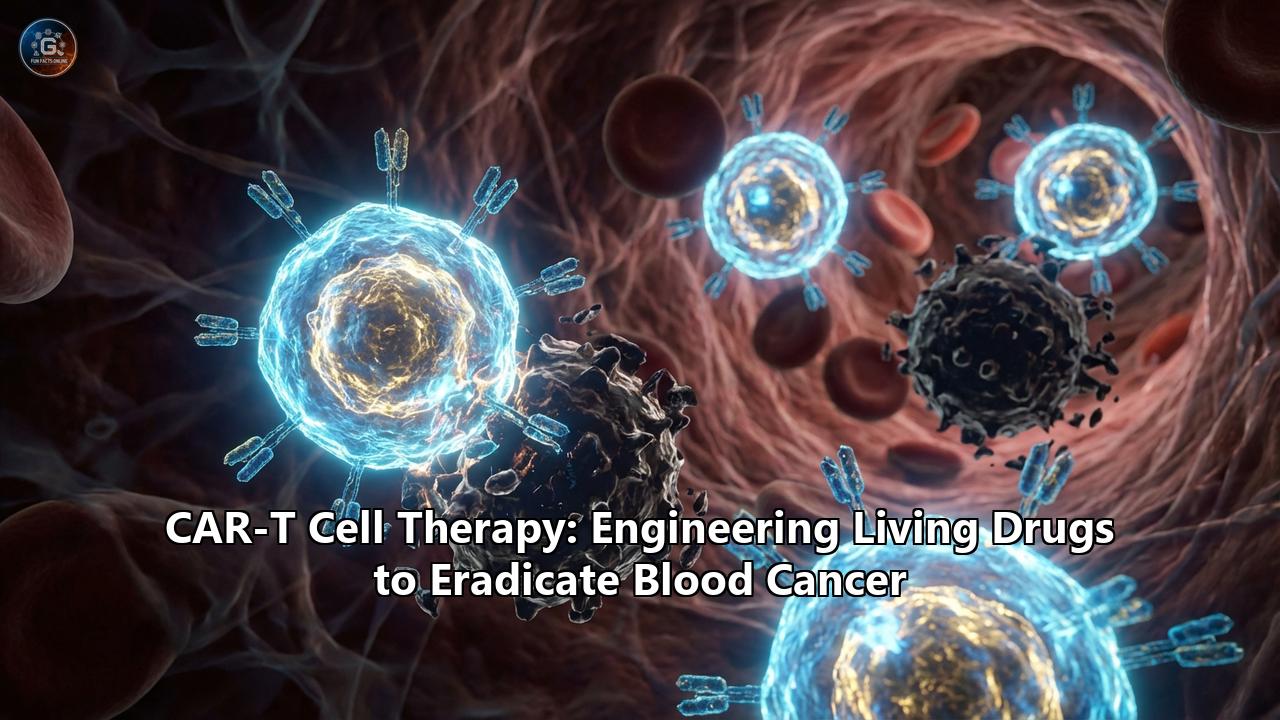
For decades, the pillars of cancer treatment were immutable: surgery to cut it out, radiation to burn it out, and chemotherapy to poison it out. While effective for many, these modalities shared a blunt instrument approach—attacking rapidly dividing cells indiscriminately, often causing profound collateral damage to healthy tissue. The 21st century, however, has witnessed the birth of a fourth pillar, one that does not rely on external poisons or beams, but rather on the internal intelligence of the human immune system. This is the era of Chimeric Antigen Receptor (CAR) T-Cell Therapy.
CAR-T therapy represents a departure from every pharmaceutical precedent. It is not a chemical compound metabolized by the liver; it is a "living drug." Once infused, these genetically engineered cells do not merely circulate and fade; they hunt, they recognize, they kill, and crucially, they reproduce. A single infusion can expand into an army of billions within the patient's body, remaining on patrol for years, potentially offering a functional cure for cancers that were once considered terminal.
This comprehensive guide explores the intricate science, the harrowing development history, the complex manufacturing processes, and the future trajectory of CAR-T therapy. It details how we are reprogramming life itself to eradicate blood cancers and the colossal challenges that remain in extending this miracle to solid tumors.
Part I: The Science of the Chimera
To understand CAR-T, one must first understand the T-cell, the foot soldier of the adaptive immune system. T-cells are hunter-killers equipped with T-cell receptors (TCRs) designed to scan the surface of other cells for evidence of infection or mutation. However, cancer is insidious; it often arises from the body's own tissues, allowing it to cloak itself from immune surveillance or downregulate the molecular flags (MHC molecules) that T-cells use to identify threats.
The "Chimeric Antigen Receptor" is the bioengineering solution to this evasion. It is a synthetic molecule, a "chimera" in the mythological sense, combining parts from different sources to create a new function.
1. Anatomy of a CAR
A CAR construct is a masterpiece of protein engineering, composed of three critical domains:
- The Extracellular Domain (The Sensor): This is usually a Single-Chain Variable Fragment (scFv) derived from a monoclonal antibody. Unlike a natural T-cell receptor, which requires an antigen to be presented on a specific cellular platter (MHC), the scFv allows the CAR-T cell to latch directly onto a protein on the surface of a cancer cell, much like a magnet. For most blood cancers, this target is CD19 or BCMA.
- The Transmembrane Domain (The Anchor): This structural component anchors the receptor into the T-cell’s outer membrane, connecting the outside sensor to the inside machinery.
- The Intracellular Domain (The Engine): This is where the magic happens. When the scFv latches onto a cancer cell, this internal domain triggers the T-cell to activate.
First Generation CARs contained only the CD3ζ (CD3 zeta) signaling chain. They could activate T-cells but lacked staying power; the cells died out quickly in the body.
Second Generation CARs (the current standard) added a "co-stimulatory domain," typically CD28 or 4-1BB. This second signal acts like a turbocharger, allowing the T-cells to proliferate rapidly and survive longer in the patient.
Third Generation CARs combine multiple co-stimulatory domains (e.g., CD28 and 4-1BB) to fine-tune persistence and killing power.
2. Mechanism of Action
When a CAR-T cell encounters a tumor cell expressing the target antigen (e.g., CD19 on a leukemia cell), the CAR binds to it. This binding sends an electric jolt of activation signals through the intracellular domain. The T-cell releases a payload of perforins and granzymes—molecular grenades that punch holes in the cancer cell and induce apoptosis (programmed cell death). Simultaneously, the T-cell begins to divide rapidly (proliferation) and releases cytokines to call other immune cells to the fight.
Part II: The Manufacturing Journey (Vein-to-Vein)
Unlike a pill pressed in a factory, every dose of autologous CAR-T therapy is a bespoke creation, manufactured from the patient's own blood. This "vein-to-vein" process is a logistical and biological high-wire act that typically takes 2 to 4 weeks.
Step 1: LeukapheresisThe process begins in the hospital. Blood is withdrawn from the patient and passed through a machine that separates out white blood cells (leukocytes) while returning red blood cells and plasma to the body. This collection can be challenging in patients whose immune systems have been ravaged by prior chemotherapy.
Step 2: ActivationThe collected T-cells are shipped frozen to a central manufacturing facility (often owned by pharmaceutical giants like Novartis, Gilead, or Bristol Myers Squibb). There, the cells are thawed and "activated" using artificial dendritic cells or magnetic beads coated with antibodies. This wakes the T-cells up, preparing them for genetic modification.
Step 3: Genetic TransductionThis is the critical engineering step. A viral vector—usually a deactivated lentivirus or gammaretrovirus—is used to infect the T-cells. These viruses have been gutted of their reproductive machinery and serve only as delivery trucks. They insert the genetic code for the CAR construct into the T-cell's DNA. Once integrated, the T-cell permanently reads this code and begins building CAR receptors on its surface.
Step 4: ExpansionA few million modified cells are not enough to fight billions of cancer cells. The engineered T-cells are placed in bioreactors, fed a rich soup of nutrients and growth factors (like Interleukin-2), and allowed to multiply. Over several days, they expand into hundreds of millions of potent CAR-T cells.
Step 5: Quality Control and InfusionThe final product is washed, formulated, cryopreserved (frozen), and rigorously tested for sterility, identity, and potency. It is then shipped back to the treatment center. The patient typically undergoes "lymphodepleting chemotherapy" (often Fludarabine and Cyclophosphamide) to clear out their existing T-cells and make "immunological space" for the new arrivals. Finally, the thawed CAR-T cells are infused into the patient’s bloodstream, ready to hunt.
Part III: The Clinical Landscape and FDA Approvals
Since the historic approval of Kymriah in 2017, the field has exploded. As of 2025, there are several FDA-approved CAR-T therapies, primarily targeting two antigens: CD19 (found on B-cell leukemias and lymphomas) and BCMA (found on multiple myeloma cells).
1. The CD19 Pioneers (Leukemia and Lymphoma)
- Kymriah (tisagenlecleucel): The first-ever approved CAR-T. Developed by Novartis and the University of Pennsylvania, it uses the 4-1BB co-stimulatory domain, which promotes slower, longer-lasting expansion. It is approved for pediatric/young adult B-cell Acute Lymphoblastic Leukemia (ALL) and certain lymphomas. It famously saved Emily Whitehead, the first pediatric patient, who remains cancer-free over a decade later.
- Yescarta (axicabtagene ciloleucel): Developed by Kite Pharma (Gilead). It uses the CD28 co-stimulatory domain, which induces a rapid, explosive attack on the tumor. It is a heavyweight treatment for Diffuse Large B-Cell Lymphoma (DLBCL) and Follicular Lymphoma.
- Tecartus (brexucabtagene autoleucel): Also from Kite, this therapy includes an extra purification step to handle circulating leukemic cells. It is approved for Mantle Cell Lymphoma (MCL) and adult ALL.
- Breyanzi (lisocabtagene maraleucel): A Bristol Myers Squibb product that is unique because it infuses a defined 1:1 ratio of CD4+ (helper) and CD8+ (killer) T-cells, aiming for a more controlled and predictable response with potentially lower toxicity.
- Aucatzyl (obecabtagene autoleucel): The most recent entrant (approved late 2024), designed with a "fast-off" receptor binding kinetic to mimic physiological T-cell interactions, potentially reducing the severity of immune side effects while maintaining efficacy in B-cell ALL.
2. The BCMA Revolution (Multiple Myeloma)
- Abecma (idecabtagene vicleucel): The first therapy approved for Multiple Myeloma, targeting the B-Cell Maturation Antigen (BCMA). It offered hope to patients who had failed every other line of therapy.
- Carvykti (ciltacabtagene autoleucel): A highly potent BCMA-targeting CAR with a dual-binding epitope (it grabs the target with two hands instead of one). Clinical trials showed unprecedented efficacy, with nearly 100% response rates in some heavily pre-treated myeloma populations.
3. Solid Tumor Breakthroughs (Synovial Sarcoma)
- Tecelra (afamitresgene autoleucel): While technically a TCR-therapy (engineered T-cell Receptor) rather than a traditional CAR, its approval marks the first breach into the solid tumor fortress, targeting the MAGE-A4 protein in synovial sarcoma, signaling that engineered cells can indeed work outside of the blood.
Part IV: The Double-Edged Sword – Toxicity and Management
The power of CAR-T comes with significant risks. When billions of T-cells engage their targets simultaneously, they unleash a biological storm.
1. Cytokine Release Syndrome (CRS)This is the most common side effect. As T-cells kill cancer, they release massive amounts of inflammatory cytokines like Interleukin-6 (IL-6) and Interferon-gamma.
- Symptoms: High fevers (104°F+), low blood pressure, and hypoxia. In severe cases, it can lead to organ failure.
- The Antidote: Tocilizumab. This drug, originally for arthritis, blocks the IL-6 receptor. Its discovery as a rescue drug for CRS was serendipitous but is now standard of care, acting like a "fire extinguisher" for the immune system without stopping the anti-cancer effect.
Immune Effector Cell-Associated Neurotoxicity Syndrome (ICANS) is a more mysterious complication. Patients may become confused, lose the ability to speak (aphasia), or experience seizures and cerebral edema. The mechanism involves the breakdown of the blood-brain barrier.
- Management: Steroids (dexamethasone) are used to quell the inflammation in the brain, though they can suppress the CAR-T cells if used too aggressively.
Because CD19 is found on healthy B-cells (which make antibodies) as well as cancerous ones, CAR-T therapies destroy both. This leaves patients with no B-cells and no antibodies, a condition called B-cell aplasia.
- Management: Patients often require regular infusions of IVIG (Intravenous Immunoglobulin) to replace the missing antibodies and protect against infection, potentially for life.
Part V: The Solid Tumor Challenge
While blood cancers have melted away under CAR-T therapy, solid tumors (lung, breast, colon, pancreatic) have remained stubborn. The success rate in solid tumors is currently low due to three primary barriers:
- The Trafficking Problem: In leukemia, the cancer is in the blood, right where the infused T-cells are. In solid tumors, the T-cells must exit the bloodstream, penetrate the dense tissue, and migrate to the tumor core.
- The Antigen Heterogeneity: Blood cancers are uniform; almost all B-ALL cells express CD19. Solid tumors are "patchy." Some cells might have the target, but others don't. If CAR-T cells kill only the antigen-positive cells, the antigen-negative ones simply grow back (antigen escape).
- The Hostile Microenvironment (TME): Solid tumors build a fortress around themselves. The Tumor Microenvironment is acidic, hypoxic (low oxygen), and filled with immunosuppressive cells (T-regs, MDSCs) and chemicals (TGF-beta) that actively shut down T-cells. A CAR-T cell entering a pancreatic tumor is like a soldier walking into a poison gas cloud.
- Armored CARs: These are genetically engineered to secrete their own "shields," such as IL-12 or IL-18, which modify the hostile microenvironment and keep the T-cell active.
- CAR-Enzymes: T-cells engineered to secrete enzymes (like heparinase) that dissolve the fibrous physical matrix of the tumor, allowing better penetration.
Part VI: The Future – Off-the-Shelf and Beyond
The current autologous (patient-specific) model is slow and expensive (often exceeding $400,000 per dose). The future lies in democratizing this therapy.
1. Allogeneic "Off-the-Shelf" CAR-TScientists are using gene editing (CRISPR/TALEN) to create Universal CAR-T cells from healthy donor blood. To prevent the donor cells from attacking the patient (Graft-vs-Host Disease), the endogenous TCR is deleted. To prevent the patient's immune system from rejecting the drug, the HLA molecules are removed. This would allow hospitals to keep frozen vials of CAR-T cells in stock, available for immediate use.
2. In Vivo EngineeringImagine skipping the lab entirely. Researchers are developing viral vectors or lipid nanoparticles (similar to the COVID-19 vaccine technology) that can be injected directly into the patient. These particles would find the patient's T-cells inside their body and reprogram them into CAR-T cells in situ, reducing cost and complexity by orders of magnitude.
3. Dual-Targeting and Logic GatesTo prevent relapse, next-gen CARs target two antigens simultaneously (e.g., CD19 AND CD22). If the cancer hides one, the CAR still sees the other. Furthermore, "Logic Gated" CARs (AND, OR, NOT gates) are being designed to only kill cells that possess a specific combination* of antigens, drastically increasing safety for solid tumors where single antigens might also be on healthy tissue.
Conclusion
CAR-T cell therapy is arguably the most complex therapeutic ever commercialized. It bridges the gap between cell biology, genetic engineering, and clinical oncology. While challenges regarding cost, solid tumor efficacy, and toxicity management persist, the trajectory is clear. We have moved from poisoning cancer to outsmarting it. For thousands of patients who had run out of options, these engineered cells have not just bought time—they have given back a lifetime. As the technology matures, "living drugs" may well become the standard of care, turning the terrifying diagnosis of cancer into a manageable, and curable, condition.
Reference:
- https://my.clevelandclinic.org/health/treatments/17726-car-t-cell-therapy
- https://us-uk.bookimed.com/article/car-t-cell-therapy-cost/
- https://celluris.com/en/car-t/car-t-learn-about-the-history-and-evolution/
- https://www.susupport.com/blogs/biopharmaceutical-products/car-t-manufacturing-process-and-supply-chain-strategies
- https://pmc.ncbi.nlm.nih.gov/articles/PMC9256991/
- https://www.researchgate.net/figure/Evolution-of-CAR-T-Cell-Therapy-This-timeline-graphically-depicts-the-evolution-of-CAR-T_fig1_386359302
- https://bloodcancerunited.org/blood-cancer-care/adults/types-blood-cancer-treatment/immunotherapy/chimeric-antigen-receptor-car-t-cell-therapy
- https://pubmed.ncbi.nlm.nih.gov/40549304/
- https://int.livhospital.com/7-fda-approved-car-t-cell-therapies-advances-in-chimeric-antigen-receptor-technology/
- https://israelihospitals.org.il/car-t-updates-2025-latest-fda-approved-treatments-and-advancements.html
- https://ascopubs.org/doi/10.1200/JCO.21.01992
- https://www.cgtlive.com/view/guide-for-patients-describes-possible-side-effects-of-cart-therapy
- https://pmc.ncbi.nlm.nih.gov/articles/PMC10573998/
- https://ashpublications.org/blood/article/141/20/2430/495161/How-I-treat-refractory-CRS-and-ICANS-after-CAR-T
- https://www.explorecelltherapy.com/assets/buildeasy/us-medical/car-t-us-medical/en/0725/pdfs/BMS-CAR-T-History-Timeline-infographic-v7.pdf
- https://www.novartis.com/research-and-development/technology-platforms/cell-therapy/car-t-cell-therapy-and-beyond/car-t-healthcare-professionals/process-car-t-cell-therapy
- https://www.frontiersin.org/journals/immunology/articles/10.3389/fimmu.2021.693016/full
- https://www.ajmc.com/view/researchers-provide-management-recommendations-for-crs-other-toxicities-of-car-t