
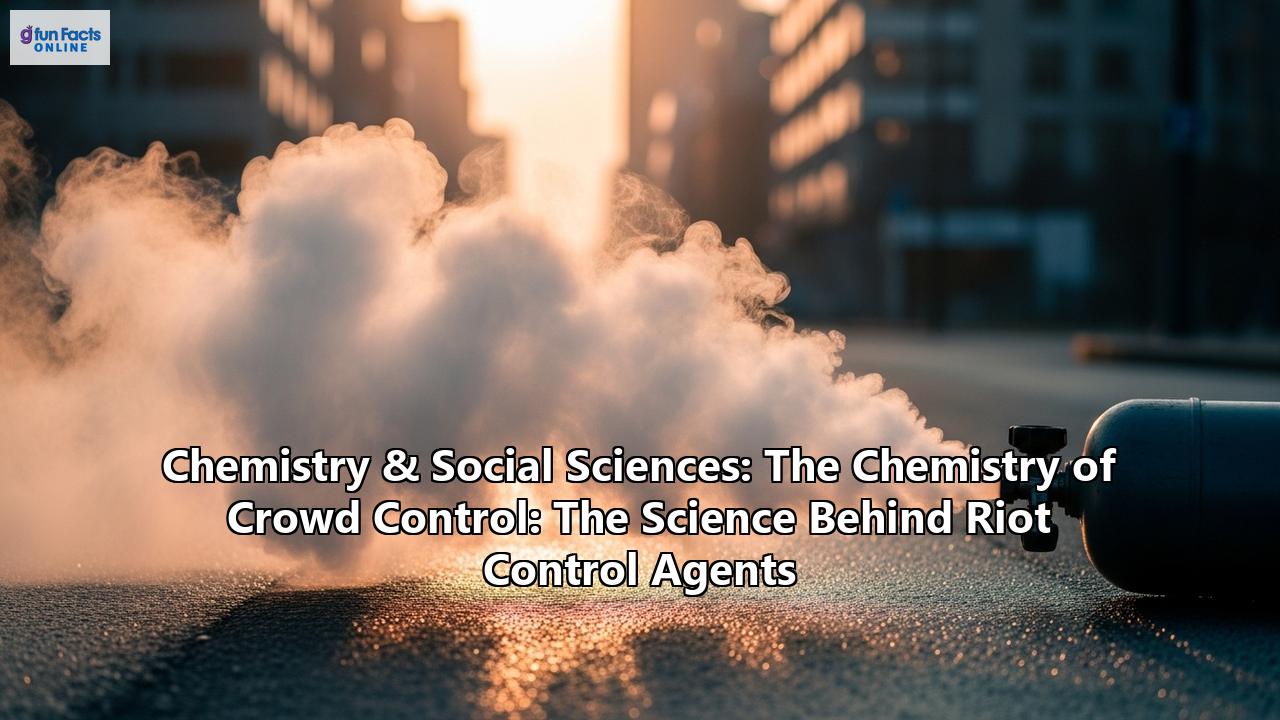
The Unseen Weapon: Deconstructing the Chemistry and Social Upheaval of Riot Control Agents
In the theater of public dissent, where the line between order and chaos is precariously thin, a unique class of chemical compounds often takes center stage. Popularly known as tear gas or riot control agents (RCAs), these substances are deployed to disperse crowds, quell unrest, and restore control. Yet, their use is a complex and contentious issue, sitting at the volatile intersection of chemistry, social science, human rights, and public policy. These are not merely tools of law enforcement; they are potent molecules designed to induce pain and fear, capable of shaping the dynamics of a protest, altering the course of a social movement, and leaving lasting impacts on both individuals and the environment.
This article delves into the multifaceted world of riot control agents, exploring the chemical science that makes them effective, the historical trajectory of their development and use, the social and psychological impact they have on crowds, and the fierce ethical and legal debates they ignite. From the laboratory bench where they are synthesized to the streets where they are deployed, we will unravel the science and the societal consequences of the chemistry of crowd control.
From Battlefields to Main Street: A Chemical History of Crowd Control
The story of chemical crowd control is inextricably linked with the history of modern warfare. While early forms of irritating smokes have been used in conflict for centuries, the 20th century saw the systematic development and deployment of what we now recognize as tear gas.
The first significant use of a lachrymatory (tear-producing) agent in law enforcement occurred in Paris in 1912, when police used ethyl bromoacetate to subdue criminals. However, it was World War I that served as the primary crucible for the development of these chemical weapons. Both Allied and German forces experimented with tear gas agents like xylyl bromide and chloroacetophenone (CN) on the battlefield, not necessarily to kill, but to incapacitate enemy soldiers, spoil their aim by causing uncontrollable tearing, and flush them from entrenched positions.
After the war, a confluence of factors brought these agents from the trenches to domestic streets. The post-war period in the United States was marked by significant social and labor unrest. Between 1919 and 1921, numerous violent strikes and race riots necessitated military intervention. Law enforcement agencies, seeking an alternative to using lethal firearms on civilians, became a new and receptive market for these chemical tools.
The U.S. Army's Chemical Warfare Service (CWS), looking to justify its peacetime existence, actively promoted tear gas as a "humane" method for quelling domestic disturbances. Despite initial opposition from Army leadership who were wary of using chemical weapons on civilians, the CWS found opportunities to demonstrate the perceived effectiveness of tear gas. Bans on its use were temporarily lifted to address labor strikes, such as the nationwide railroad workers' strikes in 1922. Private companies, often run by former CWS officers, began manufacturing and selling tear gas directly to police departments across the country. One of the most infamous early uses was against the "Bonus Army" in 1932, when World War I veterans protesting in Washington D.C. were dispersed with tear gas under the orders of President Herbert Hoover, an event that caused public outrage.
This transition cemented the role of chemical agents in domestic policing. Over the decades, the arsenal evolved. Chloroacetophenone (CN), originally marketed under the brand name Mace, was the standard for many years. However, in the 1950s, a more potent and less toxic agent, 2-chlorobenzylidene malononitrile (CS), was developed and rapidly adopted by military and police forces worldwide. The 1970s and 80s saw the rise of Oleoresin Capsicum (OC), or pepper spray, derived from chili peppers, as another popular option. The evolution continued with the development of even more potent agents like Dibenzoxazepine (CR) and new formulations designed to be more persistent in the environment. This history highlights a continuous cycle of military development, followed by adaptation for domestic law enforcement, a trend that continues to shape the technologies of crowd control today.
The Chemical Arsenal: A Molecular Look at Riot Control Agents
Riot control agents are not gases in the scientific sense. They are solid crystalline powders at room temperature that are dispersed as a fine aerosol, smoke, or liquid spray. Their effectiveness lies in their ability to rapidly cause sensory irritation, incapacitating individuals through pain and physiological distress. The ideal RCA, from a tactical perspective, has a rapid onset, a short duration of action, and a high safety margin to avoid permanent injury. However, as we will see, this "ideal" is often not met in practice.
Let's examine the key players at a molecular level:
1. CN Gas (Chloroacetophenone)- Chemical Identity: 2-chloro-1-phenylethanone (C₈H₇ClO), first synthesized in 1871.
- Synthesis: Historically prepared by passing chlorine through boiling acetophenone. Modern methods often involve the Friedel-Crafts acylation of benzene with chloroacetyl chloride.
- Mechanism of Action: CN is an alkylating agent. In the body, it is thought to be converted to an electrophilic metabolite that reacts with sulfhydryl groups in enzymes, disrupting cellular function. This action causes pain and irritation.
- Properties and Effects: Once the dominant tear gas, CN is now considered more toxic than its successor, CS. It is a potent lachrymator, causing intense eye pain, tearing, and blepharospasm (involuntary eyelid closure). High concentrations can lead to corneal damage, and it has been responsible for several deaths due to pulmonary injury, especially when used in confined spaces.
- Chemical Identity: C₁₀H₅ClN₂, a cyanocarbon compound first synthesized in 1928 by British scientists Ben Corson and Roger Stoughton. The name "CS" comes from the first letters of their surnames.
- Synthesis: CS is synthesized through a Knoevenagel condensation reaction between 2-chlorobenzaldehyde and malononitrile, often catalyzed by a weak base like piperidine or pyridine.
- Mechanism of Action: CS is a highly potent activator of the Transient Receptor Potential Ankyrin 1 (TRPA1) ion channel. This receptor is found on nociceptors (pain-sensing neurons) throughout the body, including the eyes, skin, and respiratory tract. When CS binds to the receptor, it triggers a massive influx of calcium ions into the neuron, sending a powerful pain signal to the brain. This mechanism is similar to how the oils in mustard and wasabi work, but CS is about a thousand times more potent. It is an alkylating agent that reacts with moisture on the skin and mucous membranes, causing a burning sensation.
- Properties and Effects: CS is about ten times more potent as a lachrymator than CN but is considered less systemically toxic. It is a white crystalline powder that is dispersed as a fine dust or aerosol. Exposure causes an immediate and intense burning sensation in the eyes, profuse tearing, coughing, difficulty breathing, disorientation, and a burning irritation of the skin. In high concentrations, it can induce severe coughing and vomiting.
- Chemical Identity: OC is not a single chemical but a complex extract from chili peppers of the Capsicum genus. The active ingredients are a class of compounds called capsaicinoids, with the most abundant and pungent being capsaicin (trans-8-methyl-N-vanillyl-6-nonenamide) and dihydrocapsaicin.
- Extraction: OC is produced by grinding dried chili peppers into a powder, then using a solvent (like ethanol or acetone) to extract the oily resin. The solvent is then evaporated, leaving the potent oleoresin. This resin is mixed with emulsifiers like propylene glycol to make it water-suspendable for use in spray devices.
- Mechanism of Action: Capsaicinoids exert their effect by binding to and activating the Transient Receptor Potential Vanilloid 1 (TRPV1) receptor. The TRPV1 receptor is also known as the "capsaicin receptor" and is responsible for detecting heat and pain. Activation of TRPV1 leads to an influx of calcium ions, causing a burning sensation and triggering the release of inflammatory neuropeptides like Substance P, which leads to neurogenic inflammation, pain, and bronchoconstriction.
- Properties and Effects: OC causes intense pain, inflammation, and temporary blindness. Its effects are primarily localized to the area of contact. It is widely used by law enforcement for both crowd control and individual subject control.
- Chemical Identity: Also known as nonivamide, PAVA (N-[(4-hydroxy-3-methoxyphenyl)methyl]nonanamide) is a synthetic analogue of capsaicin. It is an amide of pelargonic acid and vanillyl amine.
- Synthesis: While found in trace amounts in chili peppers, the PAVA used in riot control is manufactured synthetically. It is more heat-stable than natural capsaicin.
- Mechanism of Action: Like capsaicin, PAVA is an agonist of the TRPV1 receptor, producing similar effects of pain and inflammation.
- Properties and Effects: PAVA is used in some versions of pepper spray and is considered to have a potency similar to capsaicin. Its synthetic nature allows for greater consistency in formulation compared to the natural extracts of OC.
- Chemical Identity: Dibenz[b,f]oxazepine (C₁₃H₉NO), developed by the British Ministry of Defence in the late 1950s and early 1960s.
- Synthesis: One method involves the condensation of o-aminophenol and o-chlorobenzaldehyde followed by cyclisation.
- Mechanism of Action: CR is an extremely potent activator of the TRPA1 channel, the same receptor targeted by CS gas.
- Properties and Effects: CR is considered the most potent of the common riot control agents, reportedly twice as potent as CS. It is a pale yellow crystalline solid with a spicy odor. Exposure causes intense skin pain, described as being "like being thrown blindfolded into a bed of stinging nettles," earning it the nickname "firegas." Unlike other agents, water can amplify the pain effect of CR on the skin. While less systemically toxic than CN, its high potency makes it a formidable incapacitating agent.
The Social Science of Control: Manipulating Crowd Psychology
The use of riot control agents is not just a chemical assault; it is a psychological one, rooted in historical and often flawed theories of crowd behavior. To understand the "social science" aspect of this topic, one must first appreciate the evolution of thought on what a crowd is and how it behaves.
From the "Mad Mob" to Social IdentityFor much of the 20th century, police tactics were heavily influenced by the work of 19th-century French psychologist Gustave Le Bon. In his seminal work, "The Crowd: A Study of the Popular Mind," Le Bon argued that when individuals become part of a crowd, they lose their conscious personality and are subsumed into a "collective mind." This collective mind, he claimed, is primitive, irrational, emotional, and highly suggestible, leading to a "mob mentality" where individuals are capable of acts they would never consider alone.
This "classic" view of crowds as inherently irrational and dangerous has had a profound impact on policing. It fosters a perspective of crowds as a homogenous, threatening entity that must be controlled, dominated, and, if necessary, dispersed with force. From this viewpoint, riot control agents are a logical tool: they create an overwhelming and painful stimulus that shatters the "group mind" and forces individuals to revert to a state of self-preservation, causing them to flee.
However, modern social psychology has largely discredited Le Bon's model. Contemporary research, particularly the Social Identity Model (SIM) and its application in the Elaborated Social Identity Model (ESIM) of crowd behavior, offers a more nuanced understanding. These theories propose that crowd behavior is not a loss of identity, but a shift from an individual identity ("I") to a shared social identity ("we"). Individuals in a crowd act according to the norms, values, and goals of the group with which they identify.
This perspective changes everything. It suggests that crowds are not inherently irrational. Their actions are meaningful and directed by the shared understanding of the group. Conflict with authorities, therefore, is not an automatic outcome. Instead, it often develops through interaction. Research by scholars like Clifford Stott and Stephen Reicher has shown that indiscriminate and heavy-handed policing tactics can actually create conflict. When police treat a diverse crowd as a single dangerous entity, their actions can be perceived as illegitimate and an attack on the entire group. This can lead to a radicalization within the crowd, where even previously peaceful individuals come to see the police as an aggressive "out-group" and develop a shared identity of resistance, leading to an escalation of conflict.
The Social Identity Model of Collective Resilience (SIMCR) further challenges the old "mass panic" narrative. This model suggests that in emergencies—including the deployment of riot control agents—a shared experience of adversity can foster a new shared identity. This sense of "we're all in this together" can lead to cooperative, supportive, and resilient behaviors, such as helping strangers, providing first aid, and coordinating to neutralize tear gas canisters. This is the opposite of the individualistic panic predicted by Le Bon's theories.From this modern social science perspective, the use of indiscriminate weapons like tear gas is not just a tool of dispersal but a powerful act of communication. It tells the crowd that the authorities view them as a homogenous threat, delegitimizes their presence, and can inadvertently unify them in opposition, often escalating the very disorder it is meant to prevent.
The Biological Aftermath: Health and Environmental Consequences
While often termed "less-lethal," the idea that riot control agents are harmless is a dangerous misconception. The immediate effects are designed to be debilitating, but a growing body of evidence points to both severe acute injuries and disturbing long-term health consequences.
Immediate and Acute Effects:The primary targets of RCAs are the body's mucous membranes.
- Eyes: Instantaneous effects include intense burning pain, excessive tearing (lacrimation), redness, involuntary shutting of the eyelids (blepharospasm), and blurred vision. Direct hits from projectiles can cause permanent eye damage, scarring, glaucoma, cataracts, and blindness.
- Respiratory System: Inhalation leads to a burning sensation in the nose and throat, coughing, sneezing, chest tightness, and difficulty breathing. In high concentrations or confined spaces, RCAs can cause laryngospasm, chemical pneumonitis, and a build-up of fluid in the lungs (pulmonary edema), which can be fatal.
- Skin: Contact with the chemicals causes burning and rashes. Agents like CR can cause extreme pain that is worsened by water, and high doses of other agents can lead to chemical burns and blistering.
- Gastrointestinal System: Swallowing the agents, often through saliva, can cause nausea, vomiting, and diarrhea.
- Psychological Effects: Beyond the physical pain, the experience of being gassed can induce panic, disorientation, and anxiety.
The scientific literature on the long-term effects of tear gas is worryingly sparse, with many existing studies being decades old and based on limited data from healthy, male, military populations. This fails to account for the diverse populations exposed during civilian protests, including children, the elderly, pregnant individuals, and those with pre-existing conditions like asthma, who are at significantly higher risk.
Despite these limitations, emerging research and anecdotal reports raise serious concerns:
- Chronic Respiratory Illness: Studies have linked repeated exposure to tear gas with an increased risk of long-term respiratory complaints, including chronic bronchitis, persistent cough, and a higher incidence of acute respiratory infections. A 2014 study by the US Army found that recruits exposed to CS gas were more likely to develop respiratory infections.
- Reproductive Health: There is alarming evidence from protests in Portland and elsewhere suggesting a link between tear gas exposure and menstrual irregularities, including unusually heavy or painful periods, and even miscarriages. In 2011, Chile briefly banned the use of tear gas due to reports of it causing miscarriages.
- Mental Health: The traumatic experience of being subjected to a chemical attack can lead to long-term psychological issues, including Post-Traumatic Stress Disorder (PTSD).
- Dermal and Ocular Damage: Repeated or severe exposure can lead to chronic skin conditions like contact dermatitis and permanent eye problems.
Riot control agents do not simply vanish after they are deployed. The chemical compounds and heavy metals within the canisters settle on surfaces, contaminating soil, water, and urban infrastructure.
- Water Contamination: Following the 2020 protests in Portland, Oregon, the Department of Environmental Services found elevated levels of heavy metals like barium, lead, copper, and zinc in storm drains near protest sites. These contaminants can flow into rivers, posing a threat to aquatic ecosystems.
- Persistent Residue: The chemical agents themselves can linger in the environment. Anecdotal reports from Portland and Seoul describe residents feeling the effects of tear gas long after protests have ended, simply by being in areas where the agents were deployed. Some compounds, particularly those in newer formulations, are designed to degrade slowly and can remain active on surfaces for days. There are also concerns that the chlorinated compounds in CS gas could form stable, dioxin-like compounds that persist in the environment for decades. This raises serious questions about the long-term ecological legacy of their widespread use in urban centers.
A Legal and Ethical Minefield
The use of riot control agents is governed by a patchwork of international and domestic laws, creating a legal gray area that is the subject of intense debate.
The Chemical Weapons Convention (CWC): A Controversial ExceptionThe CWC, which entered into force in 1997, is the cornerstone of international law prohibiting chemical weapons. The treaty comprehensively bans the development, production, stockpiling, and use of chemical weapons in warfare. Tear gas agents like CS are explicitly listed as banned for use as a method of warfare.
However, the CWC contains a crucial and highly contentious exception in Article II, Paragraph 9, which states that the treaty does not prohibit "[p]urposes not prohibited under this Convention." Among these purposes is "law enforcement including domestic riot control." This single clause creates the legal paradox at the heart of the issue: a chemical agent deemed too inhumane for the battlefield is permissible for use by police against a country's own civilians.
Human rights organizations argue that this distinction is arbitrary and dangerous. They point out that the line between "domestic riot control" and a situation of armed conflict can be blurry, and that the exception allows states to use chemical weapons against their own people with less international scrutiny.
International Human Rights Law (IHRL)Where the CWC leaves a gap, International Human Rights Law provides a framework. The core principles governing the use of force by law enforcement are necessity and proportionality. This means force should only be used when strictly necessary to achieve a legitimate law enforcement objective, and the level of force used must be proportional to the threat posed.
Organizations like Amnesty International and the United Nations have established guidelines for the use of RCAs based on these principles:
- They should only be used to disperse a crowd in situations of generalized violence, not against peaceful or largely peaceful assemblies.
- They must only be used when all other, less harmful means have failed.
- Clear warnings must be given before deployment.
- They must never be used in confined spaces or where people do not have an escape route.
- Projectiles must never be fired directly at individuals.
- Authorities must avoid excessive quantities and prolonged or repeated exposure.
Unfortunately, as documented in countless incidents worldwide—from Hong Kong to Portland, Iran to Peru—these guidelines are frequently and flagrantly violated. Police have been documented firing canisters directly at protesters, using massive quantities in dense urban areas, deploying gas against peaceful demonstrators, and trapping crowds in clouds of chemicals. This widespread misuse has led many human rights experts to argue that tear gas is an inherently indiscriminate weapon that cannot be reliably used in accordance with human rights law. The UN Committee Against Torture has stated that using tear gas in confined spaces can constitute torture or other cruel, inhuman, or degrading treatment.
The "Less-Lethal" DebateA key part of the justification for the use of RCAs is that they are "less-lethal" than conventional firearms. The argument is that they provide a tool for de-escalation that prevents police from having to resort to deadly force.
However, critics, including Physicians for Human Rights, argue that the term "less-lethal" is a dangerous misnomer. They prefer the term "less-lethal weapons" which acknowledges that these weapons can and do cause serious injury and death. The extensive list of health complications, the potential for fatalities when misused, and the psychological trauma they inflict challenge the notion that these are "safe" alternatives. Some argue that the availability of these weapons may even lower the threshold for the use of force, encouraging a more violent response to dissent than might otherwise occur. Banning these agents, they contend, would force law enforcement agencies to prioritize de-escalation and communication-based tactics.
Conclusion: A Chemical Crossroads
The chemistry of crowd control reveals a profound and troubling paradox. At the molecular level, these agents are elegant in their design, engineered to hijack specific neurological pathways to induce a predictable and debilitating physiological response. They are a testament to humanity's ability to manipulate the building blocks of nature to exert control.
Yet, when these molecules are released from their canisters and into the complex social chemistry of a crowd, their effects become anything but predictable and controlled. They transform from a tactical tool into a potent symbol of state power, a blunt instrument of suppression that can inflame tensions, unify opposition, and shatter the fragile trust between citizens and the state. The classical view of a "mob" to be broken by a chemical onslaught has given way to a more sophisticated understanding of crowd dynamics, one that suggests such tactics are not only counterproductive but can create the very chaos they are meant to prevent.
The lingering questions about long-term health effects and environmental contamination add another layer of profound ethical responsibility. The invisible wounds of respiratory illness, reproductive harm, and psychological trauma, combined with the unknown legacy of chemical residues in our cities, demand a far higher standard of evidence and accountability than currently exists.
As societies around the world continue to grapple with protest, dissent, and the role of law enforcement, we stand at a chemical crossroads. The path forward requires a deeper understanding not only of the science of these agents but of the social science of the crowds they target. It demands a critical re-evaluation of the legal loopholes that permit their use and a rigorous, independent investigation into their true human and ecological costs. The use of chemical agents to manage public dissent is a decision with consequences that ripple out far beyond the immediate sting and tears, raising fundamental questions about the kind of society we wish to be: one that uses pain and fear to enforce order, or one that fosters dialogue, respects dissent, and seeks to resolve conflict without resorting to the unseen weapon.
Reference:
- https://cainstructor.com/%20Articles/History/Compendium%20of%20history%20may%2011%202020.htm
- https://www.sciencehistory.org/stories/magazine/a-tear-gas-tale/
- https://armscontrollaw.com/2020/06/17/from-irritant-to-tear-gas-the-early-story-of-why-a-toxic-agent-became-non-lethal/
- https://daily.jstor.org/how-tear-gas-became-a-staple-of-american-law-enforcement/
- https://editverse.com/less-lethal-options-military-and-police-riot-control-technology-evolution/
- https://en.wikipedia.org/wiki/Riot_control
- https://www.sierraclub.org/sierra/tear-gas-meet-environmental-law-nepa-public-health
- https://fionalowenstein.substack.com/p/how-tear-gas-impacts-our-health-and
- https://www.amnesty.org/en/latest/news/2023/05/global-misuse-of-tear-gas-killing-and-injuring-protesters-worldwide-updated-interactive-website/
- https://www.researchgate.net/publication/248933128_The_role_of_crowd_theory_in_determining_the_use_of_force_in_public_order_policing
- https://www.ebsco.com/research-starters/psychology/crowd-psychology
- https://azat.tv/en/dhs-crowd-control-purchases-spark-debate-over-safety-and-accountability/
- https://www.tandfonline.com/doi/full/10.1080/23311908.2017.1308104
- https://www.ojp.gov/ncjrs/virtual-library/abstracts/integrated-approach-crowd-psychology-and-public-order-policing
- https://www.researchgate.net/publication/240602049_An_integrated_approach_to_crowd_psychology_and_public_order_policing
- https://teargas.amnesty.org/
- https://ihrp.law.utoronto.ca/sites/default/files/media/Legality%20of%20Teargas%20-%20Aug25%20V2.pdf
- https://humanrights.berkeley.edu/projects/tear-gas-an-investigation/
- https://www.davidlapadat.com/post/gustave-le-bon-s-essential-theories-on-crowd-psychology-explained
- https://pmc.ncbi.nlm.nih.gov/articles/PMC6558061/
- https://www.amnesty.nl/media/police-human-rights-programme/amnesty-international-releases-30-rules-to-curb-the-use-of-chemical-irritants-by-police
- https://pmc.ncbi.nlm.nih.gov/articles/PMC8074355/
- https://www.amnestyusa.org/press-releases/toxic-trade-in-tear-gas-fuels-police-abuses/
- https://www.researchgate.net/publication/253297030_Social_Identity_as_a_Source_of_Strength_in_Mass_Emergencies_and_Other_Crowd_Events
- https://pmc.ncbi.nlm.nih.gov/articles/PMC6453633/
- https://www.researchgate.net/publication/391585952_A_social_identity_model_of_collective_resilience_in_emergent_groups
- https://pmc.ncbi.nlm.nih.gov/articles/PMC8919694/
- https://www.policechiefmagazine.org/leveraging-crowd-psychology-prevent-violence/
- https://www.taylorfrancis.com/chapters/edit/10.4324/9781032708492-3/social-identity-model-collective-resilience-emergent-groups-john-drury-evangelos-ntontis
- https://www.leidenlawblog.nl/articles/is-there-any-limitation-on-the-use-of-tear-gas-as-a-riot-control-agent
- https://atmos.earth/political-landscapes/tear-gas-protests-environmental-legacy-impacts/
- https://jackmanlaw.utoronto.ca/news/new-ihrp-report-problematic-legality-tear-gas-under-international-human-rights-law
- https://www.opb.org/article/2021/12/07/woman-files-lawsuit-against-portland-for-tear-gas-exposure-causing-severe-side-effects/
- https://oceanblueproject.org/how_did_tear_gas_become_a_major_pollutant_portland_river/
- https://www.opb.org/article/2023/04/17/study-2020-portland-oregon-protests-tear-gas-concentrations-far-exceeded-safe-levels/
- https://kustomsignals.com/blog/riot-police-and-crowd-control-from-tactics-to-equipment-everything-you-need-to-know
- https://havengear.com/blog/the-history-of-riot-gear/
- https://medium.com/humanrightscenter/medical-expert-discusses-the-coronavirus-police-brutality-and-the-health-implications-of-teargas-a35173ff25b3
- https://phr.org/wp-content/uploads/2020/06/Fact-Sheet-for-Protester-Self-Protection-June-2020-4.pdf