
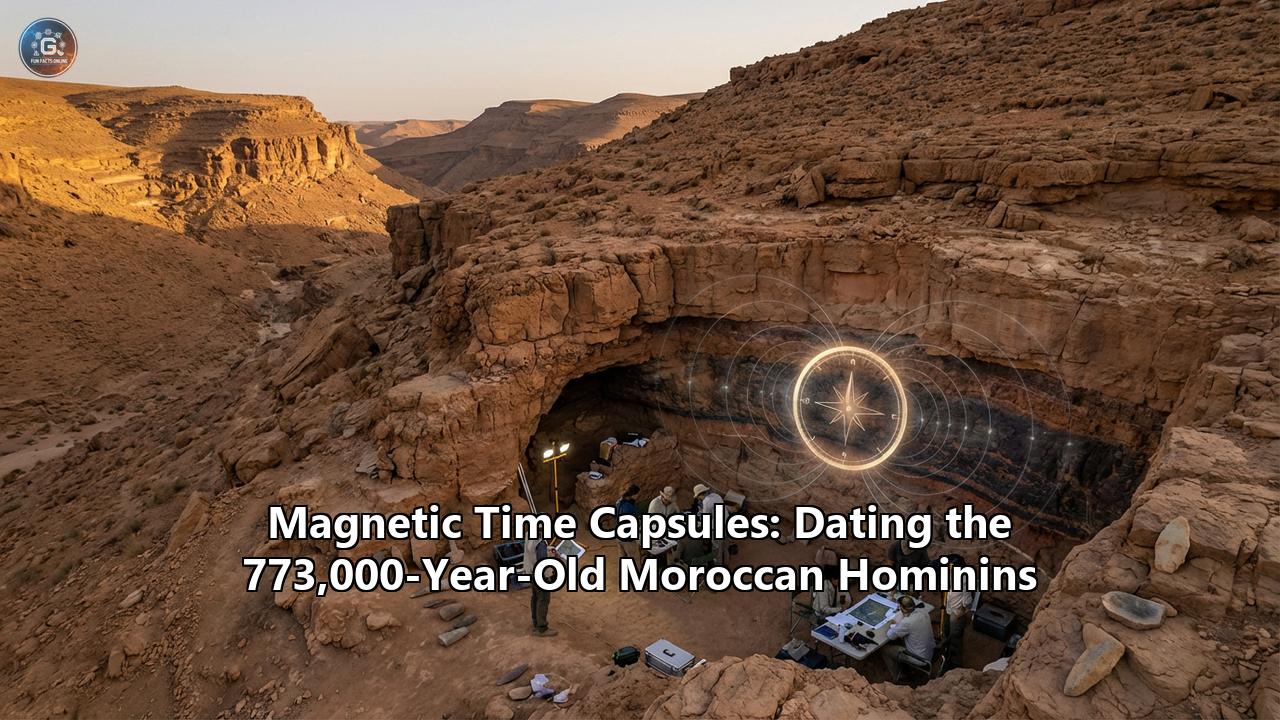
The rugged, wind-swept coastline of Casablanca has long been a destination for those seeking the romance of the Atlantic, but for paleoanthropologists, its cliffs hold a far deeper allure. Buried beneath the modern bustle of Morocco’s economic capital lies a geological archive that has recently rewritten the opening chapters of the human story. In a groundbreaking discovery published in Nature in early 2026, an international team of researchers announced the identification of hominin fossils from the Thomas Quarry I site, securely dated to 773,000 years ago.
This finding is not merely another dot on the map of human evolution; it is a revelation that illuminates one of the murkiest periods in our history—the Early-Middle Pleistocene transition. It was a time when the ancestors of modern humans, Neanderthals, and Denisovans were just beginning to diverge, a biological "crossroads" that has long baffled scientists due to a scarcity of well-dated fossils. The Casablanca fossils, locked in a sediment layer that acts as a "magnetic time capsule," have provided an unprecedentedly precise snapshot of this critical moment. By harnessing the planetary-scale physics of Earth’s magnetic field reversals, scientists have unlocked a date so accurate that it anchors the North African hominin record with a certainty previously thought impossible.
The Riddle of the "Muddle in the Middle"
To understand the magnitude of the Thomas Quarry discovery, one must first appreciate the chaos that characterizes the era it illuminates. Paleoanthropologists often refer to the period between 800,000 and 400,000 years ago as the "Muddle in the Middle." It is a geologic epoch defined by intense climatic instability, with massive glacial cycles reshaping the globe, and complex hominin migrations that saw populations expanding and contracting across Africa and Eurasia.
For decades, the fossil record for this period was frustratingly opaque. In Europe, sites like Atapuerca in Spain yielded Homo antecessor (dated to around 850,000 years ago), while later sites produced the ancestors of Neanderthals. in Africa, the picture was even more fragmented. Isolated jawbones and crania—such as the famous Kabwe skull (Homo rhodesiensis) from Zambia or the Bodo cranium from Ethiopia—hinted at a robust, large-brained species roaming the continent. Yet, these fossils often lacked precise dates, floating in a chronological limbo that spanned hundreds of thousands of years.
Without firm dates, determining the relationships between these groups was largely speculative. Was the European Homo heidelbergensis the ancestor of us all? Or was there a distinct African lineage that gave rise to Homo sapiens? The "Muddle in the Middle" remained a puzzle with half the pieces missing and the other half seemingly from different boxes.
The new fossils from Thomas Quarry I clear the fog. By providing a secure anchor point at 773,000 years ago, they demonstrate that a distinct hominin population—retaining ancient traits of Homo erectus while foreshadowing the modern biology of Homo sapiens—was thriving in North Africa. This suggests that the "cradle of humanity" was not a single point in East Africa but a continent-wide network of evolving populations, with the Maghreb playing a pivotal, central role.
The Thomas Quarry: A Geological Treasure Chest
The Thomas Quarry I site (specifically the Grotte à Hominidés or "Hominid Cave") is not a new blip on the archaeological radar. Located just southwest of Casablanca, the quarry has been a focal point of excavation since 1969, when a human half-mandible was first discovered there. Over the subsequent decades, the site has been meticulously explored by the "Préhistoire de Casablanca" program, a collaborative effort between the Moroccan Institut National des Sciences de l’Archéologie et du Patrimoine (INSAP) and French institutions including the University of Bordeaux and the Collège de France.
The quarry itself is a massive cross-section of ancient time. It cuts through the Oulad Hamida Formation, a sequence of calcified dunes and marine deposits that document the rise and fall of sea levels over millions of years. The Grotte à Hominidés was once a cave system carved into these hardened dunes by a high-standing ocean. Later, as the sea retreated, the cave filled with sands, collapsed roof blocks, and the debris of life.
It was a carnivore’s den. The bones found there—gazelles, zebras, antelopes, and hominins—bear the distinct gnaw marks of hyenas and porcupines. These predators dragged their prey into the dark recesses of the cave, unwittingly creating a fossil vault that would remain sealed for nearly a million years. Among the debris, researchers recovered mandibles (jawbones), isolated teeth, vertebrae, and a femur. These remains tell the story of a people who lived on the edge of the Atlantic, in an open woodland environment that teeming with game, long before the Sahara became the arid barrier we know today.
The Magnetic Time Capsule: How It Works
The most revolutionary aspect of the Thomas Quarry study is not just the bones, but the method used to date them. Dating fossils from the Middle Pleistocene is notoriously difficult. Radiocarbon dating, the most famous method, only works back to about 50,000 years. Other methods, like Uranium-series dating on teeth, can be affected by groundwater leaching, leading to "open system" errors that skew the results.
Enter magnetostratigraphy—the science of reading Earth’s magnetic history written in stone.
The Earth is essentially a giant magnet, generated by the churning of molten iron in its outer core. But this magnet is not stable. At irregular intervals throughout geological history, the Earth's magnetic poles have flipped. North becomes South, and South becomes North. These geomagnetic reversals are global events; they happen everywhere at once.
When sediments—like the sands filling the Thomas Quarry cave—are deposited, they often contain tiny, iron-rich minerals like magnetite. As these microscopic grains settle in calm water or wet sand, they act like tiny compass needles, aligning themselves with the Earth's magnetic field of that precise moment. When the sediment hardens into rock, that magnetic direction is locked in forever. It becomes a fossilized compass reading.
The researchers at Thomas Quarry, led by paleomagnetist Giovanni Muttoni and geologist David Lefèvre, took 180 separate samples from the stratified layers of the cave. They analyzed the magnetic orientation of each layer with painstaking precision.
What they found was a perfect "smoking gun."
The lower layers of the cave sediments showed a "reversed" polarity—their magnetic grains pointed South, indicating they were deposited during the Matuyama Chron, a long period when Earth’s magnetic field was opposite to today's. The upper layers, however, showed "normal" polarity, pointing North, corresponding to the Brunhes Chron, the current magnetic period we live in today.
Sandwiched exactly between these two zones was the Matuyama-Brunhes Boundary (MBB). This is one of the most rigorously dated events in Earth's history. Through independent dating of lava flows and ice cores around the world, geologists have pinned the date of this reversal to exactly 773,000 years ago.
The hominin fossils were found in Unit 4, a layer deposited immediately following this reversal. The magnetic signal was so sharp and the sedimentation rate in the cave so rapid that the researchers could pin the age of the fossils to 773,000 years, with a margin of error of just ±4,000 years. In the world of deep-time paleontology, where dates often come with error bars of 50,000 or 100,000 years, this is precision of an almost miraculous degree. The cave was, effectively, a magnetic time capsule sealed at the moment the poles flipped.
The Hominins: A Mosaic of Old and New
Who were these people locked in the time capsule? The morphological analysis, led by the renowned paleoanthropologist Jean-Jacques Hublin, reveals a fascinating biological mosaic.
The fossils—particularly the mandibles—do not fit neatly into the simple boxes of "Homo erectus" or "Homo sapiens." instead, they show a blend of features that captures evolution in motion.
- Archaic Features: The jawbones are robust, with a receding symphysis (the front of the jaw). They lack the protruding chin that is the hallmark of modern humans. Massive teeth and thick bone structure recall the ancient Homo erectus populations that had occupied Africa for over a million years.
- Derived Features: However, the shape of the dental arch and the details of the teeth show "derived" or modernized traits. These features align them with later Middle Pleistocene hominins—the group often called Homo rhodesiensis in Africa.
Crucially, these fossils bear a striking resemblance to the Homo antecessor fossils found in Atapuerca, Spain, which date to a similar period. This suggests a potential deep connection between the populations of North Africa and Southern Europe across the Strait of Gibraltar, or perhaps a common ancestral stock that expanded into both regions from a central African source.
The Thomas Quarry hominins likely represent a population very close to the Last Common Ancestor (LCA) of Homo sapiens and the Neanderthal-Denisovan lineage. Genetic studies have long predicted that this split occurred somewhere between 550,000 and 765,000 years ago. The 773,000-year-old date of the Moroccan fossils places them right at the base of this divergence. They are the "stock" from which modern humans would eventually evolve in Africa, while their cousins who migrated to Eurasia would eventually become the Neanderthals.
The "Green Sahara" and the North African Corridor
The discovery also forces a re-evaluation of the environment's role in human evolution. Today, we think of the Sahara Desert as a formidable barrier separating North Africa from the rest of the continent. However, the 773,000-year-old world of Thomas Quarry was vastly different.
The analysis of the animal bones found alongside the hominins—primitive gazelles, antelopes, rhinos, and carnivores—paints a picture of a "Green Sahara." During this period, North Africa was not an isolated island of habitability but was connected to East and Sub-Saharan Africa by lush corridors of savannah and woodland.
This connectivity is vital for understanding the evolution of our species. The Thomas Quarry population was not isolated; they were part of a pan-African gene flow. They shared technological traditions—specifically the Acheulean stone tool kit, characterized by large, teardrop-shaped handaxes—with populations as far away as Kenya and South Africa. The presence of these tools at Thomas Quarry (and in older layers at the site dating back to 1.3 million years) confirms that the Maghreb was a thriving hub of technological innovation and habitation, not a backwater.
Implications for the "Out of Africa" Narrative
For years, the dominant narrative of human evolution focused heavily on the East African Rift Valley (the "East Side Story"). Finds in Ethiopia, Kenya, and Tanzania were so numerous that East Africa was viewed as the sole engine of human evolution. The Moroccan discoveries—first the 300,000-year-old Homo sapiens at Jebel Irhoud in 2017, and now the 773,000-year-old ancestors at Thomas Quarry—shift the center of gravity.
These findings suggest that human evolution was a pan-African phenomenon. Innovations in biology and culture didn't just happen in one valley and spread out; they bubbled up in different regions—North, East, and South—that were periodically connected by climate shifts. North Africa, with its mild Mediterranean climate and rich coastal resources, may have been a crucial "refugium" where populations could thrive and evolve even when the interior of the continent dried out.
The precise dating of the Thomas Quarry hominins allows researchers to synchronize the North African record with the global climate record. We now know that these humans lived during a specific interglacial (warm) period, just after the magnetic reversal. This synchronization helps scientists model how ancient humans responded to climate change—expanding when the desert turned green, and retreating to coastal caves when the ice ages brought aridity.
The Technological Legacy: The Acheulean Connection
While the fossils grab the headlines, the archaeological context of Thomas Quarry is equally profound. The site is famous for yielding some of the earliest Acheulean stone tools in North Africa. This tool-making tradition, characterized by the bifacial handaxe, is the "Swiss Army Knife" of the Stone Age.
The persistence of the Acheulean industry at Thomas Quarry over hundreds of thousands of years speaks to the cognitive stability and deep cultural roots of these people. The ability to shape a stone into a symmetrical, pre-planned tool requires a level of foresight, planning, and manual dexterity that separates early humans from apes.
The 773,000-year-old occupants of the cave were not just survivors; they were masters of their environment. Although the cave was a carnivore processing site (meaning the hominins might have been prey as often as they were predators in this specific instance), the broader landscape of Casablanca is littered with their tools. They were processing plants, butchering carcasses, and likely exploiting the rich marine resources of the nearby coast—a behavior that would become a hallmark of later Homo sapiens behavior.
A Triumph of Interdisciplinary Science
The success of the Thomas Quarry project is a testament to the power of modern interdisciplinary science. It required the synthesis of:
- Paleoanthropology: To identify and interpret the subtle anatomical features of the jawbones.
- Paleomagnetism: To unlock the magnetic code in the sediments.
- Geology & Stratigraphy: To understand the complex formation of the fossil dunes and cave systems.
- Geochronology: To cross-reference the magnetic dates with other methods like biochronology (dating based on animal species).
- Paleoecology: To reconstruct the ancient environment from animal bones and pollen.
This collaboration, spanning Moroccan and French institutions, serves as a model for future research. It highlights the importance of revisiting "old" sites with new technologies. Thomas Quarry had been known for 50 years, but it took 21st-century magnetostratigraphy to fully unlock its secrets.
Conclusion: The Ancestors Emerged from the Magnetic Fog
The 773,000-year-old hominins of Casablanca stand as sentinels at the threshold of modern humanity. They lived in a world that was on the brink of profound change—both magnetically and biologically. The reversal of the Earth's poles that marked their time is a fitting metaphor for the evolutionary reversal that was about to happen: the transition from the archaic world of Homo erectus to the dawn of Homo sapiens.
Because of the "magnetic time capsule" of Thomas Quarry I, these ancient Moroccans are no longer lost in the "muddle." They have a time, a place, and a face. They remind us that our origins are not tied to a single garden in the east, but are rooted in the diverse, shifting landscapes of the entire African continent. As we look at their jawbones—robust, worn, yet undeniably akin to our own—we see the endurance of a lineage that survived ice ages, magnetic flips, and predators to eventually give rise to the storytellers of today.
The cliffs of Casablanca have spoken, and their message is clear: The history of humanity is older, richer, and more interconnected than we ever dared to imagine.
Reference:
- https://scitechdaily.com/773000-year-old-moroccan-fossils-pinpoint-a-critical-moment-in-human-evolution/
- https://ournarratives.net/at-the-root-of-humanity-773000-year-old-fossils-from-morocco/
- https://moroccobeat.com/culture-society/773000-year-old-human-fossils-morocco/
- https://www.zmescience.com/science/news-science/these-773000-year-old-hominin-fossils-from-morocco-may-be-the-closest-ancestors-of-modern-humans/
- https://www.discovermagazine.com/773-000-year-old-fossils-capture-a-moment-before-human-lineages-split-48511
- https://www.sciencedaily.com/releases/2026/02/260206012221.htm
- https://www.youtube.com/watch?v=U1IfWchkpG4
- https://dailynewshungary.com/morocco-773000-year-old-finds-may-rewrite-the-history-of-human-evolution/
- https://www.reddit.com/r/GrahamHancock/comments/1lx1o5r/morocco_fossil_finds_rewrite_the_origins_of_our/
- https://www.goodnewsnetwork.org/early-human-ancestor-found-in-morocco-dates-back-700000-years-may-be-major-missing-link/
- https://www.sci.news/archaeology/hominin-fossils-morocco-14468.html
- https://www.youtube.com/watch?v=LsKh1z42HtE
- https://www.livescience.com/archaeology/human-evolution/last-common-ancestor-of-modern-humans-and-neanderthals-possibly-found-in-casablanca-morocco