G Fun Facts Online explores advanced technological topics and their wide-ranging implications across various fields, from geopolitics and neuroscience to AI, digital ownership, and environmental conservation.

G Fun Facts Online - 2026 Articles

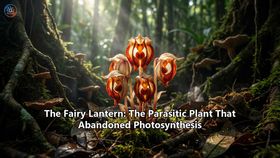
The Fairy Lantern: The Parasitic Plant That Abandoned Photosynthesis

The Fairy Lantern: The Parasitic Plant That Abandoned Photosynthesis

Deep within the damp, shadowed understories of ancient rainforests and—improbably—in the lost wetlands of industrial Chicago, there exists a biological anomaly that defies our most basic understanding of plant life. We are taught from a young age that plants are green, that they worship the sun, and ...


Republic Day: The Evolution of Constitutional Sovereignty

Republic Day: The Evolution of Constitutional Sovereignty

The dawn of January 26, 1950, was not merely a change of dates but a seismic shift in the destiny of a civilization. It was the moment when an ancient land, bruised by two centuries of colonial extraction, formally transformed into a modern nation-state governed not by the whims of a crown but by th ...

Agroecology: Science-Driven Strategies for Climate Resilience

Agroecology: Science-Driven Strategies for Climate Resilience

The dawn of the mid-21st century has brought agriculture to a precipice. For decades, the industrial model—characterized by monocultures, synthetic inputs, and mechanization—promised food security through yield maximization. Yet, as climate volatility intensifies, this system has revealed its fragil ...

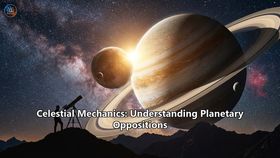
Celestial Mechanics: Understanding Planetary Oppositions

Celestial Mechanics: Understanding Planetary Oppositions

Planetary oppositions represent one of the most fundamental yet visually spectacular events in the solar system—a moment of cosmic alignment that has historically unlocked the secrets of the universe's scale and continues to drive modern space exploration. The Celestial Mechanics of Oppositio ...

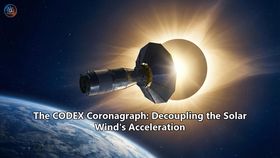
The CODEX Coronagraph: Decoupling the Solar Wind's Acceleration

The CODEX Coronagraph: Decoupling the Solar Wind's Acceleration

Introduction: The Whisper of a Star Ninety-three million miles from where you sit, a continuous thermonuclear explosion is taking place. It is a violent, chaotic, and terrifyingly beautiful event that has sustained all life on Earth for nearly four billion years. To the naked eye, the Sun appea ...

Goethite Fossils: The Iron-Preserved Rainforests of McGraths Flat

Goethite Fossils: The Iron-Preserved Rainforests of McGraths Flat

Rust is the color of decay. In our modern world, when we see the flaky, orange-red crust of iron oxide spreading across a metal surface, we instinctively recognize it as the end of something. It is the chemical signature of entropy, the slow burning of structure into dust. We do not look to rust for ...

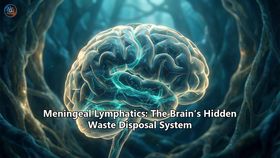
Meningeal Lymphatics: The Brain’s Hidden Waste Disposal System

Meningeal Lymphatics: The Brain’s Hidden Waste Disposal System

For centuries, the human brain was viewed as a biological fortress, a sovereign island isolated from the rest of the body’s immune landscape. Medical textbooks described it as "immune privileged," meaning it was supposedly devoid of the lymphatic vessels that thread through every other organ to clea ...

Goldene: The Two-Dimensional Chemistry of Precious Metals

Goldene: The Two-Dimensional Chemistry of Precious Metals

The world of materials science was forever altered in 2004 with the isolation of graphene, a single atomic layer of carbon. It sparked a "gold rush" for two-dimensional materials—substances with thickness measured in mere atoms, possessing exotic properties unseen in their bulk counterparts. For two ...

The Pollinating Wolf: Canis simensis and the Red-Hot Poker

The Pollinating Wolf: Canis simensis and the Red-Hot Poker

In the rarefied air of the Ethiopian Highlands, where the atmosphere is thin and the light possesses a crystalline clarity, a scene unfolds that defies the conventional laws of nature. A wolf—a creature of tooth, claw, and predatory instinct—approaches a flower. It does not trample the bloom or mark ...

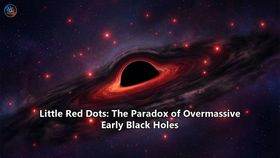
Little Red Dots: The Paradox of Overmassive Early Black Holes

Little Red Dots: The Paradox of Overmassive Early Black Holes

In the deep, ancient dark of the cosmos, something is glowing where it shouldn’t be. For decades, astronomers believed they understood the rhythm of the early universe. The story went like this: vast clouds of neutral hydrogen collapsed to form the first stars, which clustered into small, messy gal ...

Support G Fun Facts by shopping on Amazon.

Shop on Amazon
As an Amazon Associate, we earn from qualifying purchases.